The Sovereign Image: Authority Across Cultures
How power presented itself through art in Benin, Byzantium, and the European courts, from ritual objects to royal portraits.
“Court power made visible: Benin bronzes, Byzantine mosaics, and Baroque royal portraiture, three unrelated cultures independently inventing the same visual language of unquestionable authority.”
Across three continents and centuries, rulers discovered the same visual formula: gold, frontality, and stillness. The ornamental precision of Byzantine metalwork, the formal immobility of Baroque royal portraiture, and the hierarchical display of Benin bronzes all encode the same message: the subject cannot be approached, questioned, or made familiar. These works share neither trade routes nor direct influence, yet they speak an identical visual language because they solve the same problem for the powerful: how to be seen but not touched, how to command without speaking.
This exhibition gathers works that exemplify three independent solutions to representing unquestionable authority. The Byzantine pieces establish the grammar of divine kingship through precious materials and frontal stillness. Italian Renaissance rulers adopted that same logic in painted and sculpted form. The Baroque court painters perfected the formula, using light and composition to make the subject untouchable. We present these traditions not as parallel developments but as proof that authority has a shape, and that shape recurs wherever power seeks to make itself permanent in art.
Walk through in order, 10 works.
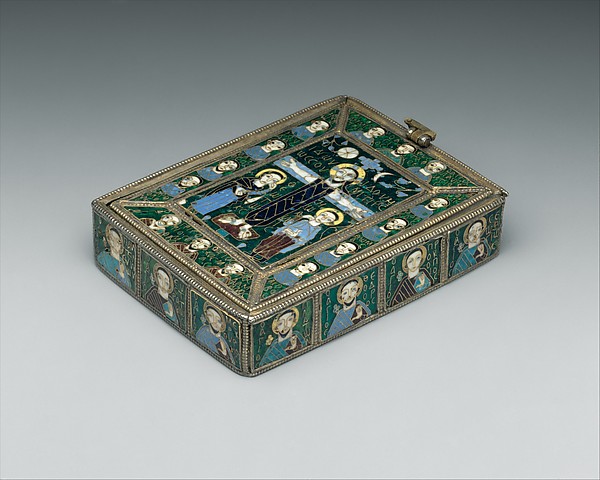
The Fieschi Morgan Staurotheke
The Fieschi Morgan Staurotheke's gilded silver ground and cloisonné enamel establish the material vocabulary of Byzantine imperial presence: precious metals and immaculate technique as a visual guarantee of divine sanction.
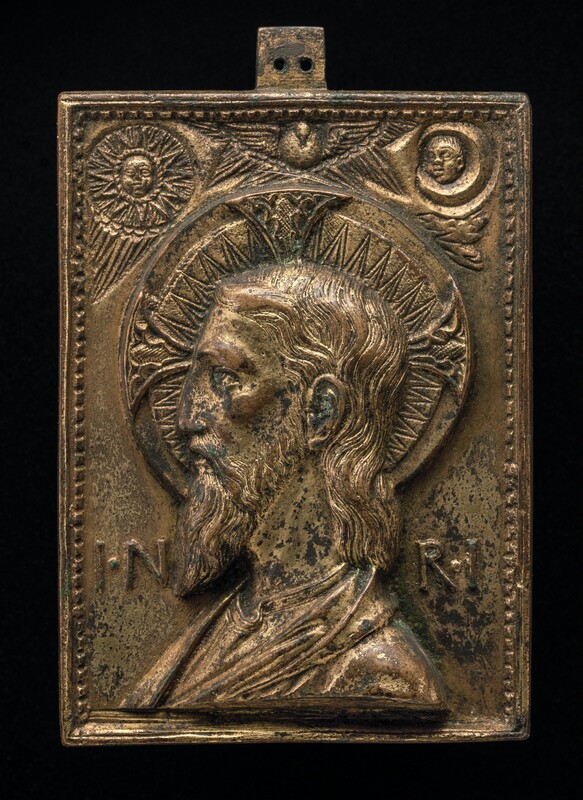
Bust of Christ
Bust of Christ in gilded bronze inherits and sanctifies the Byzantine formula of frontality and untouchable perfection, making the sacred body both radiant and utterly still.
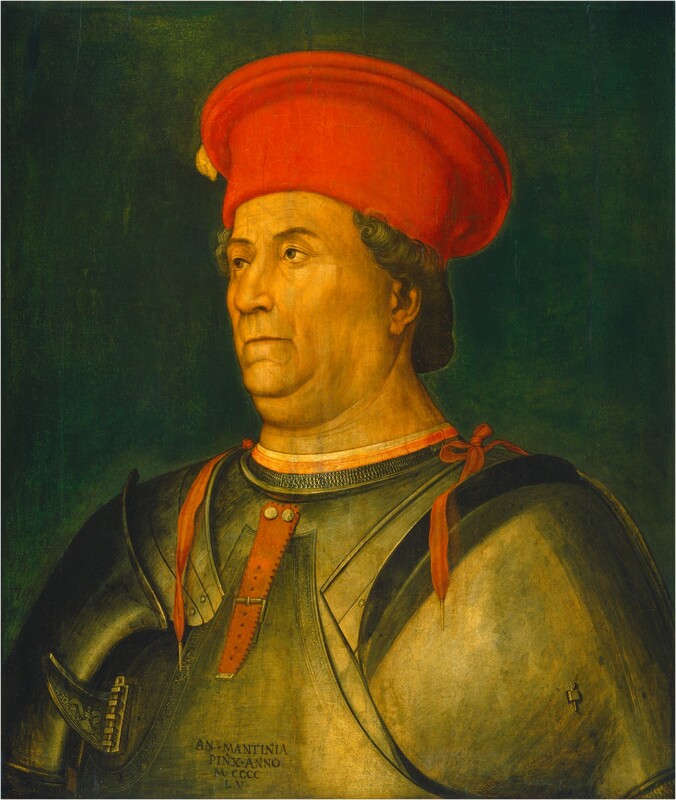
Francesco Sforza
Francesco Sforza's oil panel portrait applies the frozen frontal stance and gold-leaf background of sacred imagery to secular Italian power, transferring divine authority to a living ruler.
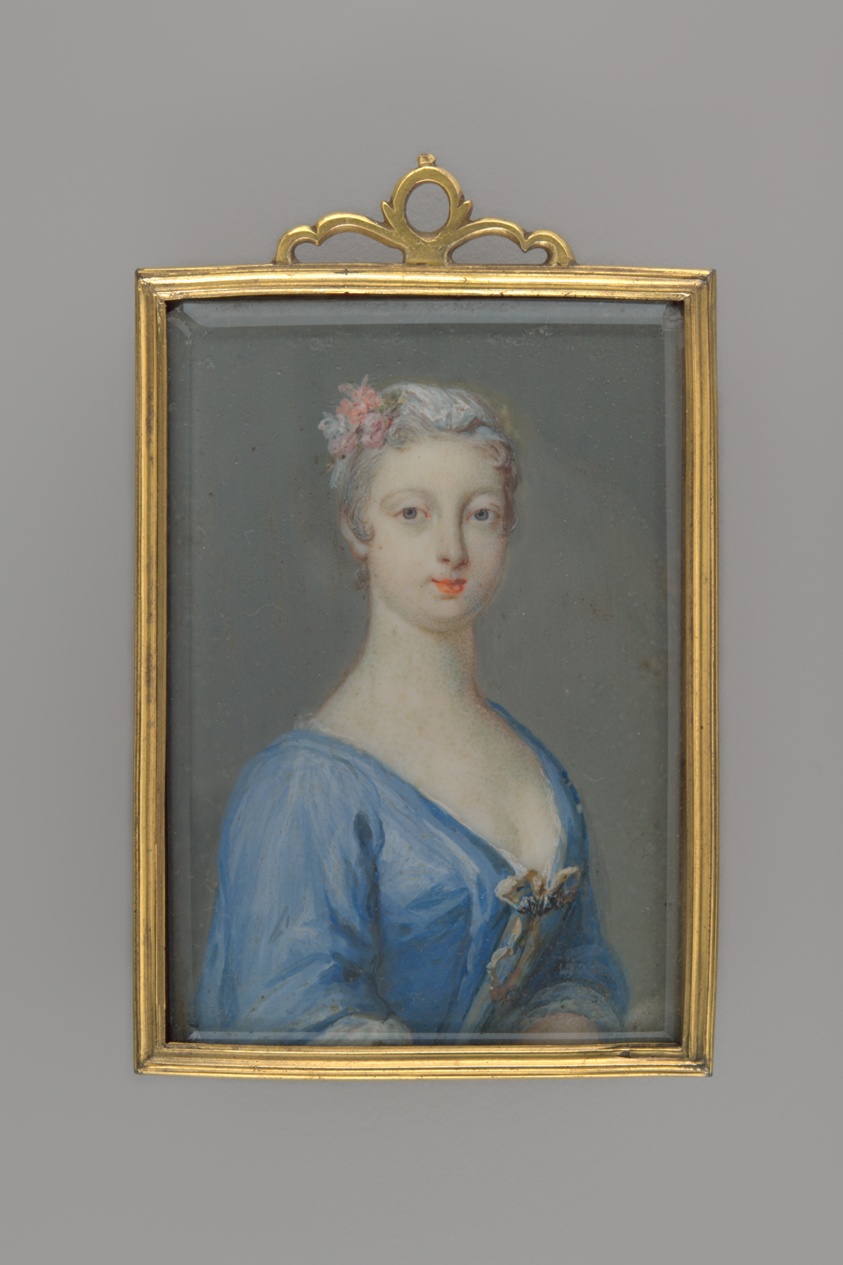
Portrait of Countess Grafin von Furstenberg
Rosalba Carriera's watercolor on ivory of Countess Grafin von Furstenberg miniaturizes and jewels the royal portrait tradition, using the precious support itself as a material claim to status.
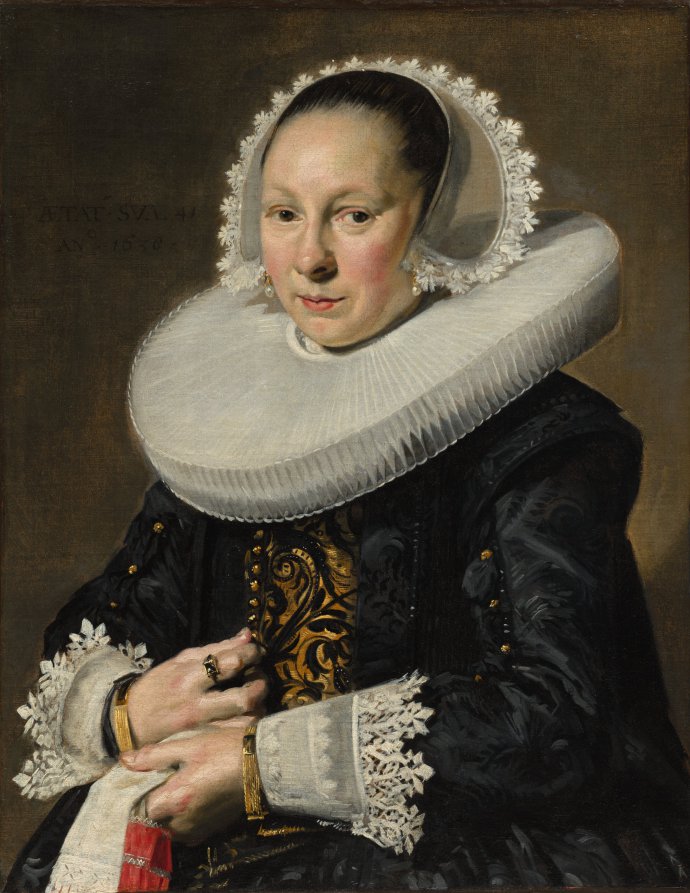
Portrait of a Woman, probably Aeltje Dircksdr. Pater
Frans Hals' Portrait of a Woman, probably Aeltje Dircksdr. Pater fixes its subject in dark oil on canvas with unflinching frontality, creating psychological distance through stillness rather than ornament.
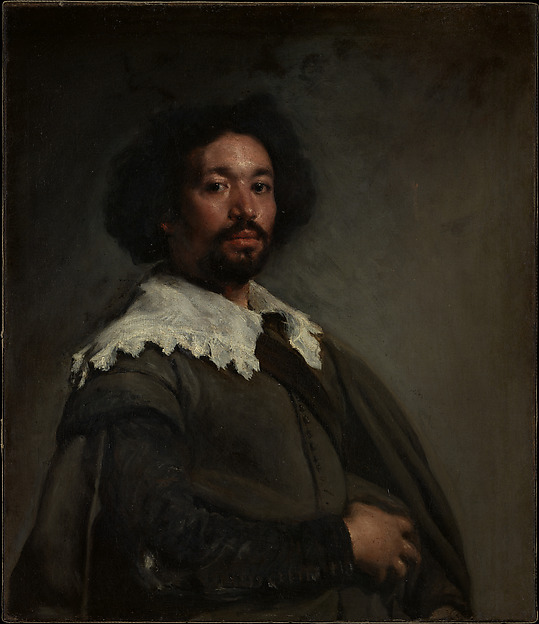
Juan de Pareja (ca. 1608–1670)
Diego Velázquez's Juan de Pareja (ca. 1608–1670) places its dignified sitter in a dark void with only light and paint to establish presence, making the figure both approachable and utterly removed.
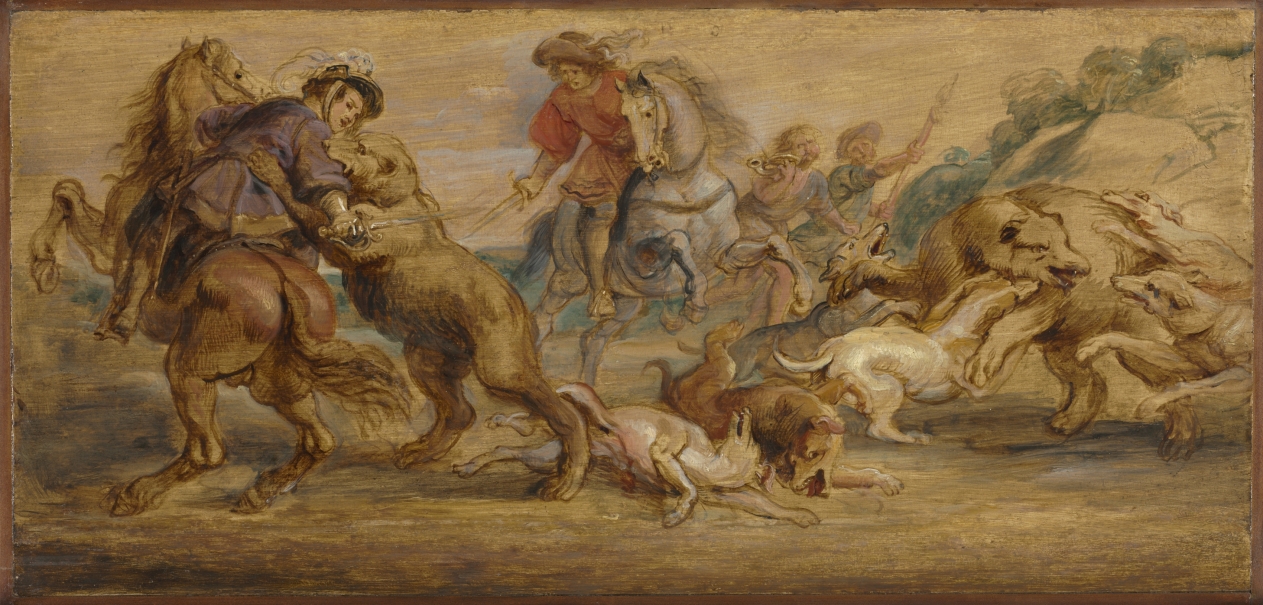
Study for "The Bear Hunt" (for the Alcázar, Madrid)
Rubens' Study for "The Bear Hunt" (for the Alcázar, Madrid) composes royal spectacle around a central still point, the authority of the hunt's command radiating from compositional center.
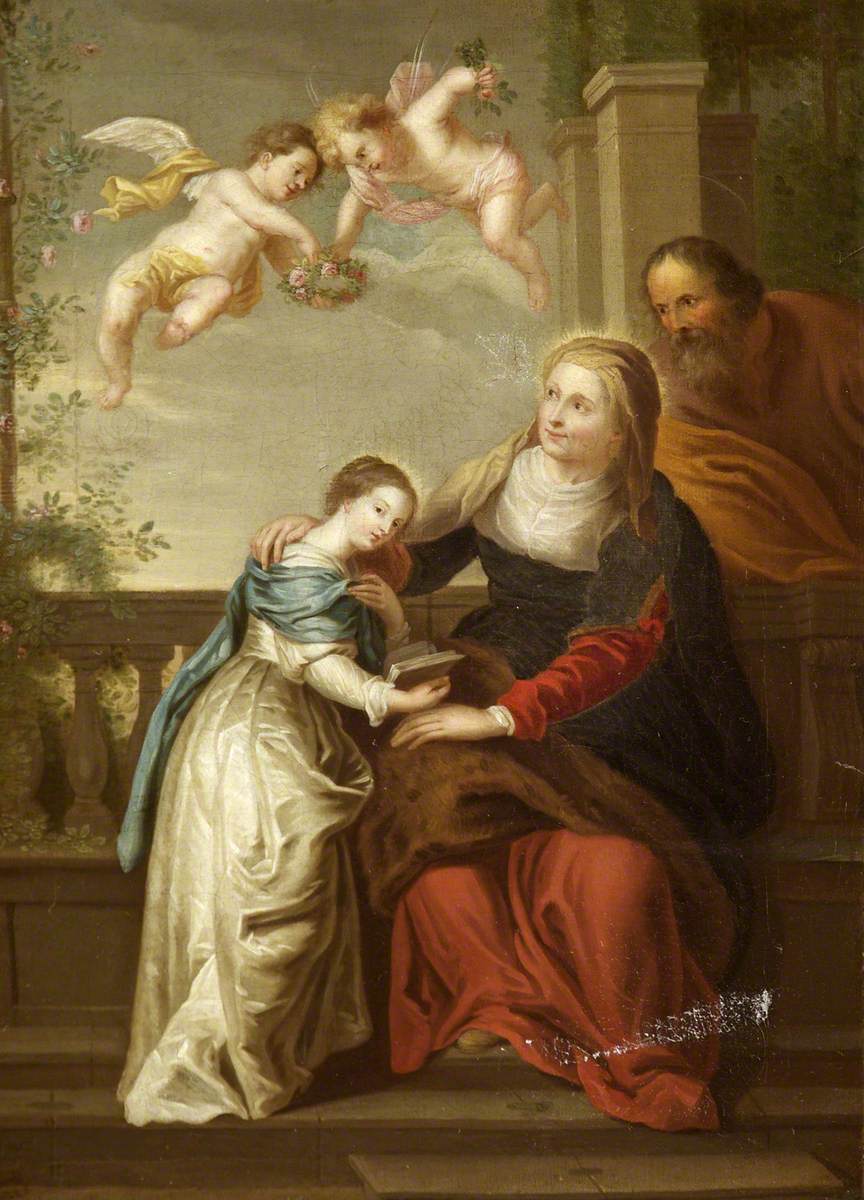
Anna and Joachim with the Virgin Mary
Anna and Joachim with the Virgin Mary uses Rubens' baroque amplitude to set sacred figures in a hierarchy of light and focus, making the central subject both surrounded and untouchable.
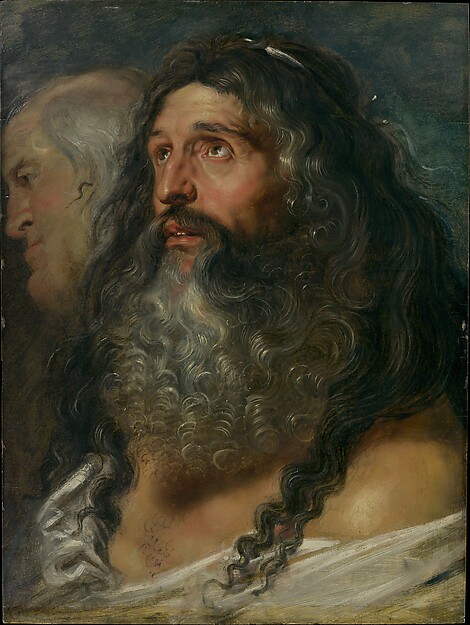
Study of Two Heads
Study of Two Heads in oil on wood by Rubens practices the frontal, penetrating gaze that makes a painted face a sovereign object rather than a portrait of a person.
![Neptune in a Sea-Car [reverse]](https://pub-45dcf715ffe54ded939bd0210dffb014.r2.dev/artworks/nga-1311.jpg)
Neptune in a Sea-Car [reverse]
Lysippus Junior's Neptune in a Sea-Car [reverse] in bronze demonstrates how Renaissance metalwork inherited Byzantine principles of divine immobility, freezing a mythological ruler in perpetual, unreachable command.
The Review

The exhibition's premise is seductive and historically legitimate: that power across cultures converged on a visual formula of gold, frontality, and untouchability. The problem is that the show proves this only by ignoring almost everything that matters about how these images actually functioned in their own moments, which is to say, it mistakes formal similarity for historical equivalence and flattens power into a single, timeless shape.
Start with The Fieschi Morgan Staurotheke, a Byzantine reliquary from around 800 that opens the argument with genuine material authority. The gilded silver and cloisonné enamel work creates a surface so precious and so deliberately fractured by pattern that the viewer cannot settle into comfortable looking, cannot access the object as a stable image. This is reliquary metalwork, made to contain and protect and to demand ritual approach, not democratic viewing. The formal frontality here is not primarily about the sitter's power but about the sacred object's removal from use, from touch, from the profane world. When the exhibition slides that same formal language into Diego Velázquez's Juan de Pareja (ca. 1608–1670), a portrait of an enslaved man of African descent whom Velázquez trained as a painter, the curatorial logic breaks down entirely. Velázquez does use frontality here, and the painting does present an inscrutable face, but the work is doing something far more legible and far more troubled than encoding "unquestionable authority." The painting's formal dignity is precisely what makes it impossible to resolve: Pareja's status as both subject and object, both depicted with the care reserved for a court painter and legally positioned as property. The frontality is not about power's permanence, it is about a contradiction that cannot be painted away. To treat this work as another example of authority's visual grammar is to miss its entire historical weight.
The show's treatment of the Baroque court painters is more troubled still. Rubens' Study of Two Heads and Study for "The Bear Hunt" (for the Alcázar, Madrid) are working drawings, studio sketches, provisional and human and full of second thought. They show painters thinking, correcting, trying angles. Placing them in a show about sovereign authority that "cannot be questioned" asks the viewer to ignore what these works actually are: the exploratory labor that precedes the official image. This is where the curatorial framework does real damage, because it requires erasing the material difference between a finished court portrait and a preparatory study, between the moment when authority is being constructed and the moment when it appears complete. Similarly, Frans Hals' Portrait of a Woman, probably Aeltje Dircksdr. Pater is a work of almost violent intimacy, its brushwork visible and urgent, its sitter alive in a way that actually resists the exhibition's claim about Baroque portraiture's immobility. Hals painted people who looked back at the viewer with presence, not distance.
Where the show could have done real work, it punts. The exhibition mentions Benin bronzes in its subtitle and preamble but includes none in the actual roster, which is a curatorial choice that speaks volumes. To argue that Benin court hierarchies expressed authority through the same visual language as Byzantine or European systems, and then to not show the work, is to treat Benin as a theoretical appendix rather than a case. More importantly, it avoids the most important and difficult question: that these formal similarities might not prove a universal truth about power, but rather might demonstrate how European empires absorbed and redeployed visual systems from the cultures they encountered and colonized. The gold, the stillness, the frontality, might not be an independent solution but a stolen one, circulating through imperial networks. That would be a genuinely sharp curatorial argument. This show is not making it.
There are moments of real formal interest here, particularly when looking at the Renaissance bronze Neptune in a Sea-Car [reverse], which shows authority in motion rather than stillness, breaking the exhibition's central claim outright. If Lysippus Junior's work is in this show about the immobility of power, then the premise is already compromised, and the curator has not acknowledged the contradiction. The gilded bronze Bust of Christ sits somewhere between devotional object and portrait, between image and relic, and that unstable position is where the exhibition's vocabulary actually fails. These works are good enough to deserve a show that asks harder questions about what they actually were doing when they were made, for whom, and what it would mean to see them side by side not as proof of power's permanence but as traces of how power has always had to remake itself, had to borrow, had to work harder than its own visual claims suggest.
The exhibition is historically minded but not intellectually restless. It knows its objects are connected, but it has chosen the flattest possible connection, the one that requires the least interrogation of its own assumptions about what authority looks like and who gets to say.
- +Strong foundational premise about visual strategies of authority that is historically defensible across multiple cultures
- +Individual works like Juan de Pareja (ca. 1608–1670) and The Fieschi Morgan Staurotheke have enough formal and historical complexity to trouble the exhibition's own thesis
- +The reliquary and Velázquez materials offer genuine material and temporal range across the roster
- –Mentions Benin bronzes in the entire show's concept but displays none, turning a non-European tradition into theoretical window dressing rather than actual argument
- –Flattens the distinction between preparatory studies (Rubens drawings) and finished state portraits, erasing the labor and revision that precedes official images
- –Avoids the harder historical question: whether these formal similarities demonstrate an independent recurring solution or whether they trace the circulation and redeployment of visual systems through imperial encounter
- Diego Velázquez →The exhibition includes his Juan de Pareja, but his wider body of court portraiture and his interrogations of how paint itself creates distance between viewer and subject deserve deeper exploration.
- Byzantine Art →The Fieschi Morgan Staurotheke opens the show's genealogy; studying the broader visual language of Byzantine imperial portraiture and religious iconography reveals how thoroughly Renaissance Europe borrowed from it.
- Peter Paul Rubens →The exhibition includes two studies, but Rubens' larger project of translating court authority into baroque sensuality and movement across his major commissions shows how the visual language of power adapted to a new kind of theatrical spec
Curious what another critic would make of this show?