Seen and Unseen: Pop Art's Politics of Appearance
How Pop artists made the marginal visible and the visible strange, from the commercial street to the gallery wall.
“25 modern and contemporary artists from Pop Art dealing with Visibility & Marginalization”
Pop Art arrived as a movement that seemed to celebrate mass production, consumer goods, and the surfaces of American life. But beneath that glossy exterior lay a more complicated project: artists interrogating who gets to appear in public space, whose stories circulate through commercial imagery, and what happens when you enlarge, repeat, or deliberately flatten the visual systems that govern visibility. This exhibition traces how Pop artists used commercial techniques (screenprinting, offset lithography, commercial paint) not to endorse consumerism but to expose it. They borrowed the visual language of advertising and street signage to represent people and places systematically rendered invisible by that same machinery: working-class figures, domestic labor, bodies at the margins of art-world attention. By seizing the tools of mass visibility, they asked what it means to be seen, and what it costs to remain invisible.
The roster here spans the 1950s through the 1990s, mixing Pop's peak years with artists who inherited its methods and ambitions. Some works cling to the movement's bright surfaces and mechanical repetition. Others push toward abstraction, conceptual practice, or explicit social critique. What unites them is a refusal to treat visibility as innocent. They understood that how an image circulates, in what medium, at what scale, and framed by what context, determines whether it registers as art, document, advertisement, or protest. Pop gave them the tools to make that machinery visible from the inside.
Walk through in order, 25 works.
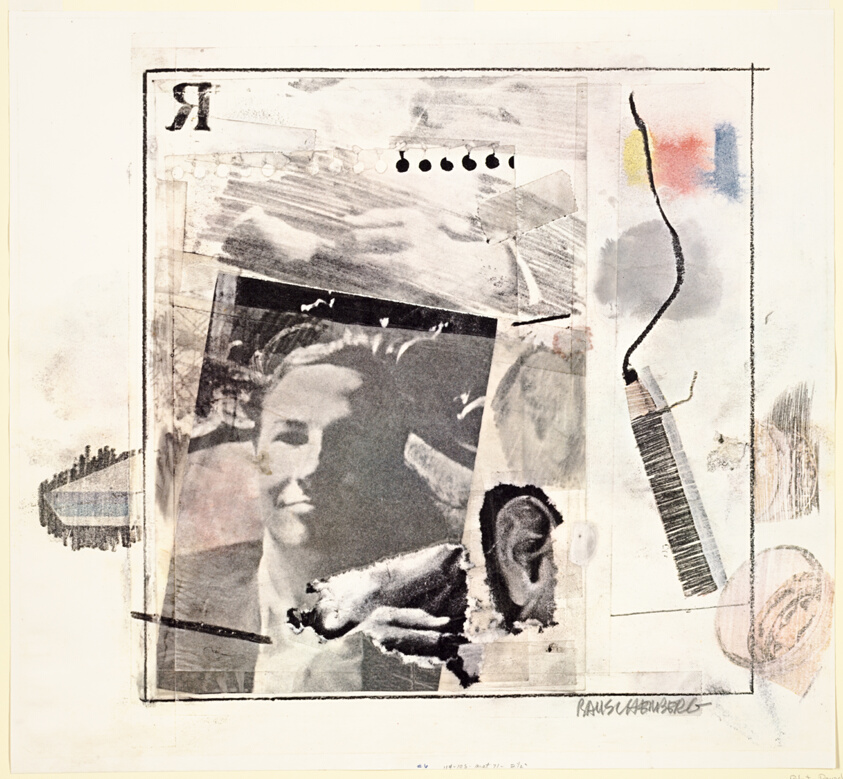
Dwan Gallery Poster
Rauschenberg's collaged poster assembles fragments of photographic portraiture and gestural mark-making into a composition of deliberate disorientation, using commercial printing processes to scramble the hierarchy between high art and the visual chaos of mass media.
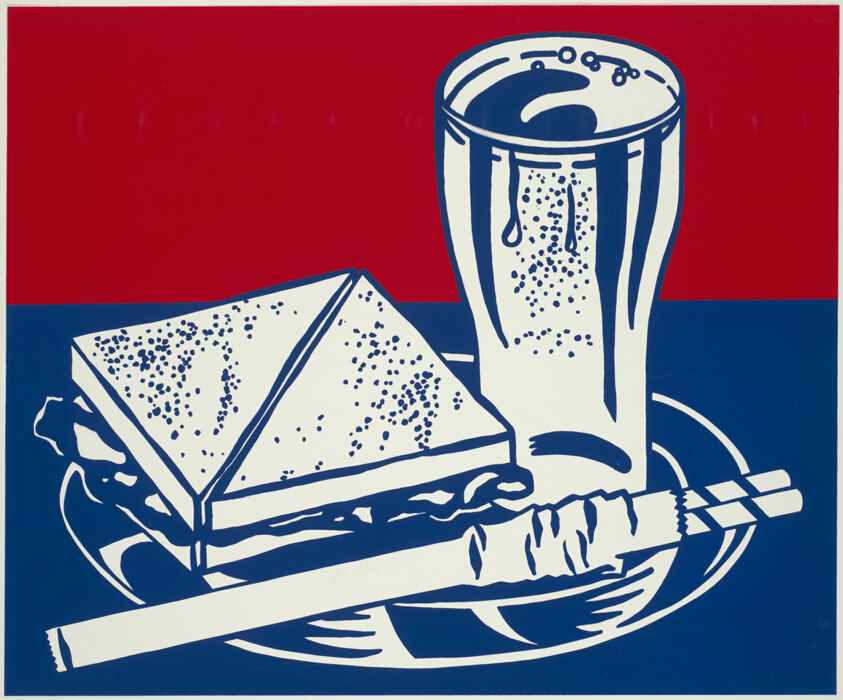
Sandwich and Soda, from X + X (Ten Works by Ten Painters)
Lichtenstein's still-life of mundane commercial goods (sandwich, soda, cigarette) inflates trivial consumer objects to gallery scale through screenprint, forcing viewers to confront the formal and emotional weight of images designed to be disposable.

Boy with Branch I
Katz's aquatint portrait of a boy framed by yellow foliage and rendered in a flattened, poster-like palette uses fine-art printmaking to adopt the visual vocabulary of commercial illustration, collapsing distinctions between high and mass-produced portraiture.
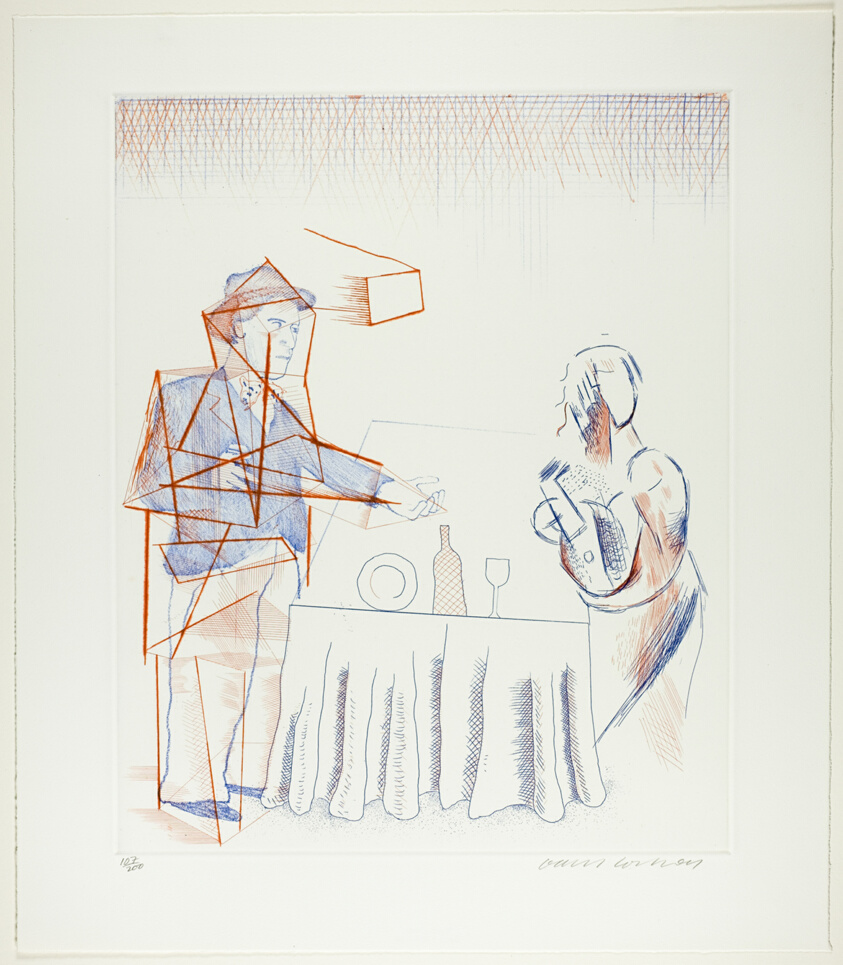
Figures with Still Life, from The Blue Guitar
Hockney's etched figures and still-life objects are rendered as outlined schematic forms interwoven with gestural line, translating Pop's graphic directness into the traditional medium of copper-plate printmaking.
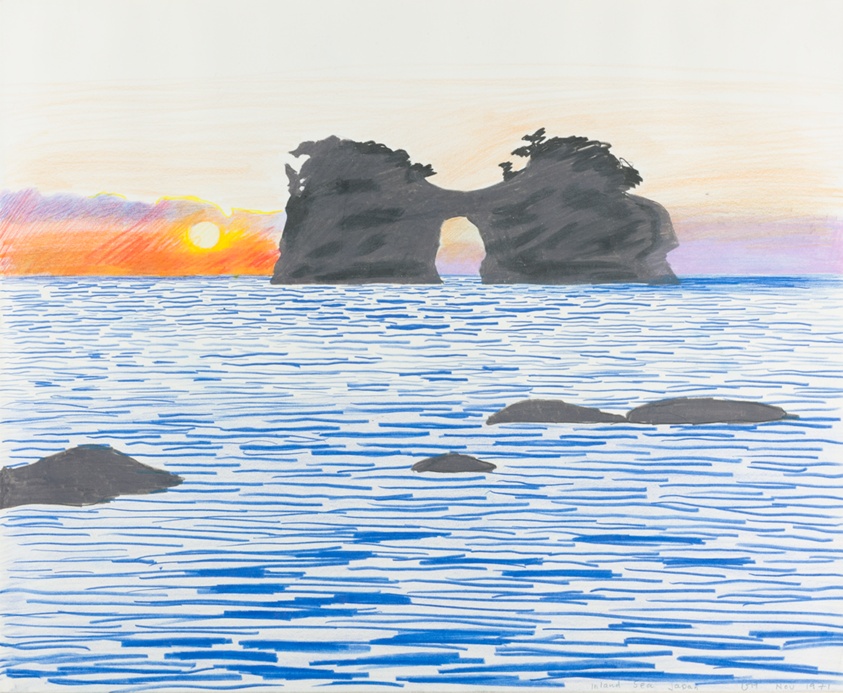
Inland Sea, Japan
Hockney's seascape employs repetitive, mechanical mark-making (horizontal lines for water, a geometric stone formation) that echoes commercial printing's visual language, using crayon to mimic serialized industrial representation.
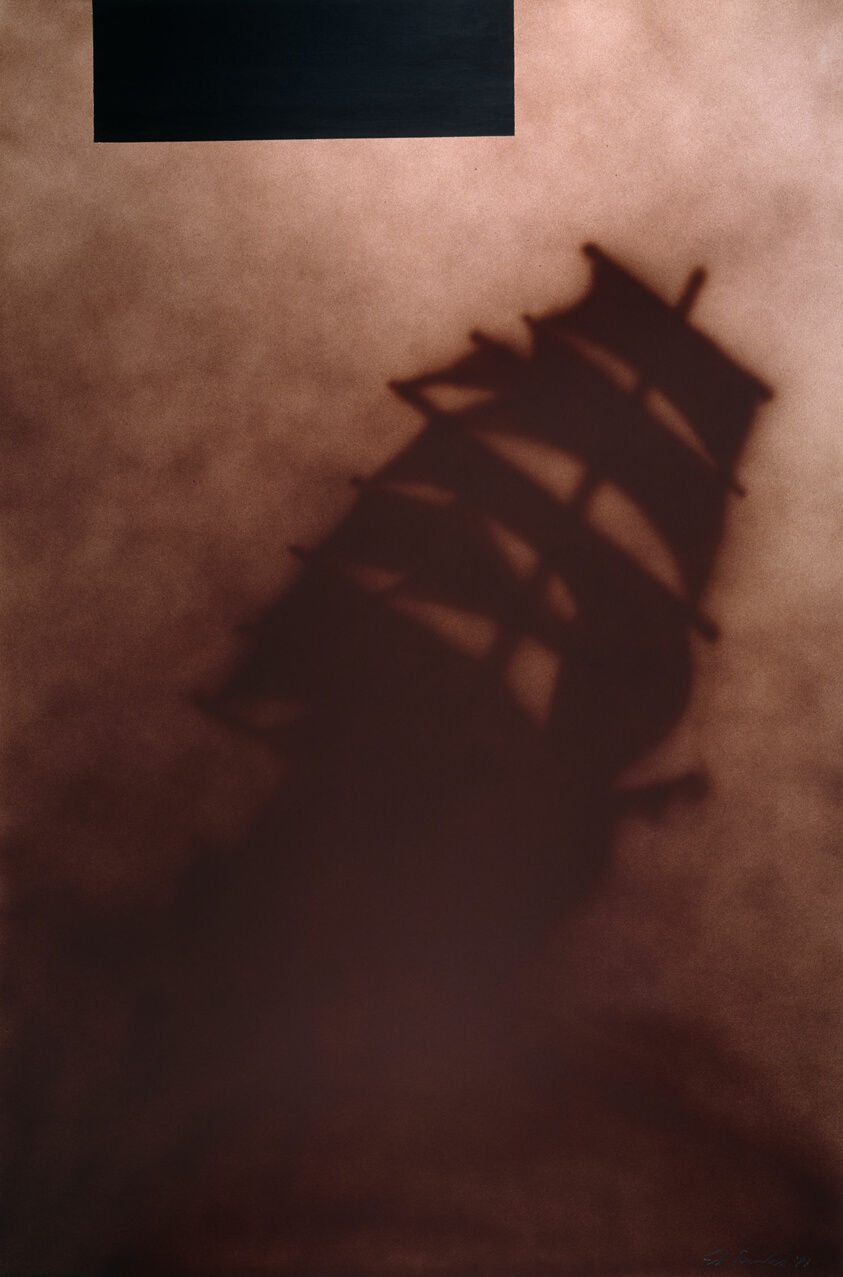
Untitled (Ship)
Ruscha's shadow-form of a ship projected on monochromatic ground uses acrylic and photographic illusionism to render an industrial object as pure silhouette, stripping narrative and context to expose the abstraction underlying documentary or advertising imagery.
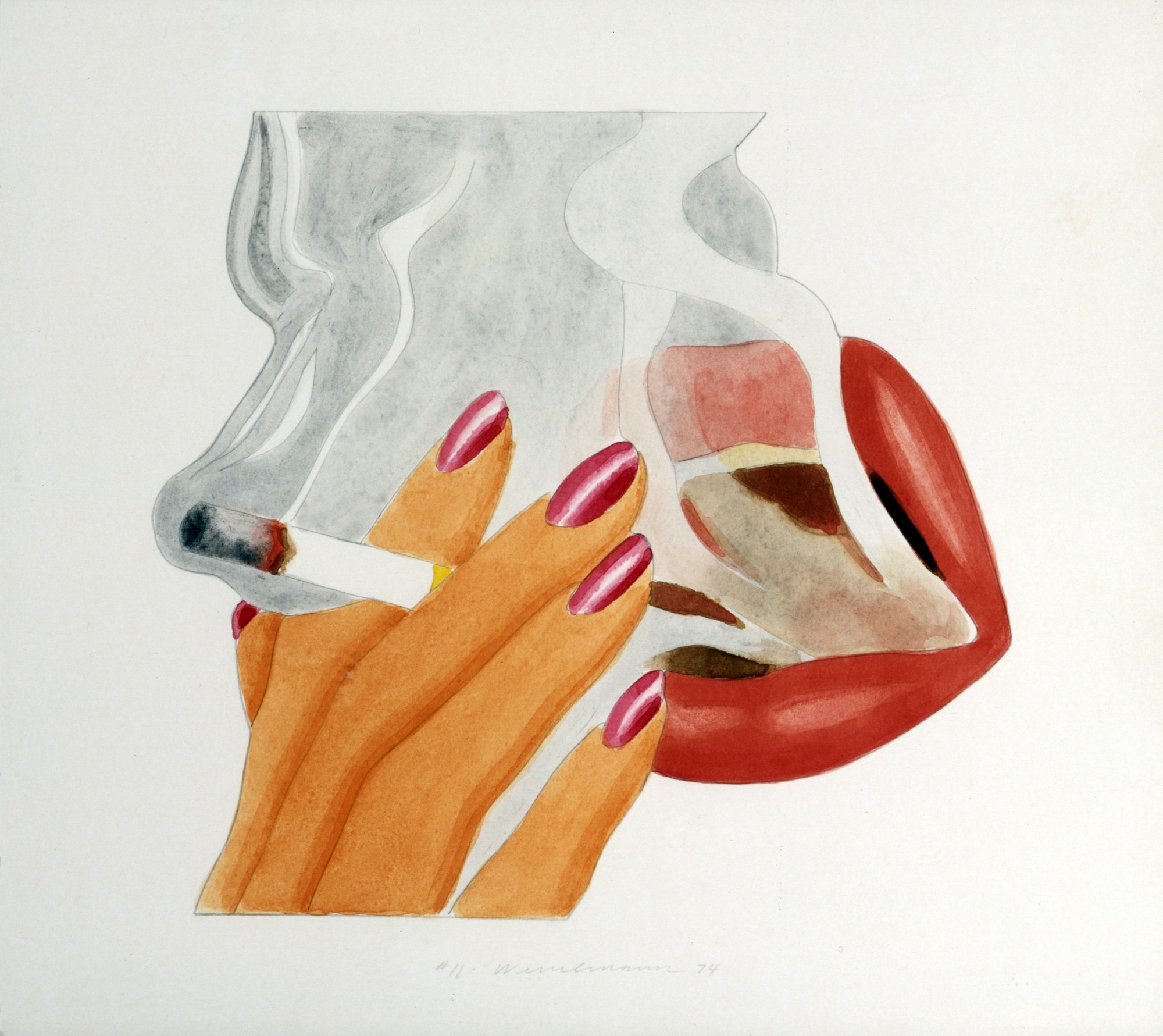
Open Ended Smoker
Wesselmann's composition of a woman's hand and smoking cigarette isolates fragments of the human body as commodity and symbol, using commercial acrylic and the close-up framing of advertisement photography.
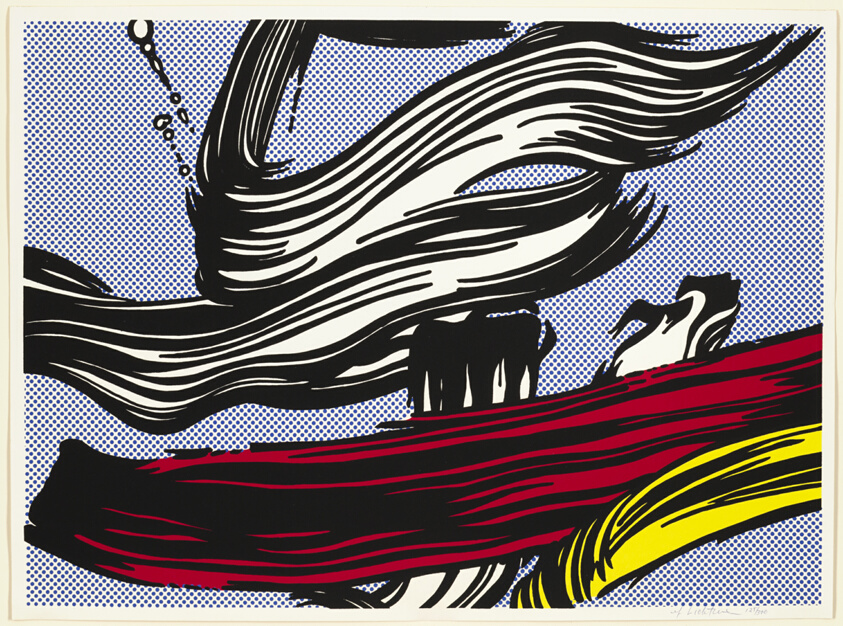
Brushstrokes
Lichtenstein's screenprinted brushstrokes mimic gestural expressionist painting through the mechanical halftone dot, making visible the gap between artistic intention and mass-reproduction technology.
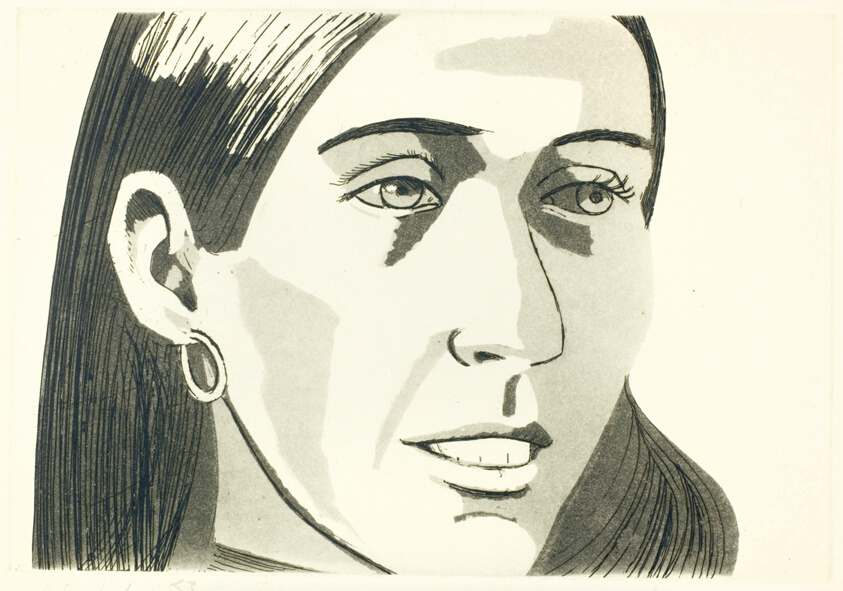
Harmony
Katz's etched portrait of a woman rendered in crosshatch abstraction uses the precision of traditional printmaking to create a face that hovers between likeness and formal design, echoing how commercial portraiture reduces identity to reproducible pattern.
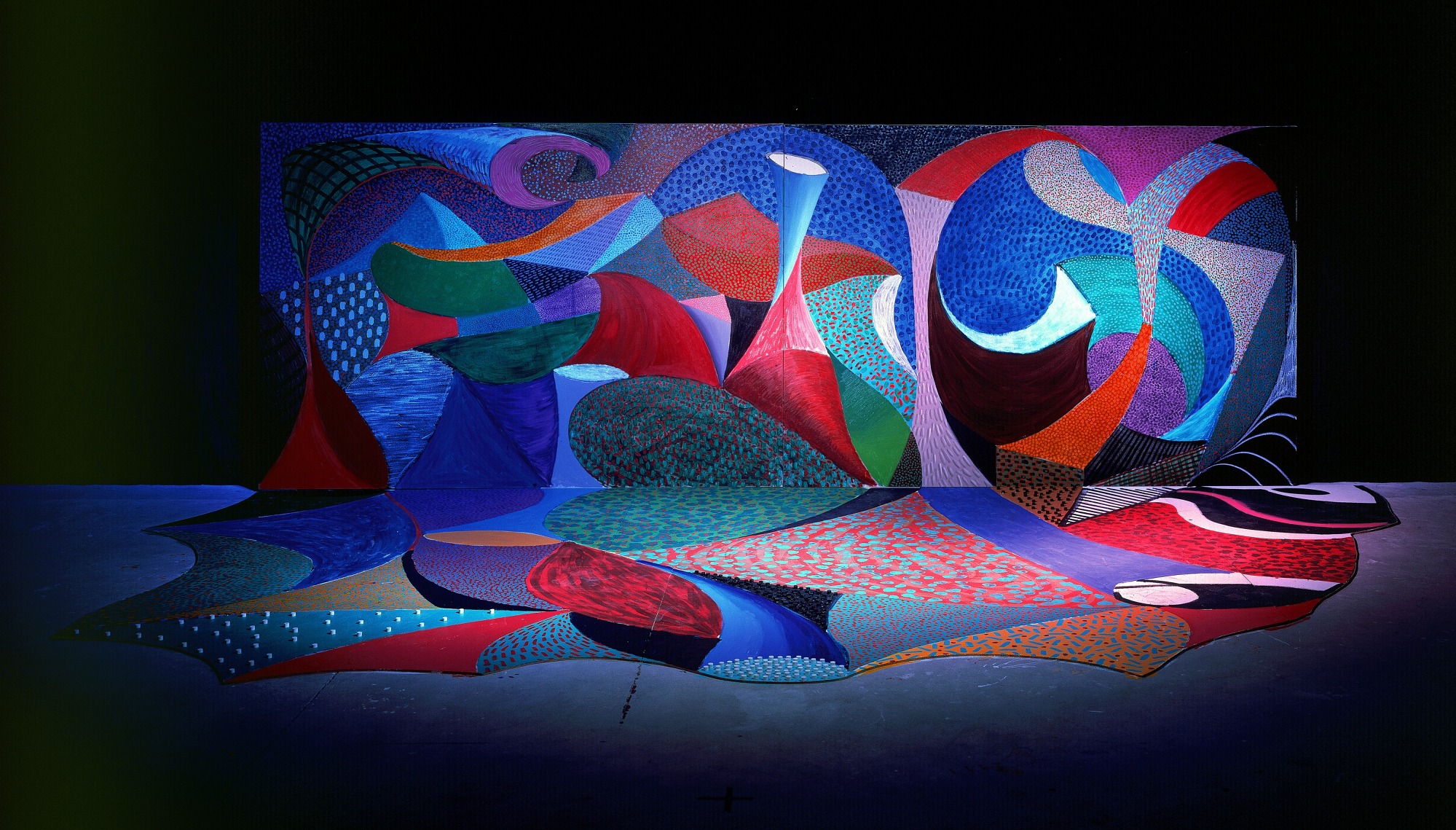
Snails Space with Vari-Lites, "Painting as Performance"
Hockney's multimedia construction of undulating forms and color-field canvas-panels transforms abstract modernism into theatrical, performative space, using mixed media to render the gallery itself as a site of commercial display.
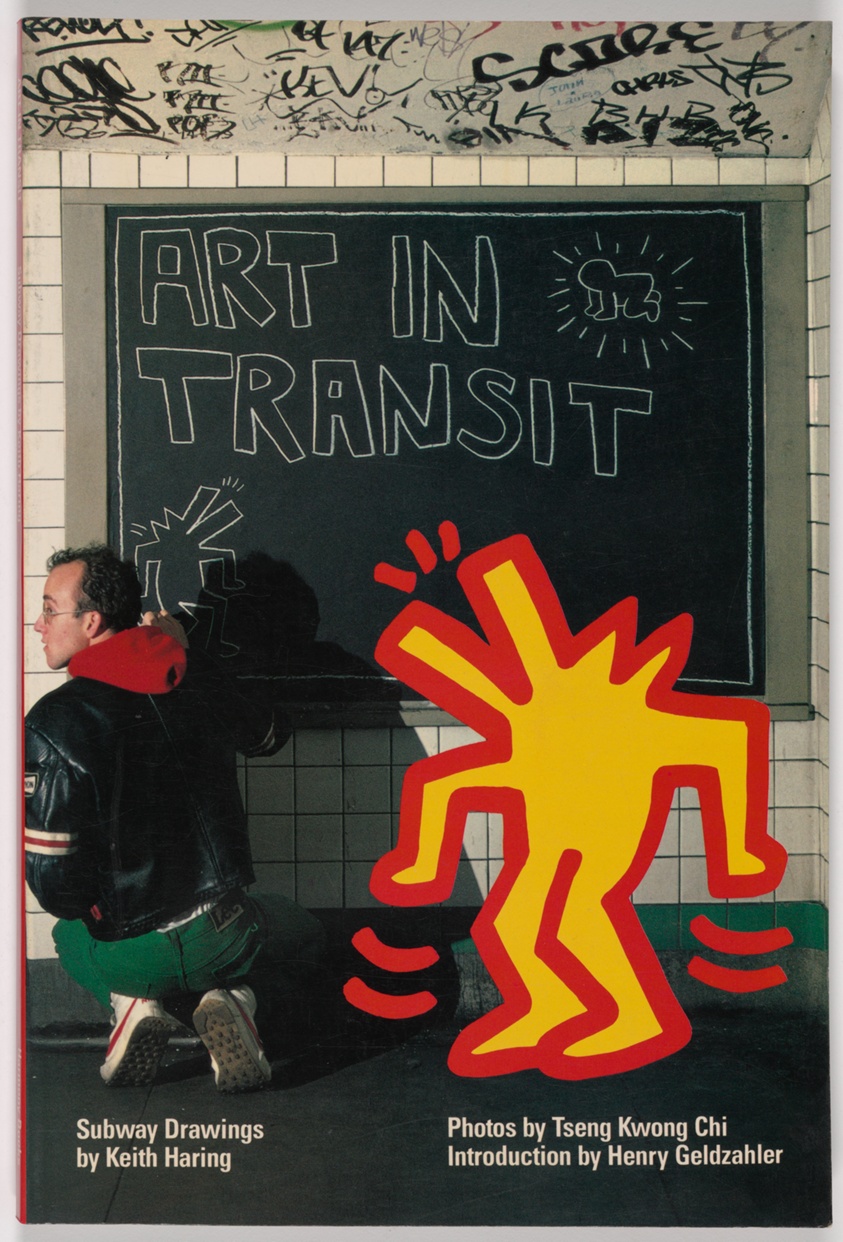
Art in Transit: Subway Drawings
Haring's subway-drawing documentation records the artist's act of producing unauthorized imagery in public transit, making visible the alternative visibility economies operating beneath official commercial signage.
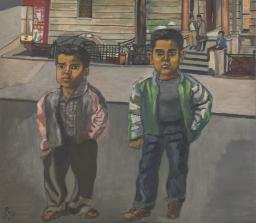
Dominican Boys on 108th Street
Neel's portrait of Dominican boys positions working-class and racially marginalized subjects within the art-historical genre of portraiture, using expressive figuration to assert the dignity of bodies typically excluded from gallery representation.
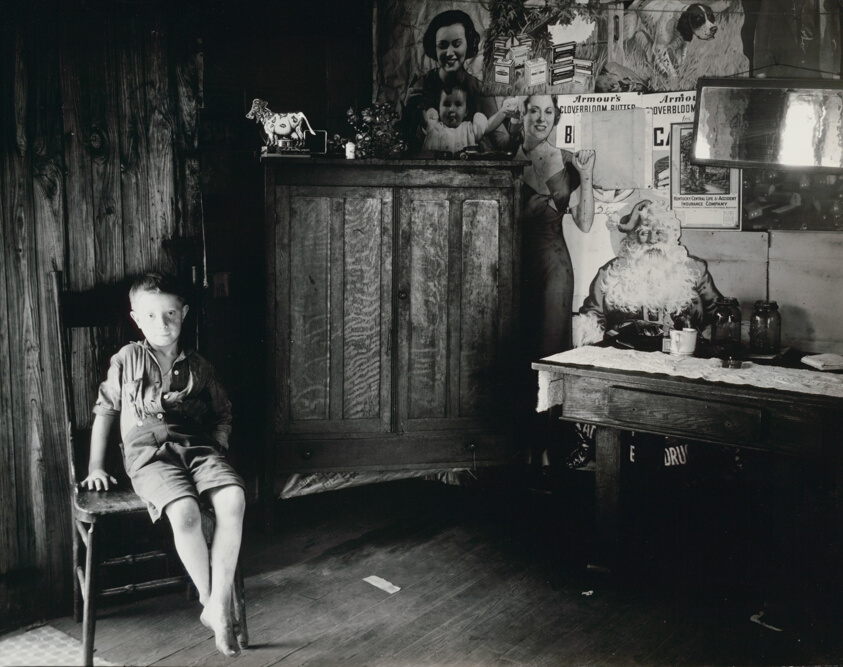
Coal Miner's House, Scott's Run, West Virginia
Evans' photograph of a coal miner's household interior documents domestic labor and rural poverty with unflinching clarity, using the realist photograph as a tool to make structural inequality visible within the frame of American modernity.
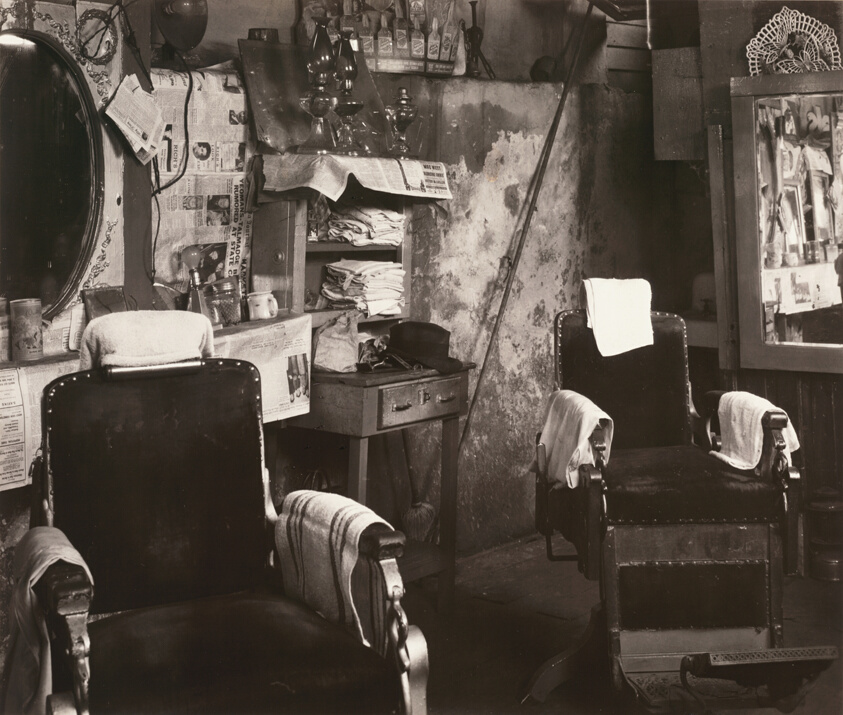
Negro Barber Shop Interior, Atlanta
Evans' interior of an Atlanta barber shop records African American labor and commercial space through documentary photography, using the medium to affirm the presence and dignity of a community-serving business routinely erased from mainstream visual culture.
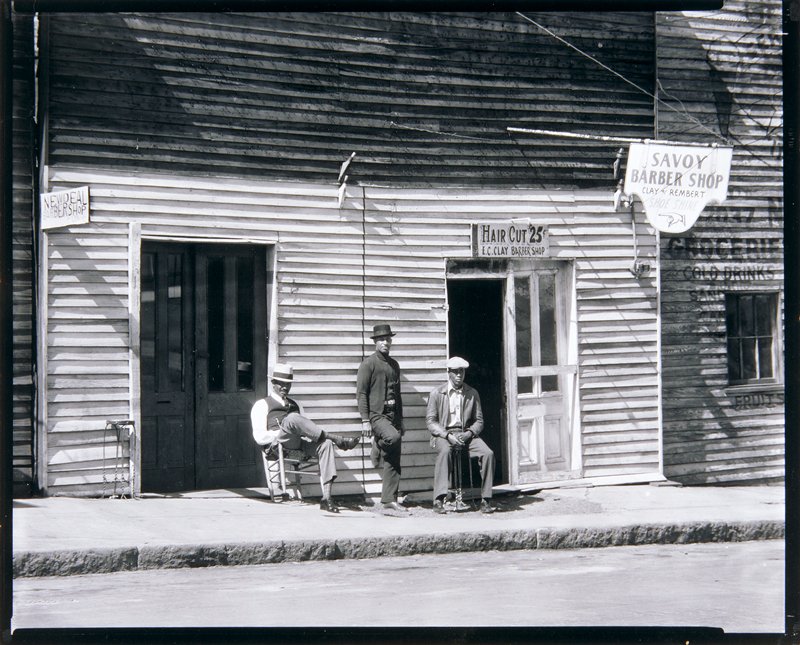
Street Scene, Vicksburg, Mississippi
Evans' street-front barber shop in Mississippi captures the spatial and social reality of segregated American commerce, using gelatin silver printing to preserve evidence of how segregation was architecturally and commercially visible.
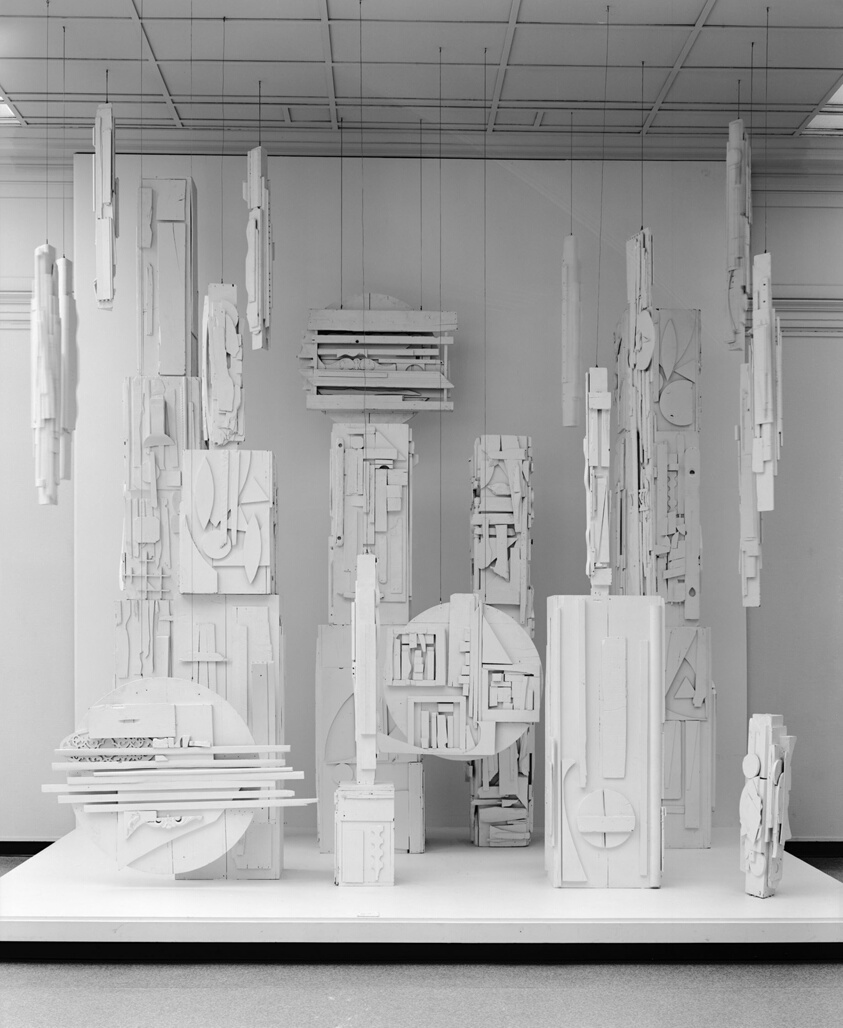
America Dawn
Nevelson's sculptural assemblage of painted wood fragments and found architectural elements transforms discarded industrial materials into monumental form, using scale and accumulation to assert the formal and historical presence of overlooked materials and spaces.
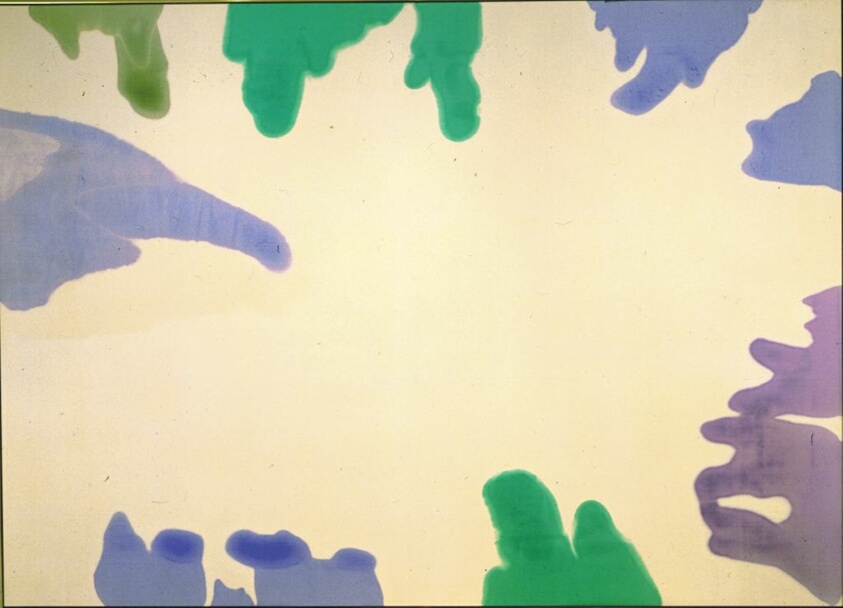
Circum I
Louis' acrylic resin poured and stained directly onto canvas creates optical color-field abstraction through industrial application methods, translating commercial paint technology into fine-art abstraction.
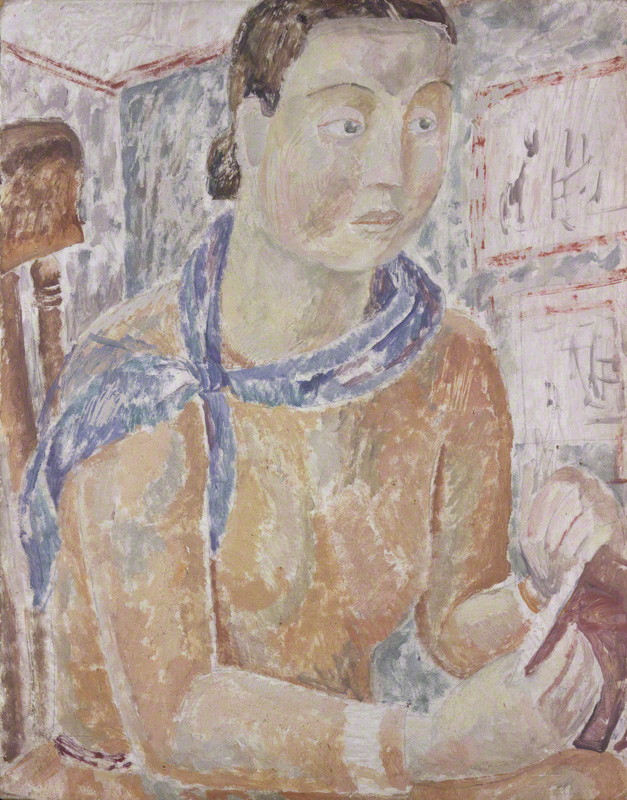
Jessica Dismorr
Dismorr's portrait uses oil paint to render a sitter's face with geometric abstraction and Vorticist angularity, asserting modernist formal invention while maintaining the portraiture tradition's commitment to individual presence and likeness.
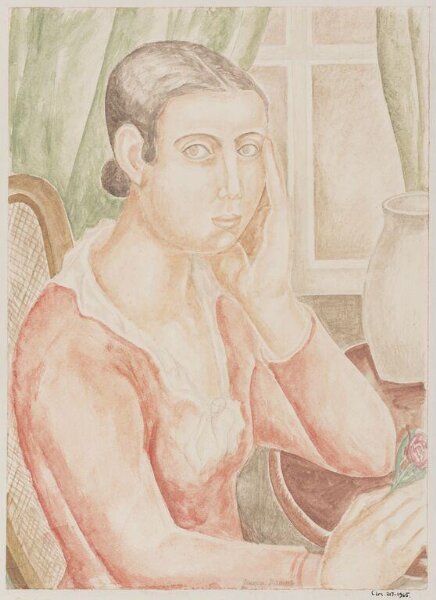
Self portrait
Dismorr's self-portrait employs watercolor with economical, direct brushwork to create a half-length figure, using traditional media to claim artistic authority and subjective interiority within early modernist practice.
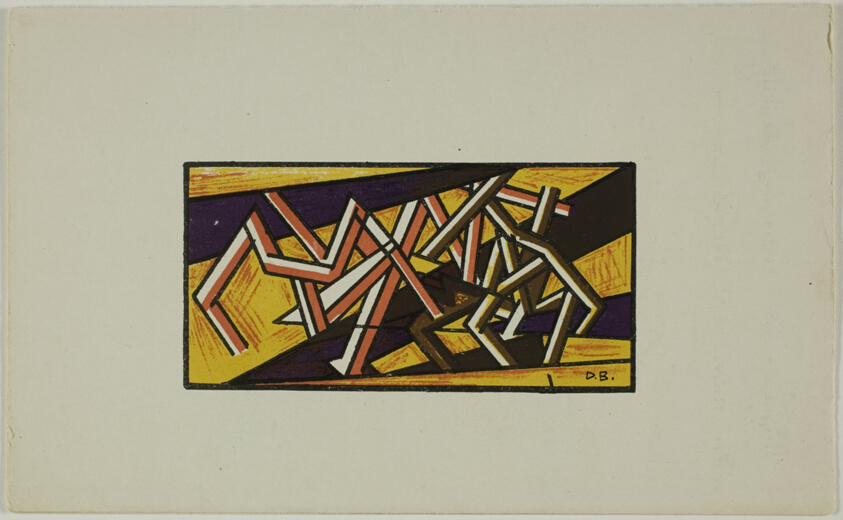
Sheet IV from Russian Ballet
Bomberg's Vorticist lithograph deploys fragmented geometric forms and intense color to represent movement and dynamism, using commercial printing's color separation to generate visual energy that exceeds representational description.
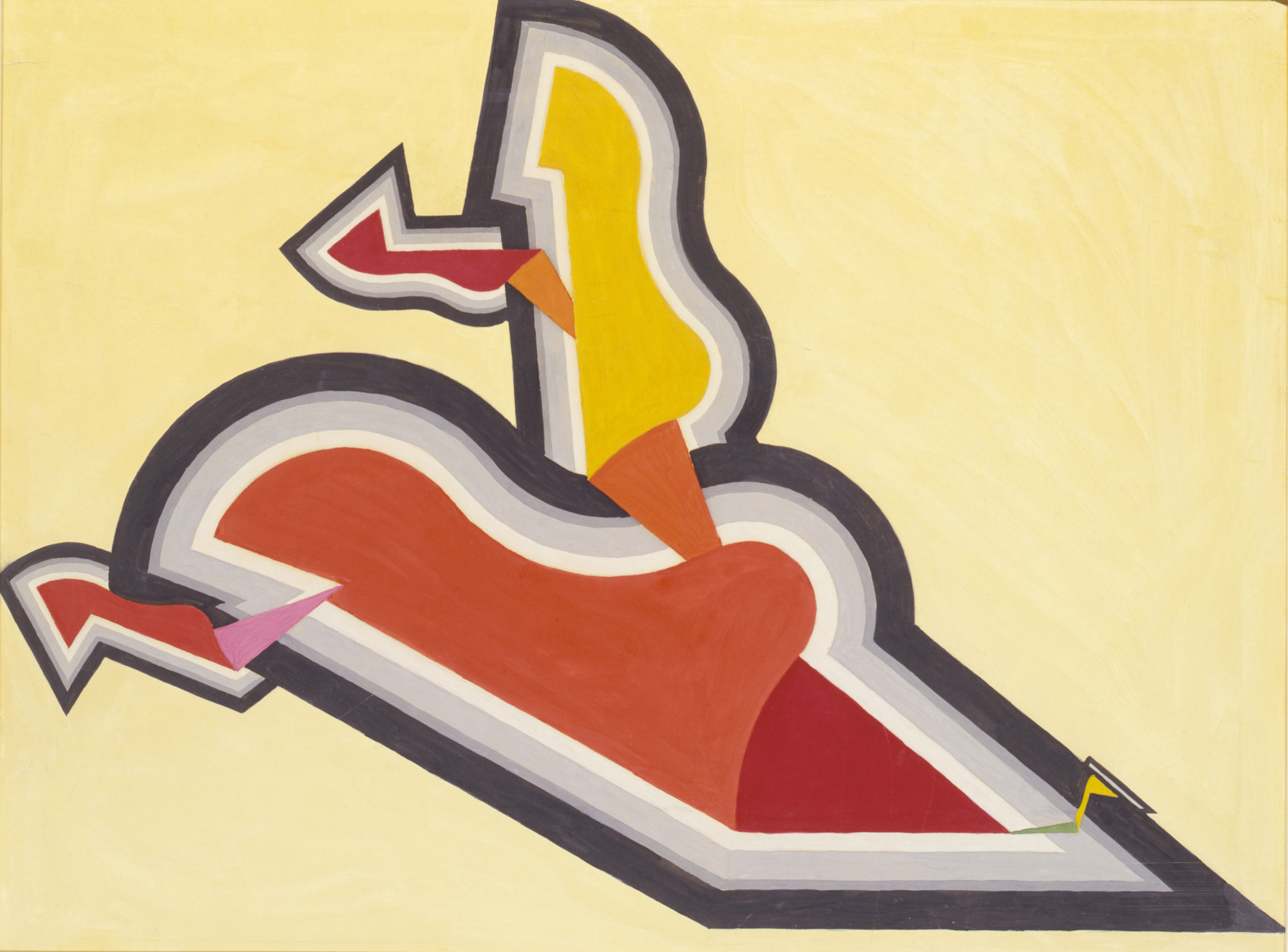
Study in Rhythm: Red and Gold
Schillinger's gouache composition of red and gold shapes explores rhythmic abstraction and color harmony through commercial media, using industrial design principles to structure pure form.
Portrait--Man
Deutsch's oil portrait renders a man's head in warm, earthy tones with structural solidity, using painterly technique to assert presence and psychological depth within modernist formal language.
Seated Woman
Henri's pencil drawing of a seated woman captures gestural immediacy and contemplative quiet, using graphic economy to convey figure and emotional register through line alone.
(Sketch of Group of Figures)
Zorach's pencil sketches of grouped figures construct forms through interlocking lines and spatial overlaps, using modernist abstraction to suggest human presence and interaction without fixed representation.

Portrait of Katherine S. Dreier
Goldthwaite's portrait of Katherine Dreier employs oil paint to render a woman of intellectual and artistic authority, using the portrait form to document and affirm the presence of a female collector and artist-advocate within modernism.
The Review

The exhibition announces itself as a history of visibility, and what it actually presents is messier and more interesting: a collision between commercial systems of representation and the artists who learned to sabotage them from within. That it works at all depends on a curatorial willingness to let Pop's bright surfaces coexist with documentary photography and early modernist portraiture without resolving the tensions between them.
Rauschenberg's "Dwan Gallery Poster" sits near Lichtenstein's "Sandwich and Soda, from X + X (Ten Works by Ten Painters)," and the comparison is immediate and productive. Both use screenprint and mechanical reproduction, but where Rauschenberg fractures his image into collaged fragments that refuse legibility, Lichtenstein commits to the hyperclarity of commercial illustration, enlarging a sandwich and soda bottle to monumental scale. The sandwich, flat and deadpan under halftone dots, becomes unrecognizable as food and registers instead as a formal problem: how to render appetite as pure design. That difference, fragmentation versus hyperclarity, generates the show's intellectual spine. Both strategies are ways of making the machinery of mass visibility strange from the inside.
The inclusion of Walker Evans' photographs repositions Pop as one strand in a longer American commitment to documentary realism and the politics of representation. Evans' barber shop interiors and street scenes are not Pop Art by any formal measure, but they belong here because they operate from the same conviction: that visibility itself is not neutral. Evans photographs black commercial spaces with the same unflinching attention that Pop artists enlarge commercial objects, insisting that what appears in the frame, a barber's interior, a miner's house, registers as culturally present and therefore as art. The arc from Evans' 1930s gelatin silver prints through Haring's subway drawings in the 1980s traces a political education: that the authority to circulate images is the authority to control whose lives become visible.
Hockney's works here demonstrate how thoroughly Pop's visual strategies outlasted the movement itself. "Inland Sea, Japan" uses mechanical, repetitive crayon mark to render water as pure pattern, while "Figures with Still Life, from The Blue Guitar" collapses three-dimensional bodies into linear schematic forms. Both works inherit Pop's graphic flattening but push it toward something more abstract. When you stand in front of Nevelson's "America Dawn", a monumental white wooden assemblage of architectural fragments and found objects, you encounter a different kind of visibility work: the transformation of discarded industrial materials into commanding sculptural presence. Nevelson's scale and accumulation assert that these overlooked forms deserved monumental space all along.
The exhibition loses its coherence slightly when it insists on including early-modernist portraiture by Dismorr, Bomberg, and Goldthwaite. These artists were working before Pop's emergence, and while their formal strategies sometimes anticipate Pop's graphic directness, their historical problem was different. They were claiming modernist artistic authority within traditions (Vorticist abstraction, portraiture) that still carried aristocratic and bohemian associations. Pop came later with a more radical wager: to embrace the visual language of commerce and mass reproduction not as a betrayal of art but as its only honest contemporary tool. The portrait works by Dismorr and Goldthwaite, skillful as they are, register here primarily as formal precedent rather than as works actively intervening in systems of visibility.
What lingers is the show's implicit argument about American art and labor. Alice Neel's "Dominican Boys on 108th Street" and Keith Haring's "Art in Transit" both depict and sometimes celebrate working-class, marginalized, and ethnically specific communities. Neel does this through expressionist figuration; Haring through street performance and unauthorized public art. Both refuse the gallery's fiction of disembodied beauty. When you move from Lichtenstein's levitating sandwich to Evans' photograph of a man sitting outside a barber shop, or to Neel's portrait of boys on an uptown street, you begin to see that Pop's political argument was always about who gets to be rendered at all, and in what medium. Commercial visibility excludes most people. Pop seized that machinery to make the excluded visible. That it often did so through celebration of commerce and consumer goods becomes, in retrospect, a productive contradiction rather than a sell-out: you use the enemy's tools because they're the only tools sharp enough.
- +Genuinely provocative pairing of Pop artists with documentary photographers and modernist portraitists forces viewers to see commercial reproduction techniques across historical contexts
- +Thematic coherence around visibility and representation is intellectually earned, grounded in formal choices (Lichtenstein's flatness, Evans' documentary precision, Nevelson's scale) rather than just labeled assertions
- +Range of media and technique is substantial: screenprint, etching, acrylic, photography, sculpture, drawing across 40+ years
- –Early-modernist inclusion (Dismorr, Bomberg, Goldthwaite) feels historically unjustified; these artists' formal innovations precede Pop's political wager about commercial visibility
- –Show's argument works only if you accept that visibility and marginalization are the primary themes, but several works (Louis's color-field, Nevelson's abstract assemblage) engage those questions obliquely if at all
- –Brief documentation and minimal work count compared to stated ambition; a show about visual systems and mass reproduction could sustain deeper formal analysis of any single work
- Barbara Kruger →Kruger's text-and-image collages extend Pop's critique of mass visibility into the 1980s and beyond, using advertising's own graphic language to question power, representation, and who controls the message.
- Cindy Sherman →Sherman's photograph-based work interrogates how commercial media constructs identity and the female body, using the visual strategies of advertising and film publicity to expose and destabilize them.
Curious what another critic would make of this show?