Hands, Witness, and Refusal: Labor, Resistance, and Memory from Blake to Now
Nineteen artists across four centuries who made work visible when power sought to erase it.
“20 artists dealing with Labor & Class and Resistance & Protest and Memory & History”
This exhibition traces the refusal to let labor disappear. It begins with Blake's mythic vision of revolutionary force in the early 19th century and moves through Realism's insistence that working bodies and handmade objects deserve serious artistic attention. The 1930s emerges as a turning point: American artists working under federal programs documented furniture, textiles, and domestic ornament with the precision of museum registrars, treating the made object as evidence of human skill and dignity. Across the 20th century and into the contemporary moment, artists have inherited this double practice: showing work itself, and showing resistance to it, whether through the body (Kollwitz, Mendieta), political symbol (Lissitzky, Forain), or the deliberate refusal of traditional representation.
The show is not about the nobility of suffering or the beauty of labor. It is about how artists have insisted on the presence of human effort in a world structured to make that effort invisible. From Blake's chained Orc to Mendieta's blood on a wall, from Daumier's grotesque satirist to Hopper's cat boat riding low in the water, each work registers a commitment to witness what the powerful prefer to forget.
Walk through in order, 20 works.
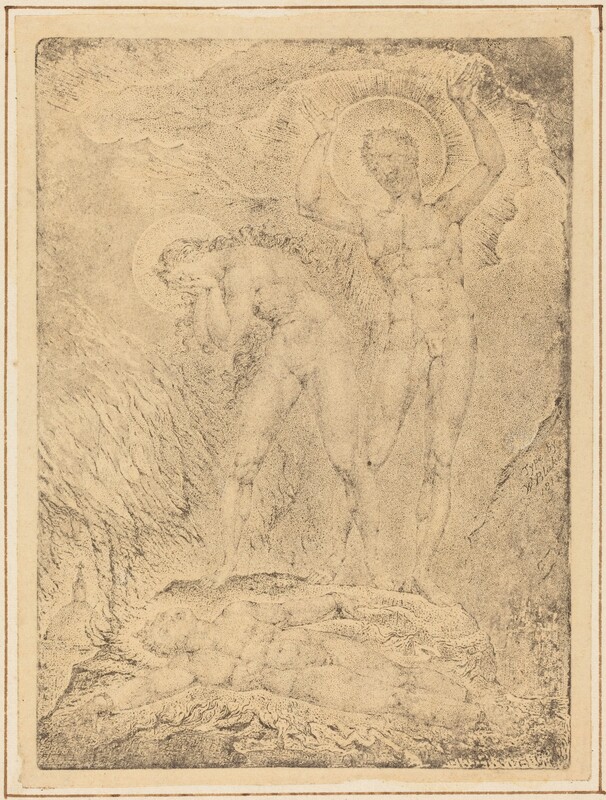
The Chaining of Orc
Blake renders revolutionary violence as embodied force, his Orc chained and taut with rage against constraint, the relief etching's deep blacks and fine hatching pressing the viewer toward the physical fact of struggle.
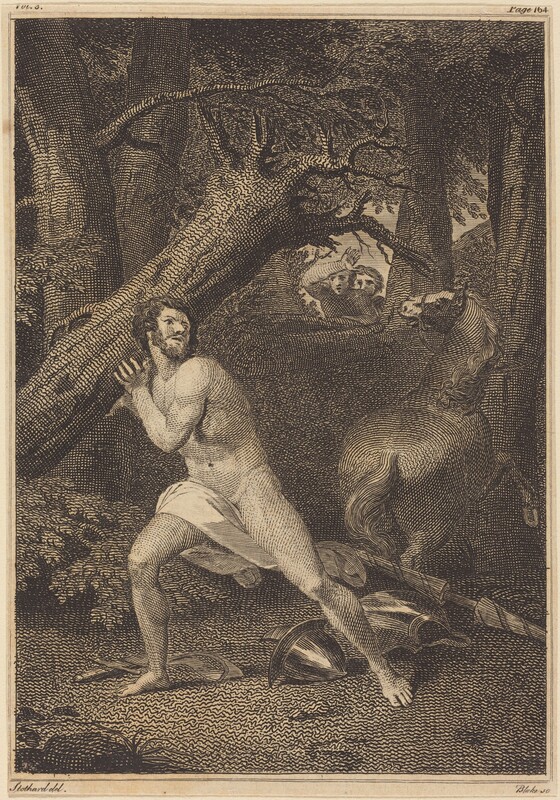
Orlando in a Fury Tearing up Trees
Blake's Orlando tears at trees in fury, his body a vector of uncontainable energy and resistance to confinement; the engraving's violent line work mirrors the subject's refusal to accept limits.
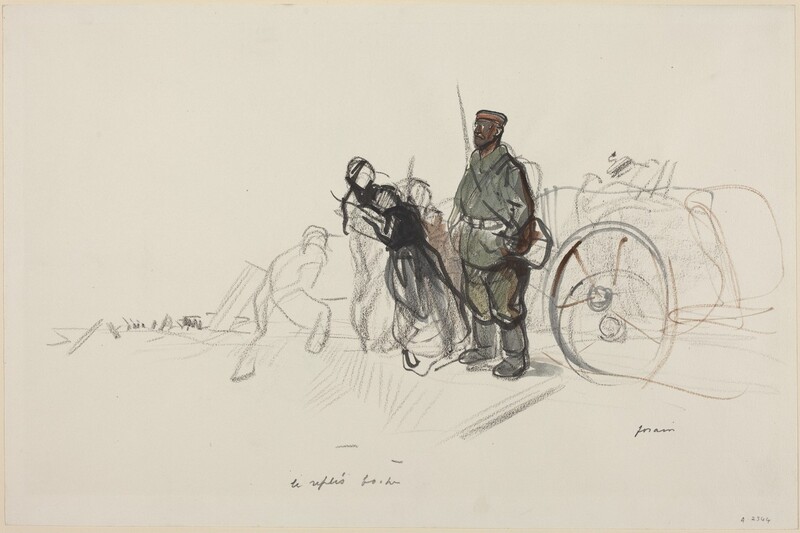
a) Le replis boche (recto); b) Sketch for the Figure of the German (verso)
Forain's wartime sketch captures a German soldier in collapse, the rapid ink and watercolor registering both the soldier's humanity and the artist's urgent need to document what the military machine produces: broken men, not victories.
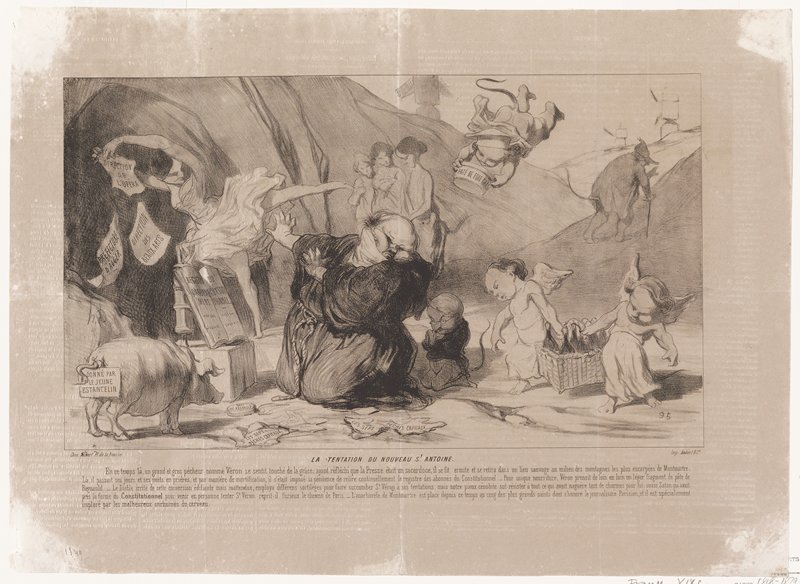
La Tentation du Nouveau Saint Antoine (Le Dr. Veron)
Daumier's grotesque lithograph lampoons authority and pretense in the figure of Dr. Veron, using exaggeration to expose how power masks itself behind respectability and false learning.
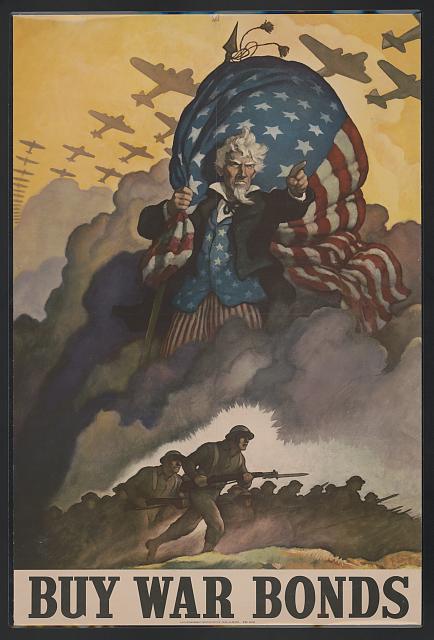
Buy war bonds
The wartime poster image of Uncle Sam bearing the American flag, surrounded by military aircraft, transforms patriotic myth into labor and sacrifice; the artist's task here is propaganda, yet the image also renders visible the cost of the war effort being sold.
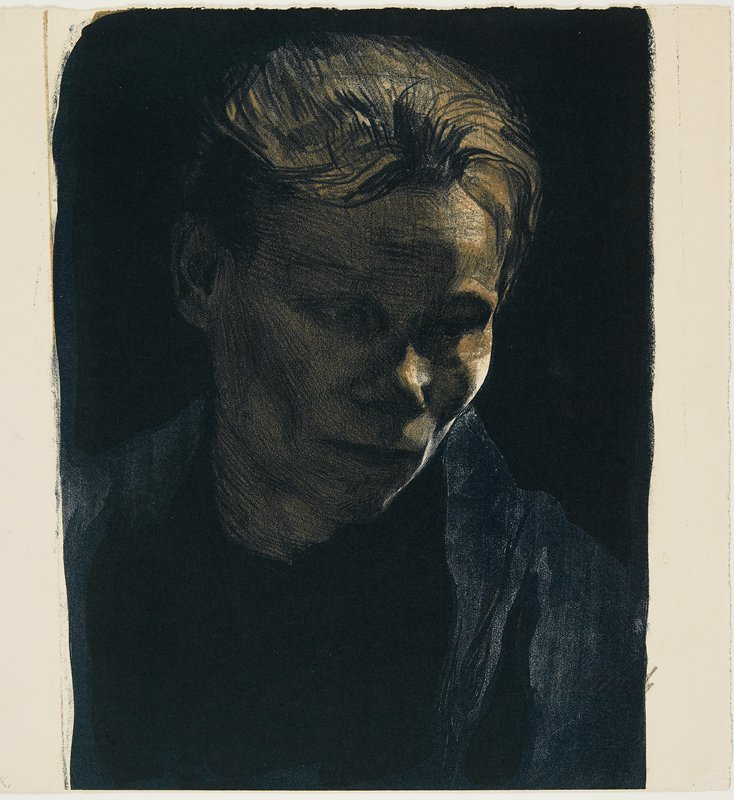
Portrait of a Working Woman with Blue Shawl
Kollwitz's lithograph renders a working woman's face in shadow and deep blue, her expression inward and weary; the medium's tonal depth and the artist's empathetic line insist on the interior life of labor.
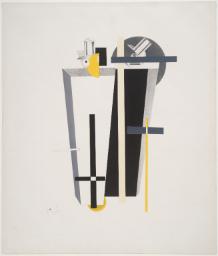
9. Gravediggers
Lissitzky's gravediggers geometric and monumental in the lithograph's bold forms and stark composition, the work honors the dignity of necessary, unglamorous labor through the language of revolutionary modernism.
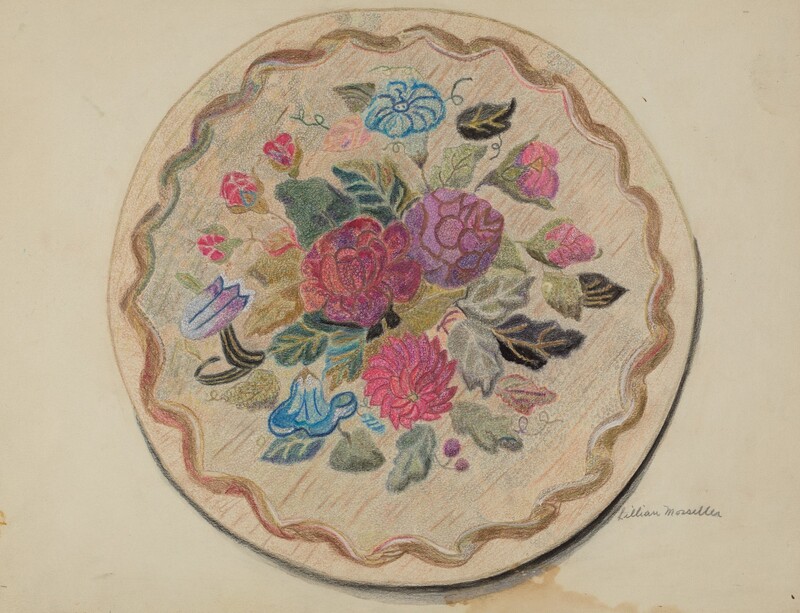
Hooked Rug
This design for a hooked rug, rendered in colored pencil and watercolor, documents the handmade ornament of domestic life as worthy of curatorial attention; Mosseller treats the craft object as a subject deserving the precision of museum cataloging.
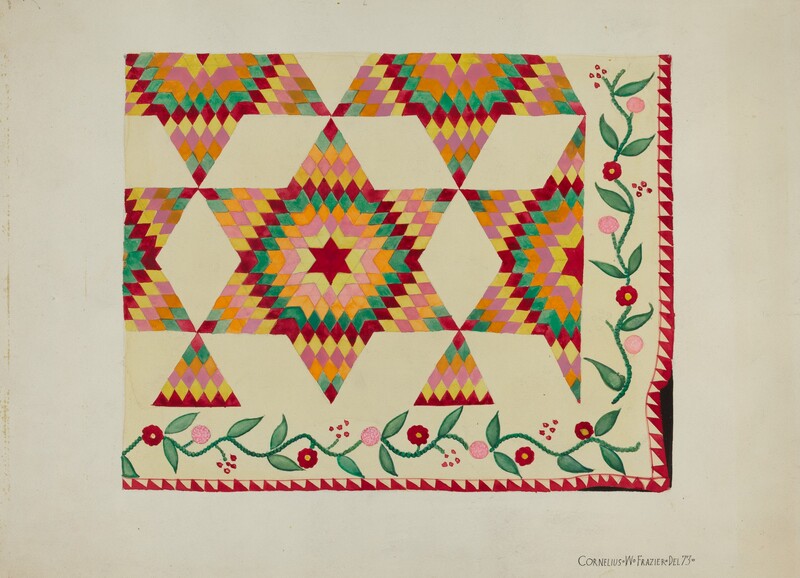
Applique Quilt
Frazier's appliqué quilt design, rendered in watercolor and graphite, records the geometric precision and color intelligence of American textile tradition; the work itself becomes evidence of skill and cultural memory.
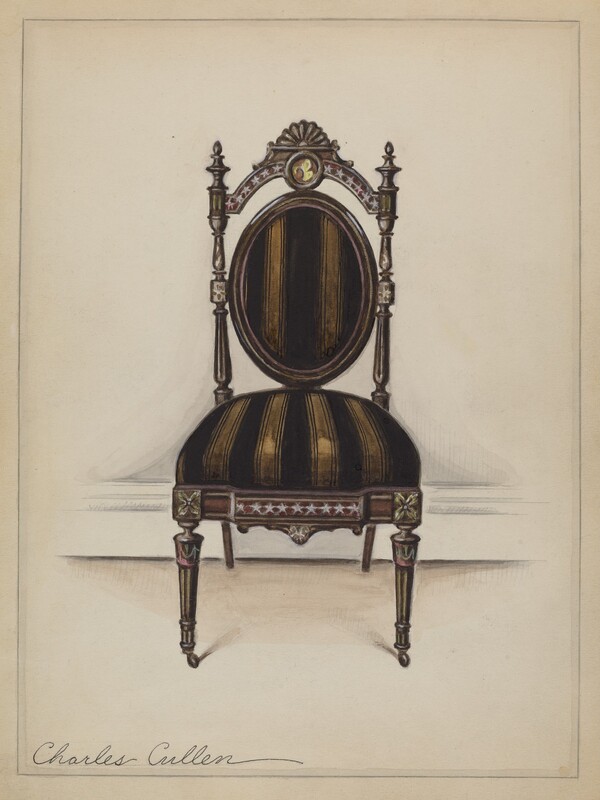
Chair (one of a pair)
Cullen's drawing of a parlor chair, executed in watercolor and mixed media, elevates furniture design to the status of serious artistic inquiry, treating the made object as a site of both beauty and the labor that produced it.
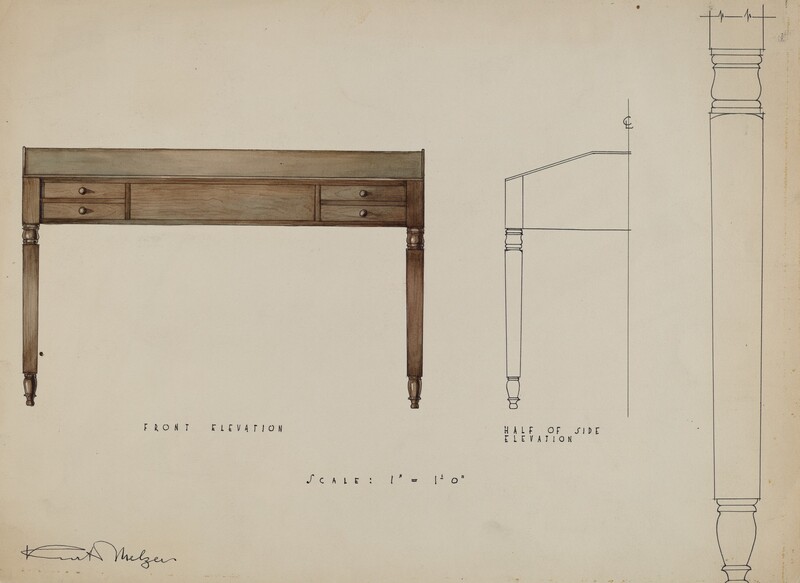
Accounting Desk
Melzer's technical drawing of an accounting desk, rendered in watercolor and graphite with architectural precision, documents the furniture of invisible administrative labor; the work honors the object by rendering it with exactitude.
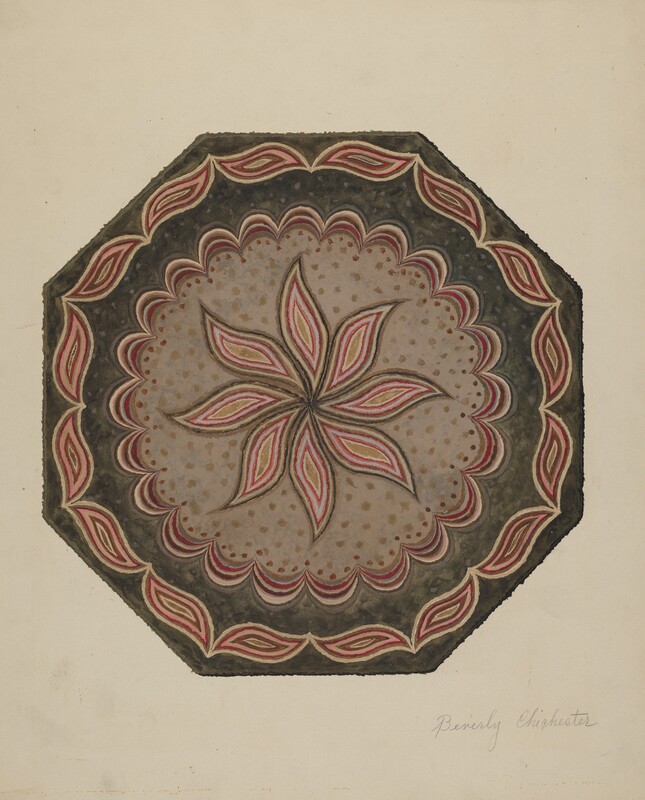
Octagonal Hooked Rug
Chichester's octagonal hooked rug, in watercolor and graphite, records the geometric and floral intelligence of American domestic textile tradition; the concentric pattern and careful symmetry preserve what handwork achieves.
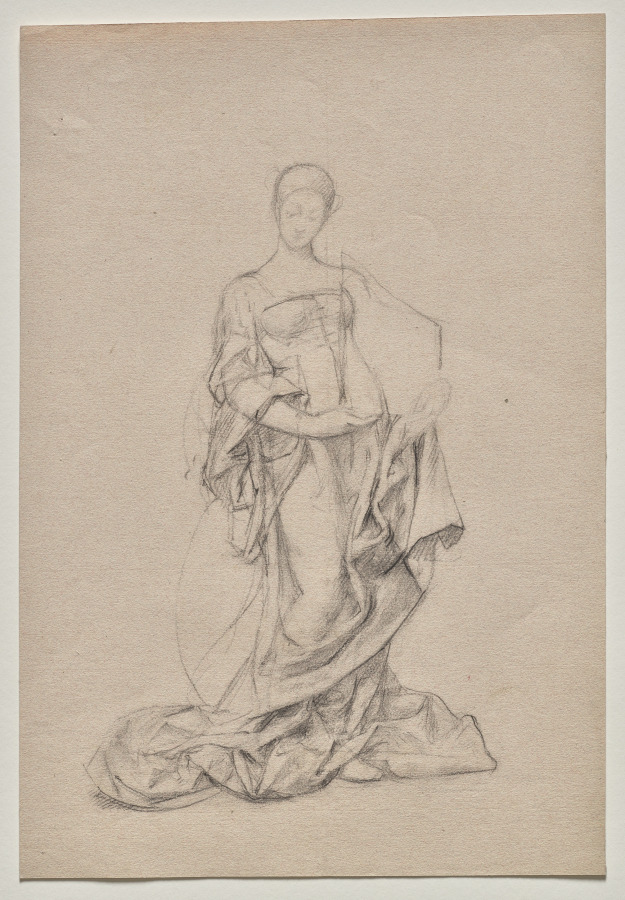
Architecture
Bracquemond's chalk drawing of a draped female figure, rendered with classical restraint and assured line, recovers the female body as a subject of architectural grace; the medium's delicacy and the artist's control assert presence and agency.

Robert Green Ingersoll (1833–1899) with his Grandchildren
Spencer's portrait of Robert Green Ingersoll with his grandchildren, rendered in oil with intimate warmth, depicts the intellectual life and familial affection of a man known for his activism and resistance to religious orthodoxy.
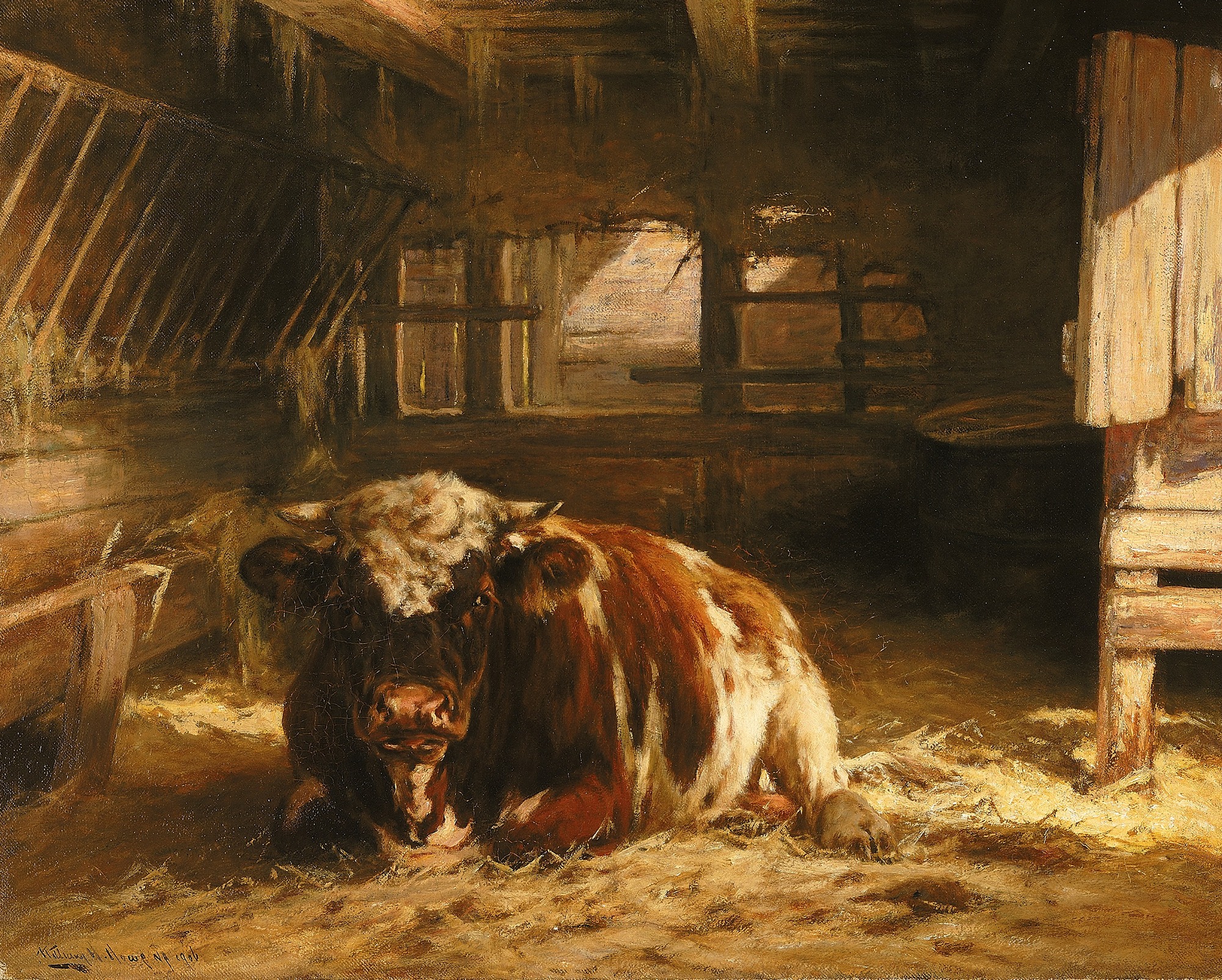
My Day at Home
Howe's painting of a cow at rest in a barn, rendered in warm oils and domestic light, retrieves the labor and presence of animal life in the American agricultural economy from invisibility.
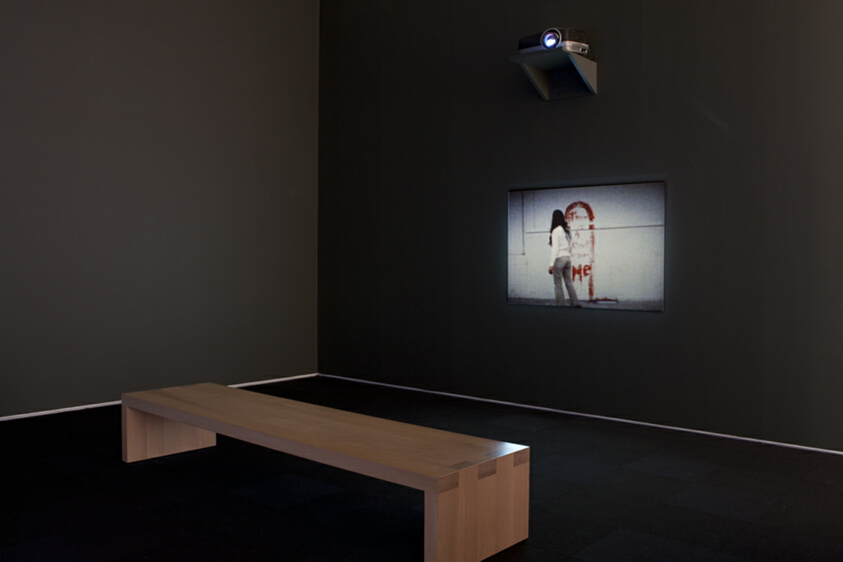
Blood Sign
Mendieta's video of her body marked with blood on a wall, silently unfolding, makes visible the female body as a site of resistance and witness; the ephemeral medium and the body's vulnerability assert presence against erasure.
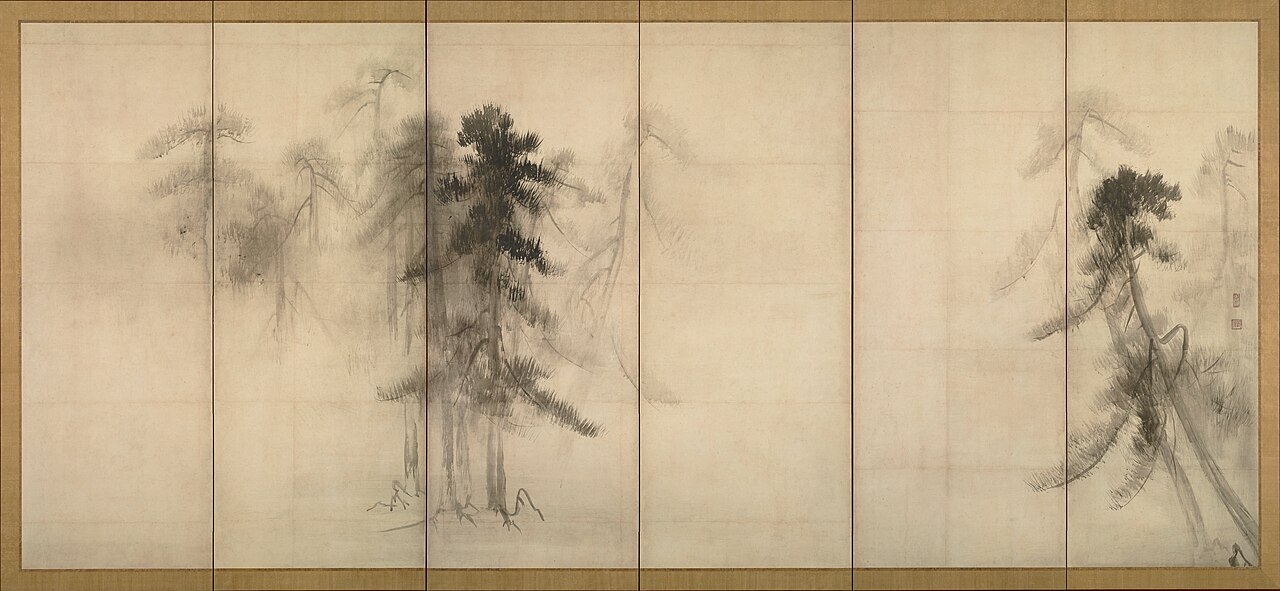
Pine Trees
Tohaku's ink painting of pine trees, rendered across six panels with extraordinary atmospheric subtlety, demonstrates that labor and witness operate across cultures and centuries; the work's minimalism and control register the artist's hand and intention.

Automotive Industry (mural, Detroit Public Library)
Beerbohm's mural for the Detroit Public Library depicts workers in the automotive industry, their bodies and tools rendered in narrative grandeur; the public scale and the artist's social realist commitment make labor the subject of monumental attention.
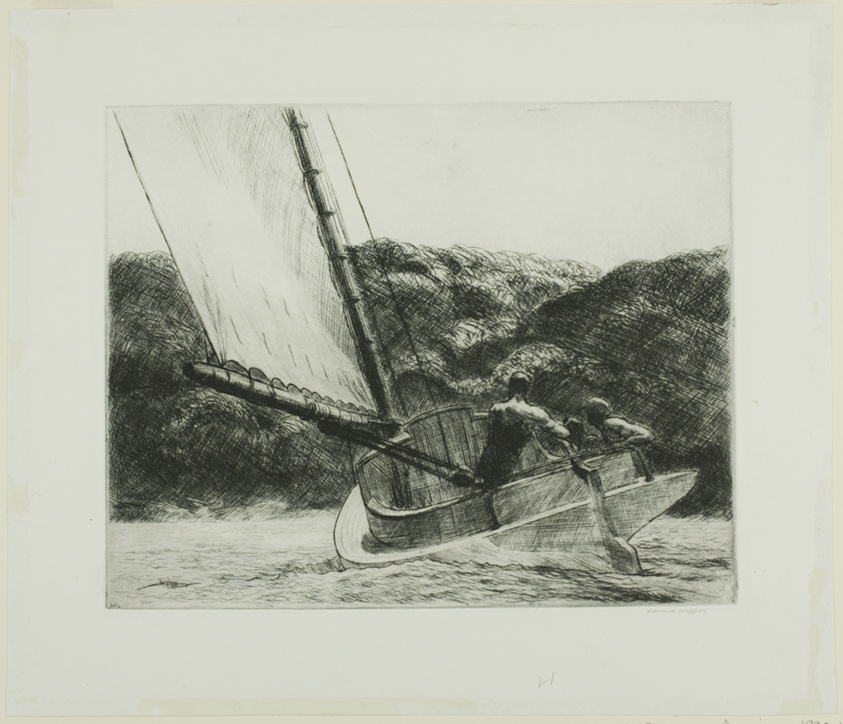
The Cat Boat
Hopper's etching of the cat boat riding low in the water, rendered with precise line and atmospheric shadow, captures the vulnerability and dignity of a working vessel; the print's technical mastery and spare composition transform labor into formal beauty.
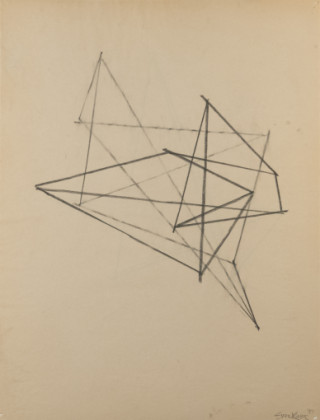
Untitled
Keister's untitled drawing of overlapping geometric forms in charcoal on newsprint, spare and abstract, registers the artist's hand through line and construction; the work's refusal of figuration or narrative insists on the autonomy of formal making itself.
The Review

This show wants to argue that four centuries of artists have refused to let labor disappear from view. It is an argument worth making, and most of the time the work in the room actually makes it.
Start with Blake. The Chaining of Orc and Orlando in a Fury Tearing up Trees are bodies in extremity, rendered through relief etching and engraving respectively, and in both you see Blake's line doing the work of resistance itself: the mark is violent, urgent, refusing ease. Orc is chained and thrashing; Orlando tears at trees. The technique itself embodies refusal. This is not Blake celebrating the beauty of struggle. This is Blake insisting that struggle is real, that bodies do things to resist constraint, and that an artist can register that reality through the precision of line and tone.
The Realism section holds up less evenly. Daumier's La Tentation du Nouveau Saint Antoine (Le Dr. Veron) is biting satire rendered through lithography's gritty directness, and the grotesque distortion of the doctor's face accomplishes what caricature should accomplish: it makes the target's pretension visible and therefore fragile. But Forain's wartime sketch, a) Le replis boche (recto); b) Sketch for the Figure of the German (verso), feels thinner than it might because it asks us to care about the German soldier's suffering without quite earning that sentiment through the image alone. The rapid watercolor and ink register urgency, but the emotional claim exceeds what the form delivers.
What transforms the show is the 1930s section. These are mostly design studies and technical drawings: Mosseller's Hooked Rug, Frazier's Applique Quilt, Cullen's Chair (one of a pair), Melzer's Accounting Desk, Chichester's Octagonal Hooked Rug. They are rendered in watercolor, graphite, colored pencil. To a contemporary eye habituated to Instagram and rapid consumption, these works can read as almost unbearably patient. But that patience is the point. These artists were working under the WPA and related programs, and their task was to document the material culture of ordinary American life with the same precision that a museum curator might bring to a medieval altarpiece. The hooked rug is rendered as seriously as an old master drawing. The chair is studied with the attention due a work of architecture. This is not sentiment. This is a curatorial and political decision: to treat handmade objects as evidence of human skill and agency in a moment when the economy was collapsing and labor was being erased from value.
The show moves unevenly from there. Kollwitz's Portrait of a Working Woman with Blue Shawl is brilliant: the color lithograph's deep tones and the artist's empathetic line register the interiority of exhaustion without sentimentalizing it. Lissitzky's 9. Gravediggers transforms the gravedigger into a geometric monument, which is a different kind of political work: not empathy, but the assertion that the worker deserves monumentality. Both strategies are valid. Both appear in this show.
Then there is the question of what gets included at all. Bracquemond's Architecture is a figure study in chalk, a drawing of a draped woman. It is beautifully made. It does not belong in a show about labor and resistance. The woman is not shown at work; she is a classical study, a figure from artistic tradition. Spencer's portrait of Robert Green Ingersoll with his Grandchildren is a warm family scene by an American painter who deserves recovery from obscurity, and Ingersoll himself was a free-thinking orator who resisted religious orthodoxy. But the painting depicts domestic affection and intellectual life, not labor. Howe's My Day at Howe shows a resting cow in a barn lit by golden afternoon light. The cow has labored, presumably, and the barn is a working space, but what we see is repose and visual beauty, not the resistance or witness that the show's premise proposes.
These inclusions matter because they dilute the curatorial argument. A show about labor and resistance should commit to depicting labor, witnessing its erasure, or showing refusal of it. Instead, what emerges here is sometimes a show about beauty and dignity, which is a different proposition. Dignity is not insignificant, but it is not resistance. The show is at its strongest when it refuses that softening.
Mendieta's Blood Sign, a Super-8 video transferred to digital, shows the artist's body marked with blood on a wall, the image silent and unflinching. It lasts four minutes and forty seconds, which is longer than you might expect. That duration forces the viewer to sit with discomfort, to register the body as a site of vulnerability and witness. Hopper's The Cat Boat, an etching rendered with precise line and atmospheric shadow, shows a working vessel sitting low in the water, its form battered by use. The print's spare composition and technical mastery transform a subject that could have been sentimental into something austere and dignified. These works do what the show promises: they make presence visible in the face of systems that prefer erasure.
Tohaku's Pine Trees, a six-panel ink painting from 1550, appears late in the show. The trees are rendered with extraordinary atmospheric subtlety, and the work demonstrates that this commitment to witness and skill operates across centuries and cultures. The inclusion of this work suggests that the show's argument might extend beyond Western labor history into a broader human commitment to marking presence through line and form.
Beerbohm's Automotive Industry (mural, Detroit Public Library) from 1940 renders workers in the auto industry at monumental scale. The work is confident in its political assertion: labor deserves public grandeur. But the monumental style itself, with its heroic workers and narrative clarity, can elide the actual conditions of industrial labor. The show knows this, and the placement alongside other strategies of representation suggests that monumentality is one political choice among several.
The weaknesses are real. The curatorial frame sometimes softens into "dignity" when it should stay committed to "resistance and refusal." A few works dilute rather than sharpen the argument. The show's reach across four centuries and multiple cultures is admirable but sometimes produces tonal unevenness: Blake's rage sits uneasily with Bracquemond's classical restraint, even if both are beautifully executed.
But the strongest works in this show accomplish something important: they insist that the hand matters, that skill matters, that the effort of making something is a form of presence that capitalism structurally attempts to erase. They do this through radical commitment to the specificity of the medium and form. Blake's etching line doesn't celebrate labor; it shows what resistance looks like when you put a mark on a plate. Mosseller's patient graphite rendering of a hooked rug doesn't beautify working life; it preserves what the worker made against the moment's urgent forgetting. Hopper's spare etching doesn't idealize the working boat; it renders it with the attention due a fact that matters.
That is the show's real accomplishment. Not that labor is beautiful. But that artists have known how to make labor visible through the depth of their own work, and that visibility itself is a form of resistance.
- +The 1930s WPA design studies are genuinely powerful in their patient commitment to treating handmade domestic objects as worthy of curatorial attention and technical precision.
- +Blake's two works establish a formal language of refusal through line and etching technique itself, not through narrative sentiment.
- +Late pieces like Mendieta's video and Hopper's etching demonstrate that strategies for making labor and vulnerability visible persist and transform across media.
- –Bracquemond's Architecture and Howe's My Day at Home are beautifully made but don't actually depict labor or resistance; their inclusion dilutes the curatorial argument by softening it into general 'dignity.'
- –Forain's wartime sketch asks for emotional investment in the soldier's suffering without quite earning it through formal means; the pathos exceeds what the image delivers.
- –The show spans too many centuries and cultures without resolving whether it is arguing about Western labor history specifically or claiming something more universal; this produces tonal unevenness.
- Diego Rivera →Mexican muralist whose work in the United States during the same WPA era depicted industrial and agricultural labor at monumental scale, sharing the show's commitment to making the worker visible through public art.
- Käthe Kollwitz →Already represented, but her full body of work across print media and drawing demonstrates sustained, decades-long commitment to depicting working bodies and grief without monumentalizing suffering, extending the show's logic across the 20t

The show's stated premise is clean: artists refusing to let labor disappear. What I see on the walls is messier and, in places, more interesting than that frame can hold.
Start with what actually works. Mendieta's Blood Sign is exactly what contemporary art about witness should be and rarely is: uncomfortable, uncinematic, four minutes of silence that feels longer because your body knows what it's looking at. The video doesn't perform care for the viewer. It demands the viewer stay present with vulnerability. That's not sentiment. That's refusal packaged as duration. And Hopper's The Cat Boat operates in a completely different register, a working boat rendered through etching with such formal restraint that the vessel becomes almost abstract, all line weight and atmospheric pressure. The print doesn't celebrate the boat or mourn labor. It simply insists the thing is there, its form shaped by use, worthy of the exact precision Hopper brought to it.
The 1930s section is where the curatorial thinking actually earns the exhibition's right to exist. These watercolor and graphite studies of domestic objects, Mosseller's Hooked Rug with its concentric geometry built from patient colored pencil, Frazier's Applique Quilt in its bold geometric blocks, Cullen's Chair (one of a pair) rendered as if it were a furniture specification drawing, these works hit a nerve because they're not fighting for your sympathy. The curatorial choice to treat a hooked rug design with the same archival gravity as a Blake relief etching is genuinely radical. It says: skill and labor appear in these ordinary forms, and the artist's job is to record that with precision, not to make you feel sad about it. That's a political gesture made through formal restraint.
But the exhibition dilutes itself repeatedly, and I think deliberately. Bracquemond's Architecture is a clothed figure in black chalk, executed beautifully and utterly divorced from any labor context. It's a life study, classical training made visible. Howe's My Day at Howe is a cow resting in golden barn light, a painting about pastoral beauty and repose, not about witness or refusal. Spencer's portrait of Ingersoll with his grandchildren is domestic affection, intellectual legacy, family warmth. These works are well-made. They're not what this show claims to be about. The first critic notes this weakness and I agree, but I want to push on it harder: these inclusions suggest the show is actually arguing something different than its premise admits. It's arguing that dignity is itself a form of resistance, that rendering working people or working spaces with formal care is inherently political in a moment that wants to render them invisible. That's a legitimate argument. But it's not the argument the show's subtitle makes.
What I find genuinely surprising is Tohaku's Pine Trees arriving late in the roster, six panels of trees rendered in ink with such atmospheric loss that you're barely seeing the forms. This is not labor art. This is not a gesture toward witness or refusal in any obvious sense. But its inclusion in a show about making presence visible across centuries suggests the curators understand something about mark-making and permanence that exceeds the labor-resistance frame. The painting commits presence through the hand's discipline, through the restraint required not to overstate. That's a different kind of political work than Blake's violent etching, but it's operating in the same register: the mark itself as form of insistence.
Lissitzky's 9. Gravediggers is doing something I need to think about more: the worker becomes geometric monument, which is a specific political choice, not a celebration of labor but an assertion that labor deserves monumentality. That's distinct from empathy, which Kollwitz's Portrait of a Working Woman with Blue Shawl pursues through color and tonal depth. These strategies coexist in the show, and their coexistence doesn't weaken the argument so much as it makes the argument more complicated than the press release suggests.
What I'm resistant to: the show wants to make a unified claim about four centuries of commitment to visibility. The reality is that Blake's rage (violent line, thrashing bodies, revolutionary mythology) operates on completely different terms than a 1930s WPA design study operates on. Beerbohm's monumental muralism in the Detroit Public Library renders workers as heroic figureheads, a very specific political language, distinct from the patient restraint of Mosseller's rug or the formal austerity of Hopper's etching. The show seems aware of these tonal and political differences, but it doesn't quite argue them. It presents them as variations on a theme when they're actually different claims about what resistance can look like.
The opening works by Blake do what the show's premise demands: they make the violent effort of making a mark visible as itself a form of political refusal. The relief etching technique requires force. The mark has to cut. You cannot make a Blake without your body and will showing up in the line. That's a specific claim about form and politics that I don't think the show sustains across all its inclusions. And maybe that's okay, maybe the show is actually about visual strategies for preserving presence rather than a unified political argument about refusal. But the gap between what it claims and what it shows matters. It matters because some works here have real stakes (Mendieta, Blake, the WPA studies, Hopper) and some works soften into dignity and beauty without fully committing to the show's harder claim about resistance. The show doesn't have to choose one strategy. But it should acknowledge it's mixing them.
- +The 1930s section authentically treats domestic craft objects as museum-level work through patient technical studies, making a real curatorial argument about dignity through precision.
- +Mendieta's Blood Sign and Hopper's The Cat Boat are formally uncompromising in ways that match the show's stated commitment to witness, duration and restraint as refusal.
- +The show includes works that genuinely operate at cross-purposes (Blake's violence, Lissitzky's monumentality, Kollwitz's empathy, WPA documentation) without flattening them into a single strategy.
- –Several works (Bracquemond's Architecture, Howe's My Day at Home, Spencer's family portrait) prioritize beauty and dignity over any visual or political engagement with labor, diluting the premise.
- –The show doesn't acknowledge the tonal and political differences between its own inclusions, Blake's revolutionary violence and Mosseller's patient rug study are treated as variations on the same theme when they're making different claims.
- –The curatorial frame softens repeatedly into 'dignity' and 'beauty' when the premise demands commitment to 'resistance and refusal', it's unclear whether this is a feature or an inconsistency the show hasn't resolved.