What a Face Can Be: Portraiture Beyond Recognition
An exhibition exploring how artists abandoned the pursuit of likeness to reveal what portraiture could express instead.
“Portraits that refuse likeness: Fayum mummy portraits, Cubist heads, and contemporary figuration, an exhibition about what a portrait is for when it stops trying to look like its subject.”
The portrait has always been a proxy for presence: a way to make someone visible, knowable, fixed in time. But what happens when an artist abandons that contract? This exhibition traces a deliberate refusal of likeness across five centuries, asking what a face becomes when it stops trying to look like the person it depicts.
The show opens with Renaissance certainty: Hans Mielich's Portrait of Maria Kitscher, Frau von Freyberg renders its subject with the precise, almost photographic fidelity that was the portrait's entire purpose in the sixteenth century. From there, the exhibition watches that contract crack. Henry Raeburn's William Forsyth (1749–1814) still aims at likeness but with Romantic flourish and brushwork that asserts the artist's hand. The early American realists in the roster—Jared B. Flagg, Irving R. Wiles, and Elbridge Ayer Burbank—maintained the illusion of recognition even as photography began to steal portraiture's documentary function.
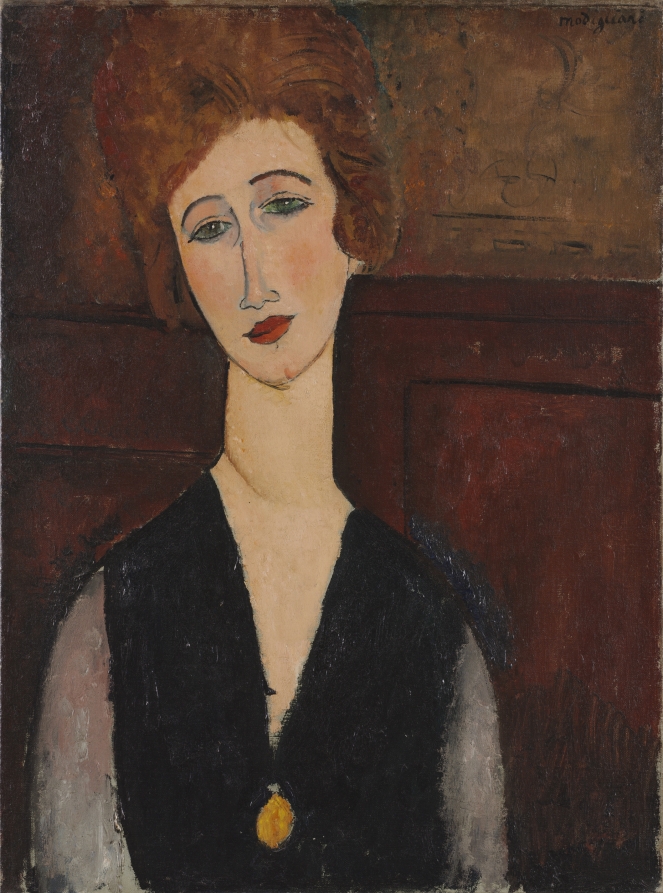
Then modernism fractured the face. Amedeo Modigliani's Portrait of a Woman elongates and abstracts the human head into something between sculpture and fever dream. August Macke's Male Nude bends anatomy into gestural abstraction. Lucius Kutchin's Girl with Cards reduces the figure to essential planes of color and form. By the time we reach Mark Rothko's Untitled (Brown and Gray) and Jasper Johns' Target, the portrait has abandoned the face entirely, leaving only the residue of its gesture: color, surface, the raw fact of paint and material. These works ask us to abandon the pleasure of matching a painted face to a remembered one. Instead, they offer something harder and stranger: a portrait that functions as an object, a psychological projection, a formal experiment, or a pure act of painting. In refusing likeness, they expand what a portrait can be.
Walk through in order, 10 works.
Portrait of a Woman
Modigliani's elongated skull and almond eyes abandon anatomical accuracy to achieve a psychological intensity that likeness alone could never reach.
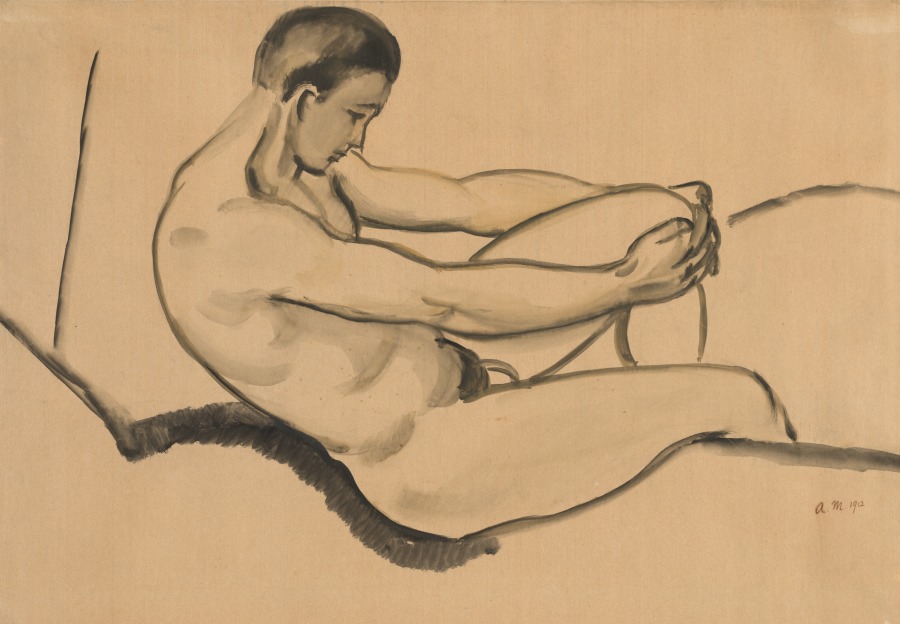
Male Nude
Macke's gestural black wash and gouache dissolve the figure's body into emotional and formal notation rather than description.
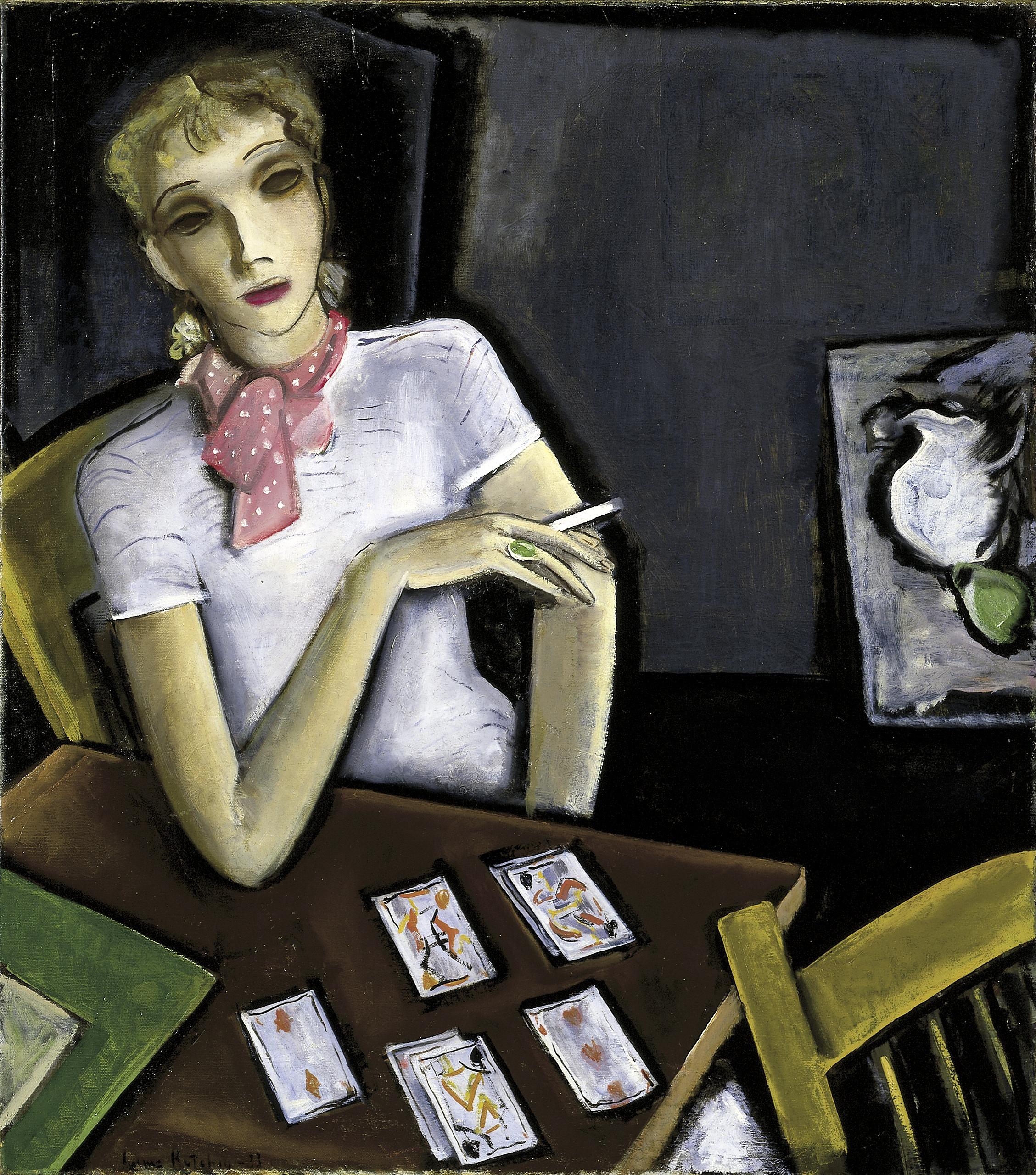
Girl with Cards
Kutchin reduces his subject to flat planes and simplified forms, privileging pictorial order over recognition of the sitter.
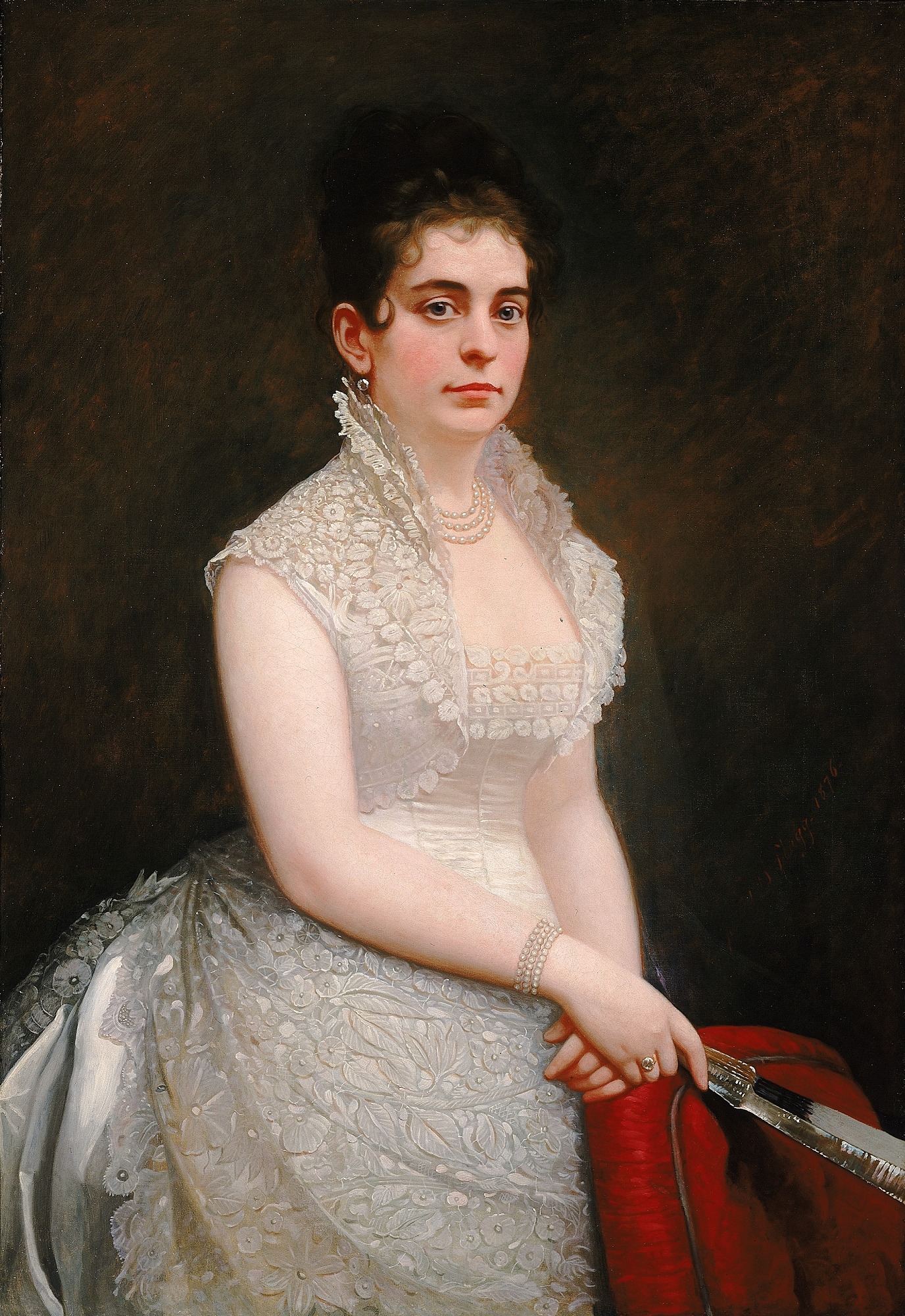
Alice Pike Barney, in Wedding Gown
Flagg's meticulous rendering of Alice Pike Barney's wedding gown represents the realist portrait at its apex, before modernism began its refusal.
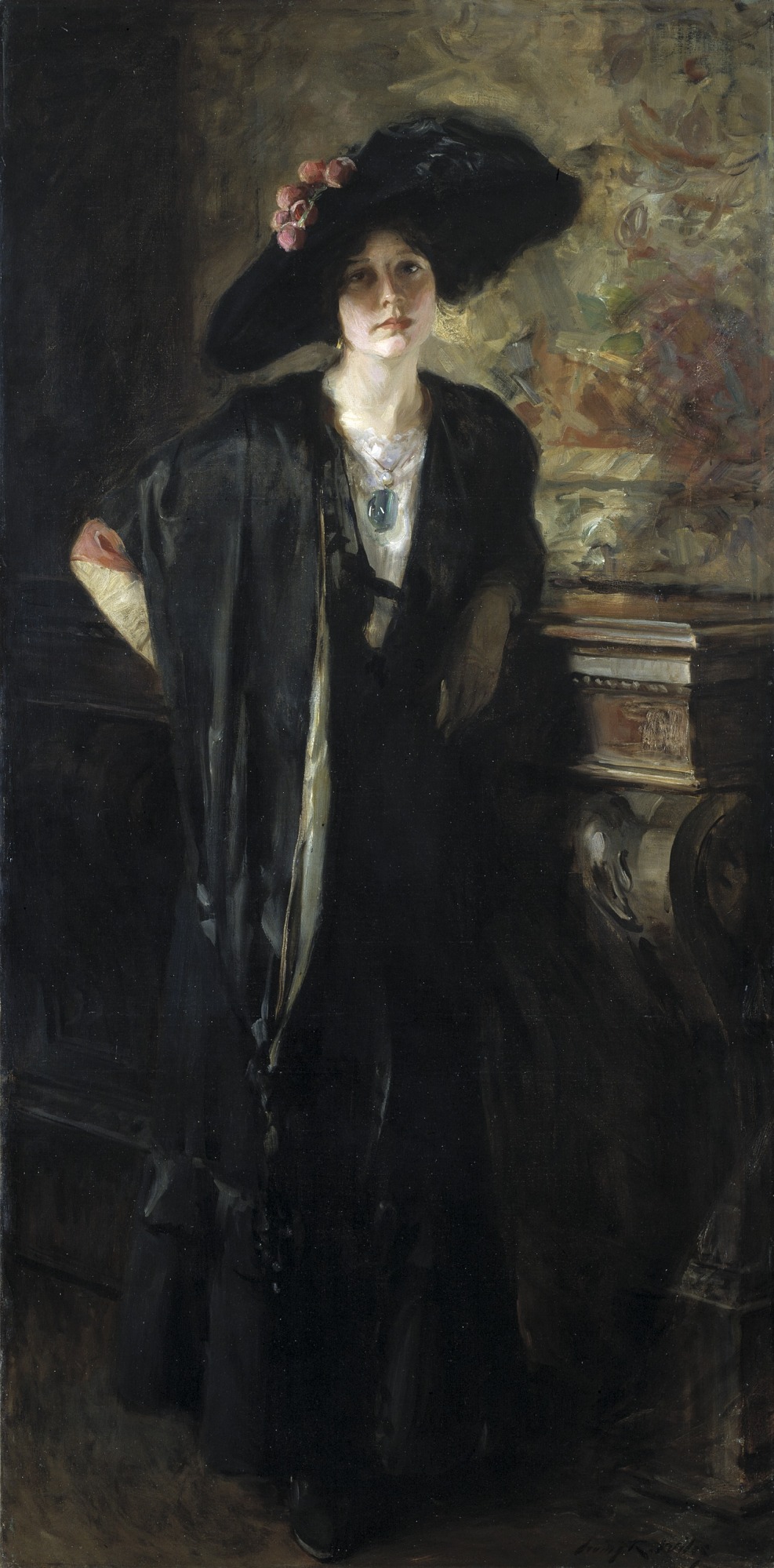
My Daughter Gladys
Wiles' Portrait of My Daughter Gladys maintains the realist mode while the exhibition's modernist works all around it demonstrate what that mode had begun to lose.
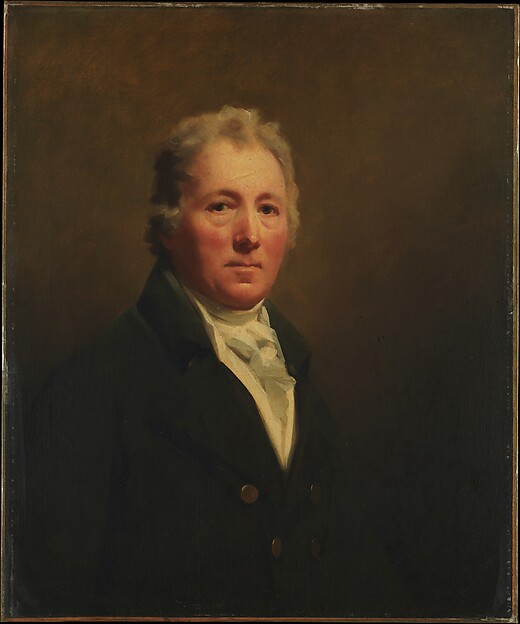
William Forsyth (1749–1814)
Raeburn's William Forsyth (1749–1814) uses romantic brushwork and chiaroscuro to enliven likeness, showing portraiture in transition from fact to interpretation.
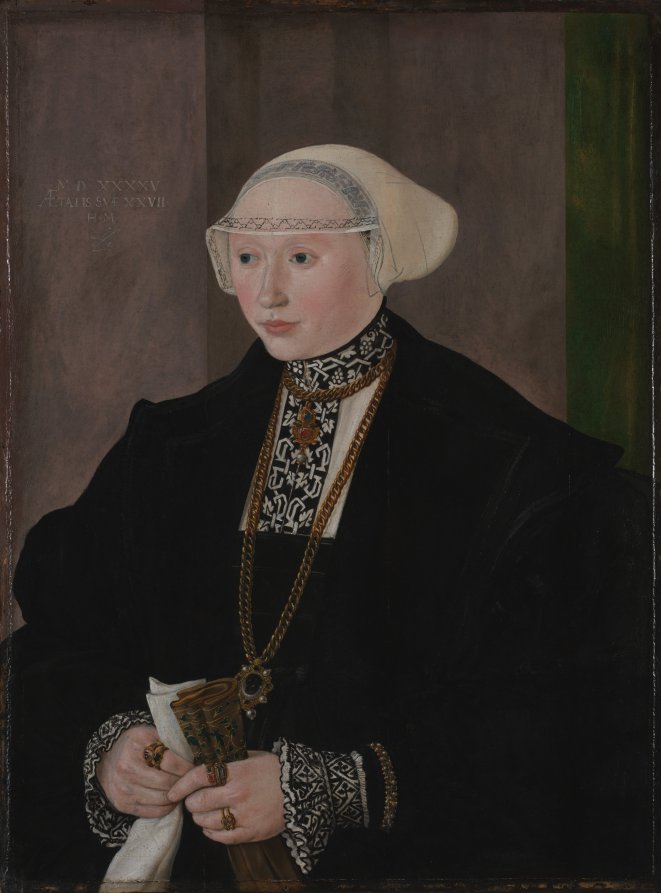
Portrait of Maria Kitscher, Frau von Freyberg
Mielich's Portrait of Maria Kitscher, Frau von Freyberg exemplifies Renaissance portraiture's absolute commitment to recognizable likeness as its primary contract.
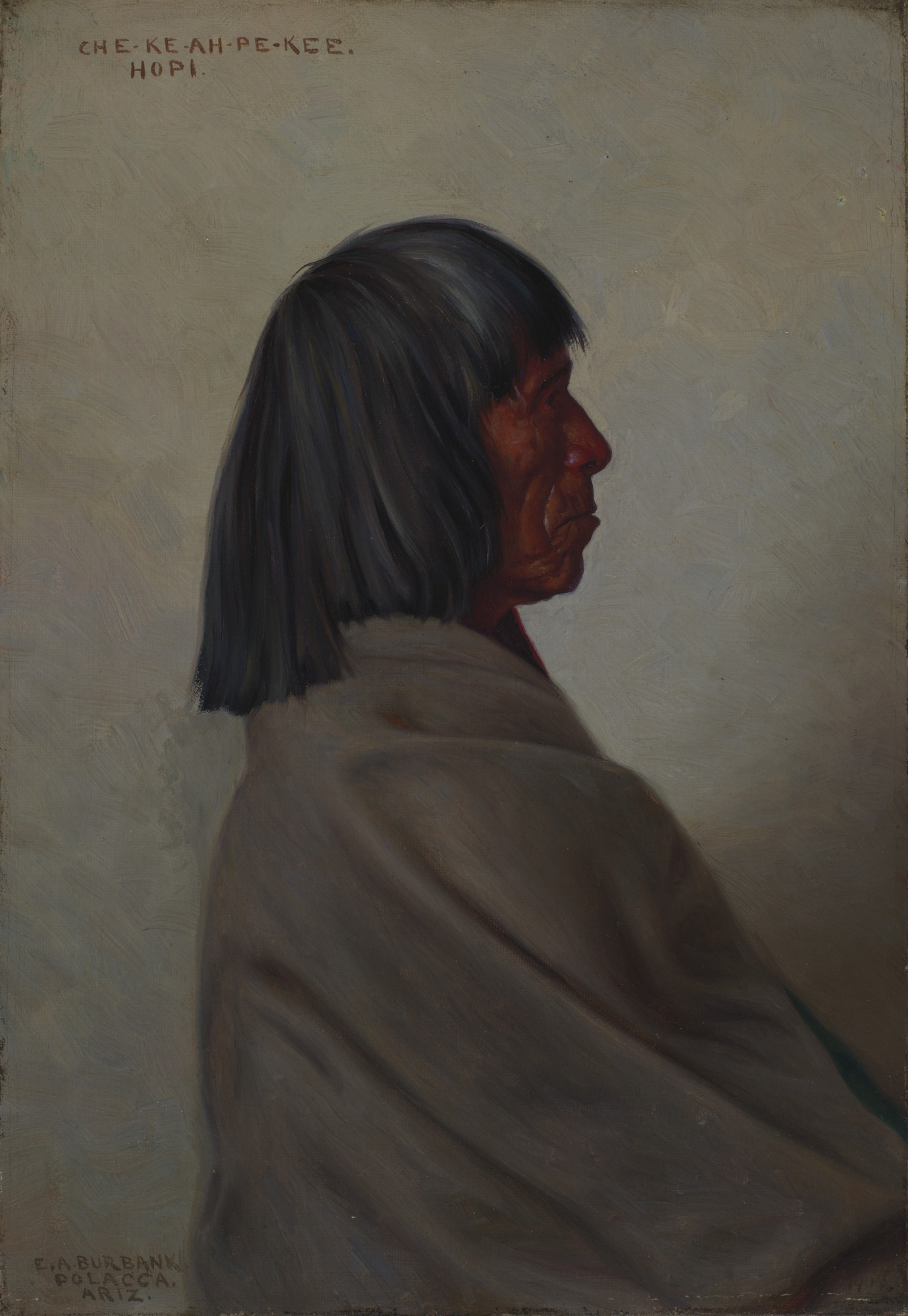
Che-ke-ah-pe-kee
Burbank's Che-ke-ah-pe-kee maintains documentary realism while serving colonial ethnographic purposes, showing portraiture's entanglement with power.
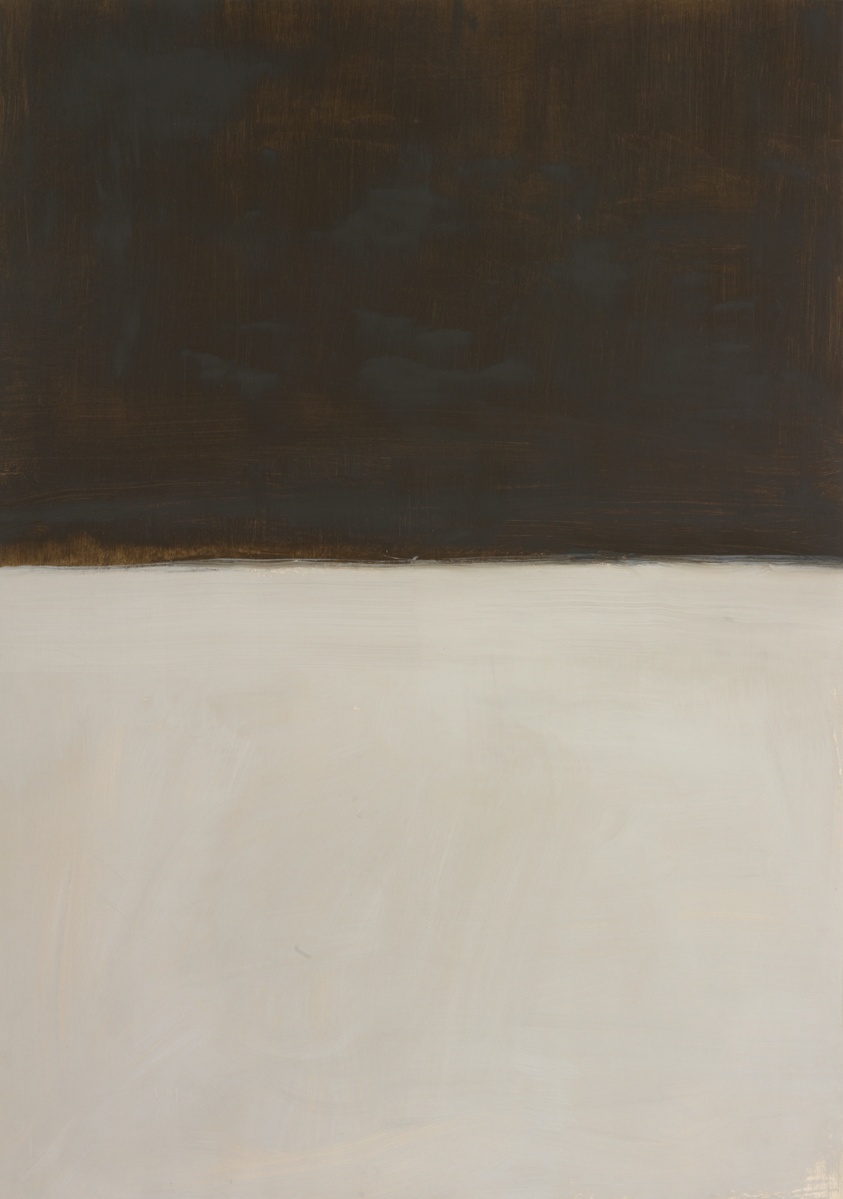
Untitled (Brown and Gray)
Rothko's Untitled (Brown and Gray) strips away the face entirely, leaving only color, surface, and affect, portraiture reduced to pure material presence.
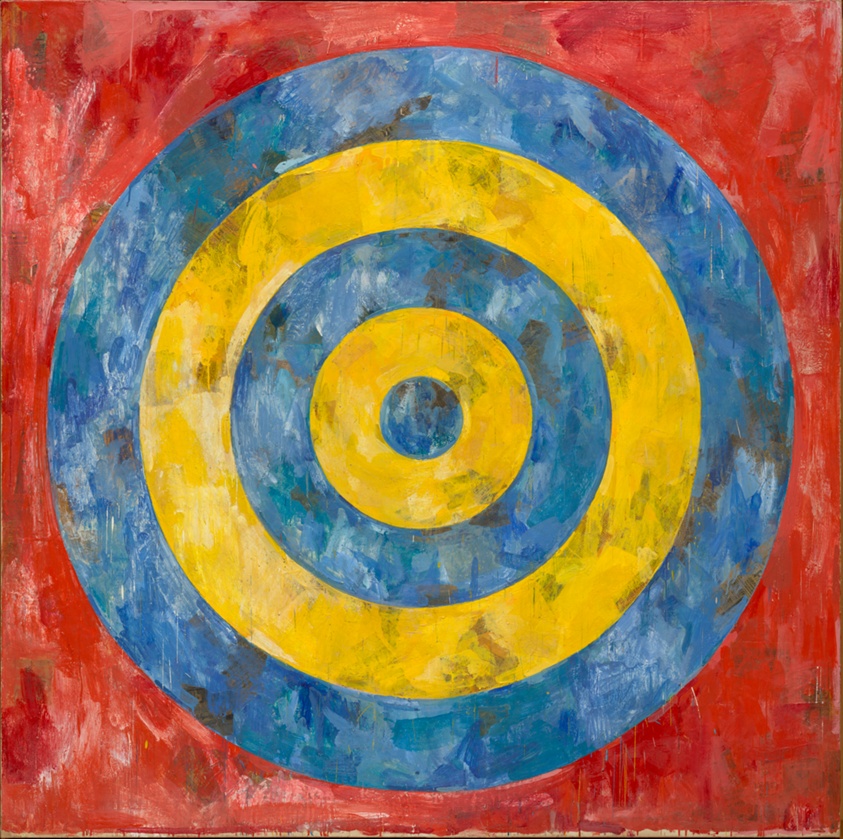
Target
Johns' Target abandons figuration altogether, replacing the portrait's traditional subject with a manufactured geometric form, completing the trajectory from likeness to abstraction.
The Review
The premise is sound: watch the portrait's contract with likeness erode across five centuries. The wall text sets up the argument cleanly. Then you walk into the room and the show collapses into a chronological procession that proves nothing.
Start with Portrait of Maria Kitscher, Frau von Freyberg. Mielich's panel is small, densely worked, nearly miniaturist in its finish. The face sits centered, symmetrical, presented like an inventory of features: the precise line of the veil, the small mouth, the hands folded in lap. It is descriptive painting. Competent. Airless. That clarity is the point, and the painting makes it without sentimentality. But standing in front of it, the eye has nothing to do except confirm what it sees. Likeness is the entire transaction.
William Forsyth (1749–1814) arrives next and the hand becomes visible. Raeburn uses the brushwork itself as a kind of portraiture, gestural strokes that read as confidence rather than precision. The fabric of the coat loosens into suggestion. The face remains legible but the paint assertively asserts itself. This is the first real move in the argument, and Raeburn executes it with actual control. The brushwork never lapses into expressionism for its own sake. It serves legibility while claiming the right to be seen as paint.
Then the American realists stall the momentum. Alice Pike Barney, in Wedding Gown and My Daughter Gladys maintain the fiction of likeness without advancing anything formal. They are technically proficient but intellectually inert, neither committed to Mielich's precision nor to Raeburn's assertion of the artist's hand. Elbridge Ayer Burbank's Che-ke-ah-pe-kee sits in the same register: rendered with fidelity but without any real investigation of what that fidelity costs or conceals. The show lists them in order and the wall text tells you they are important, but the paintings themselves do not argue for their inclusion. They fill time.
Modigliani's Portrait of a Woman is where the actual fracture happens. The neck elongates. The nose becomes sculptural, almost carved from the canvas. The eyes sink into shadow. The paint is spare and the face is no longer a face you would recognize in the street. It is a psychological object, a formal investigation into how much of the human can be abstracted before it ceases to function as portraiture at all. Modigliani does not soften this. The painting is austere. The elongation is not decorative. It is a real refusal of the conventions that Mielich took for granted.
August Macke's Male Nude, rendered in brush and black wash with gouache accents, pushes further into expressionist distortion. The anatomy buckles. The musculature reads as emotional rather than anatomical fact. The green-yellow gouache cuts across the form without describing it. But here the show begins to lose the thread. Macke is not making a portrait. He is making a study in gestural abstraction using the male body as its occasion. The distinction matters. The show's central argument is that portraiture can abandon likeness and still function as portraiture. Macke is abandoning portraiture itself.
By the time we reach Lucius Kutchin's Girl with Cards, the title is all that anchors the work to the portrait at all. The painting reduces the figure to rectangular planes of color stacked with no particular concern for the body's logic. It is a formal composition that happens to have been called a portrait. The same collapse occurs with Untitled (Brown and Gray), where Rothko's color field has nothing to do with the human head and everything to do with chromatic relationships. And Jasper Johns' Target, made of encaustic and newspaper, is not even pretending to engage with portraiture. It is Johns making a sculpture-painting about perception and reification. To call it a portrait because it has a title is to abandon the show's own argument.
The curatorial move is to treat this dissolution as a natural progression, a logical continuation of the portrait's refusal of likeness. But there is a hard formal difference between Modigliani's deliberate distortion of the face and Rothko's complete abandonment of figuration. One is still a portrait. The other is not. The show elides this distinction by relying on wall text to make the argument rather than allowing the formal evidence to speak. Each work is presented as a step in an inevitable march, but the eye does not experience it that way. The eye sees a portrait tradition and then, eventually, a series of paintings that have stopped being about the face altogether.
The technical execution varies wildly and not always productively. Mielich and Raeburn are both fully in command of their materials. Modigliani's spare oil paint is disciplined and exact. But the American realists are pedestrian, and by the time we reach the late modernist works, the show is asking you to accept conceptual arguments rather than formal ones. The wall text is doing the work. The paintings are not.
What a Face Can Be has a legitimate thesis. The evidence for it is incomplete. The show would have been sharper if it had stopped with Modigliani, or if it had been willing to acknowledge that Rothko and Johns are making something other than portraits. Instead, it insists on a unified argument that the work itself does not support. That is a failure of curatorial precision, not a difference of opinion.
- +The opening pairing of Mielich and Raeburn establishes the formal problem with clarity and makes the argument visibly on the wall rather than in text alone.
- +Modigliani's Portrait of a Woman is a genuinely rigorous investigation into how abstraction can remain portraiture, and its placement allows the viewer to see formal refusal at work.
- +The historical span and institutional range permit a serious argument about a long formal tradition rather than a single movement or moment.
- –The American realists lack any formal invention or curatorial justification; they function as filler between established masters and provide no visual evidence for their inclusion.
- –The transition from figural abstraction to pure abstraction is not acknowledged; the show treats Rothko and Johns as the logical conclusion of a portrait tradition when they have abandoned portraiture entirely.
- –Reliance on wall text to carry the argument rather than allowing the formal properties of the work itself to make the case; without the premise, many pairings would appear arbitrary.
- Otto Dix →His Weimar-era portraits use distortion and exaggeration to critique their subjects, showing how refusal of likeness can become a tool of social commentary.
- Egon Schiele →Schiele's self-portraits contort the body into psychological extremity, pushing the refusal of likeness toward expressionist intensity.
Curious what another critic would make of this show?