
The Sacred Body: Women as Icon Across Time
From Renaissance devotion through modernist abstraction, tracing how women artists claimed the language of the icon for their own vision.
“The sacred feminine, reimagined every few centuries: from Cycladic idols through Renaissance Madonnas to Frida Kahlo's self-mythology, women rendered as icon rather than individual.”
This exhibition traces a paradox central to Western art history: women rendered as icons have often been deprived of individual voice, yet certain moments reveal how artists, especially women themselves, have seized this formal language to assert presence, desire, and spiritual autonomy. We begin with Renaissance devotional imagery and the female body as a vessel for sacred meaning, move through Symbolist paintings that reimagined feminine mystique, and arrive at twentieth-century women artists who adopted the iconic mode not to erase themselves but to claim its power for their own vision.
The works here share a formal commitment to distillation: the reduction of the figure or form to essential, repeatable elements. A Madonna becomes geometry and light. A portrait condenses into silhouette. Abstract fields hold the weight of transcendence. What unites them is not subject matter alone but a method: the transformation of the particular woman into something both present and unknowable, intimate and monumental.
By the twentieth century, women artists claimed this inheritance directly. They did not abandon the iconic mode; instead, they rewired it. Abstraction allowed new kinds of devotion. The body could dissolve into color, form, and gesture while remaining, paradoxically, more insistently present. This show asks what happens when the person making the icon is the person being iconified, and when abstraction itself becomes a form of spiritual witness.
Walk through in order, 10 works.
Madonna and Child
Gentileschi paints the Madonna and Child with the physical weight and intimacy of lived experience, her rich oil handling investing the sacred subject with corporeal presence rather than ethereal distance.
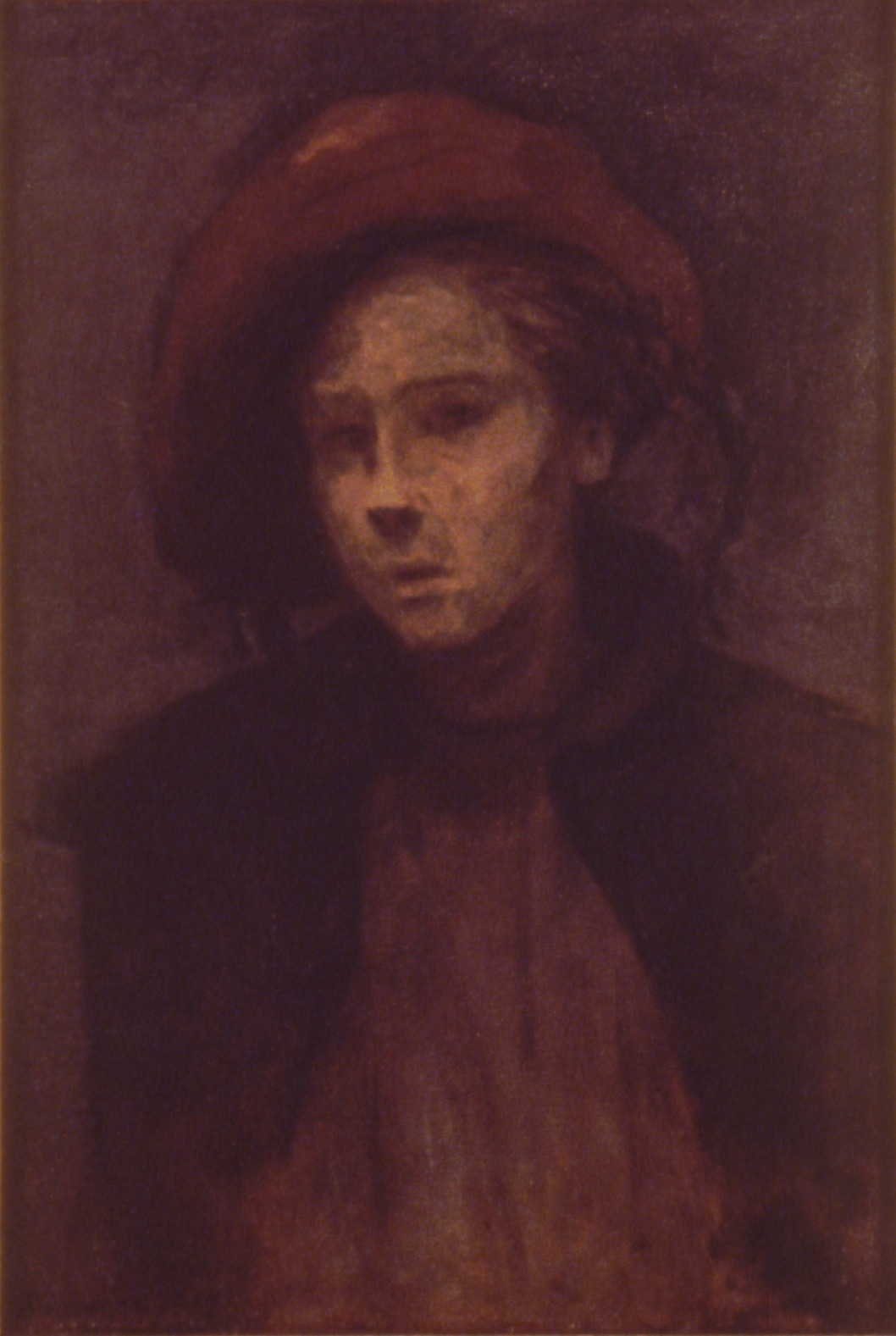
Maggie
Brooks' Maggie reduces a female figure to near-silhouette and muted tone, transforming portraiture into a meditative icon that withholds rather than reveals, making absence itself a form of presence.
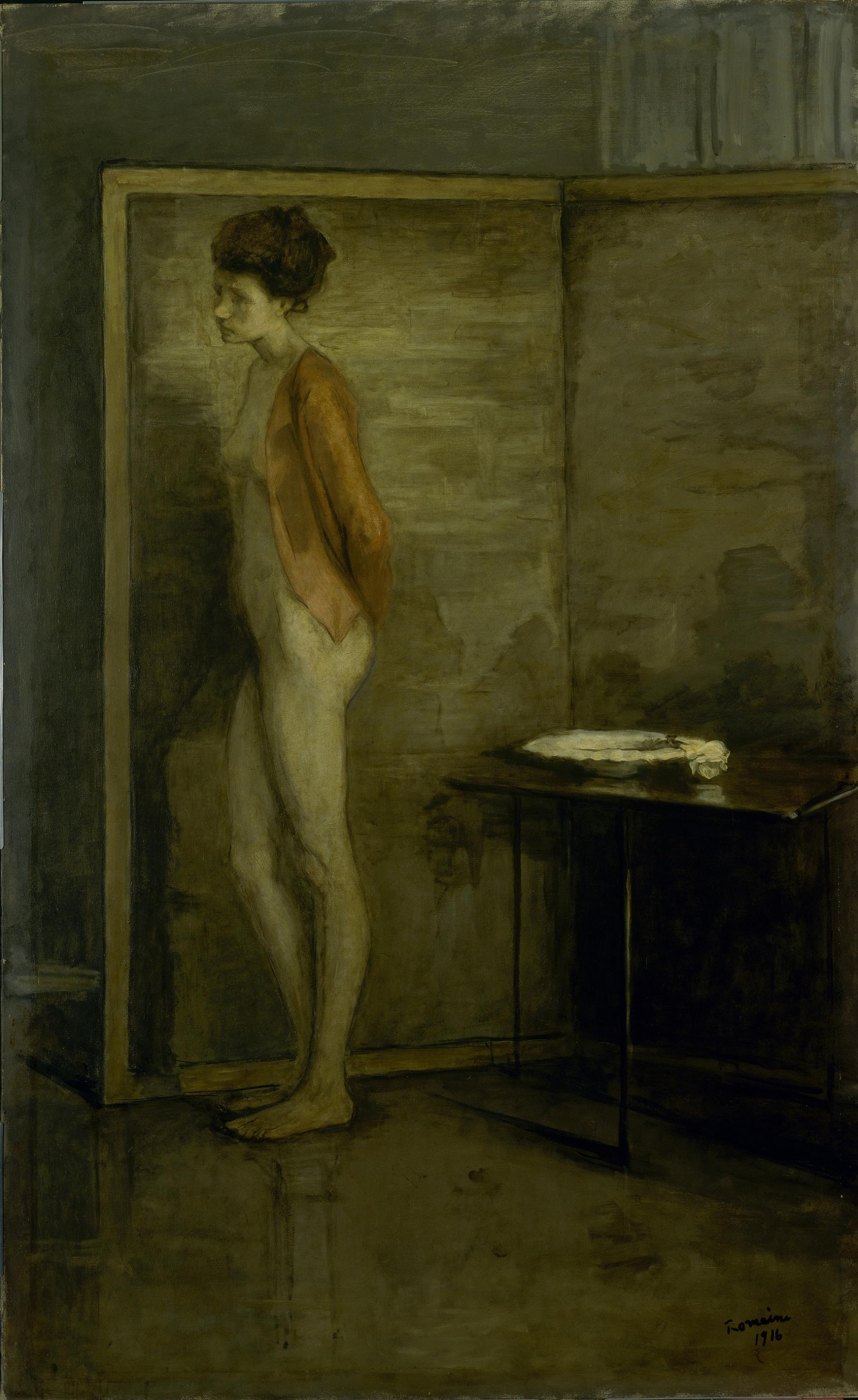
La Jaquette Rouge
In La Jaquette Rouge, Brooks uses color restriction and simplified form to elevate an ordinary garment into symbolic weight, claiming the Symbolist mode of distillation for a distinctly female body.

Naked in the mirror
Valadon's Naked in the mirror presents the female body in self-examination rather than display, using the mirror motif to assert the woman's own gaze as subject rather than object of the icon.
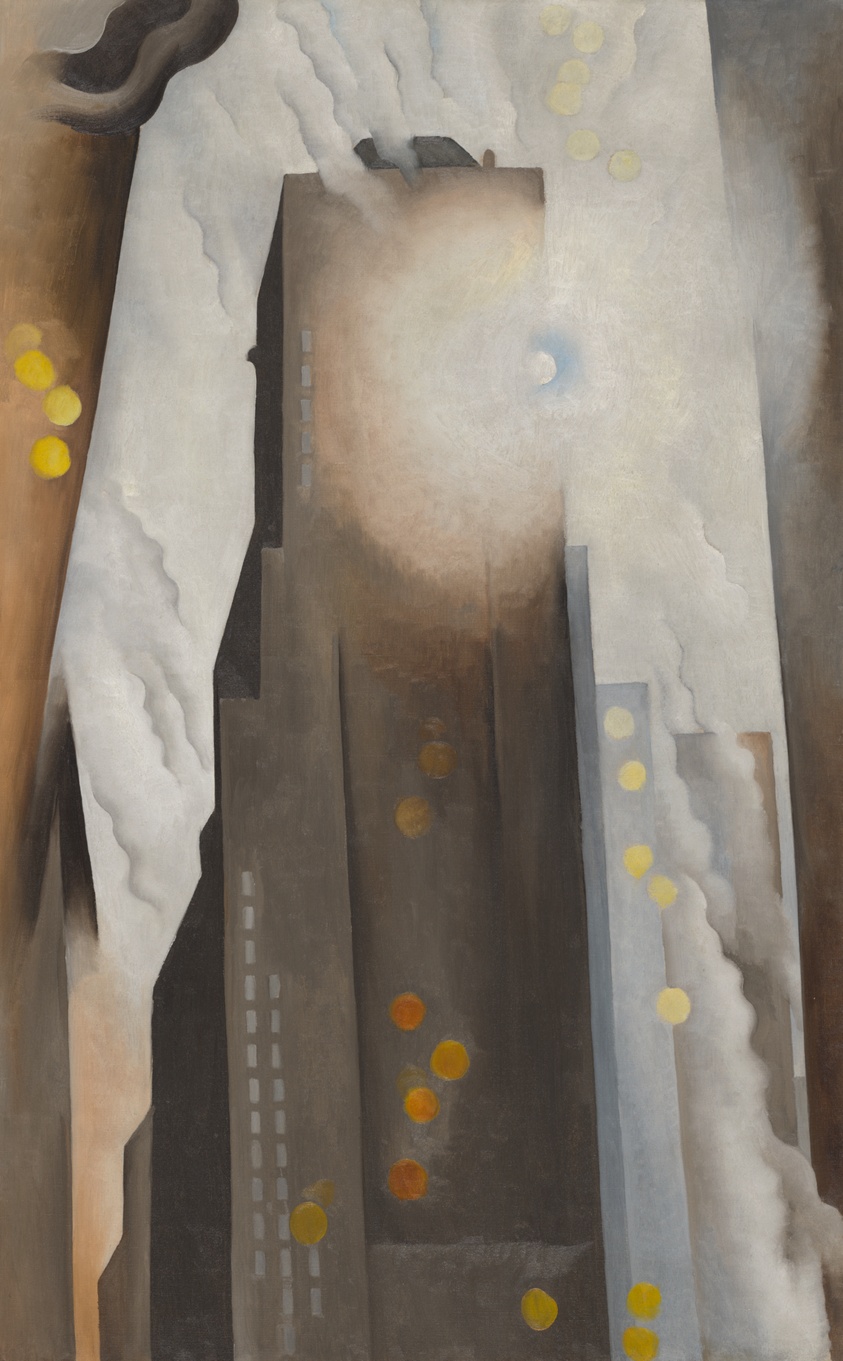
The Shelton with Sunspots, N.Y.
O'Keeffe's The Shelton with Sunspots, N.Y. abstracts the vertical urban form into soaring, almost spiritual geometry, transforming the city into a kind of vertical icon through color and light.
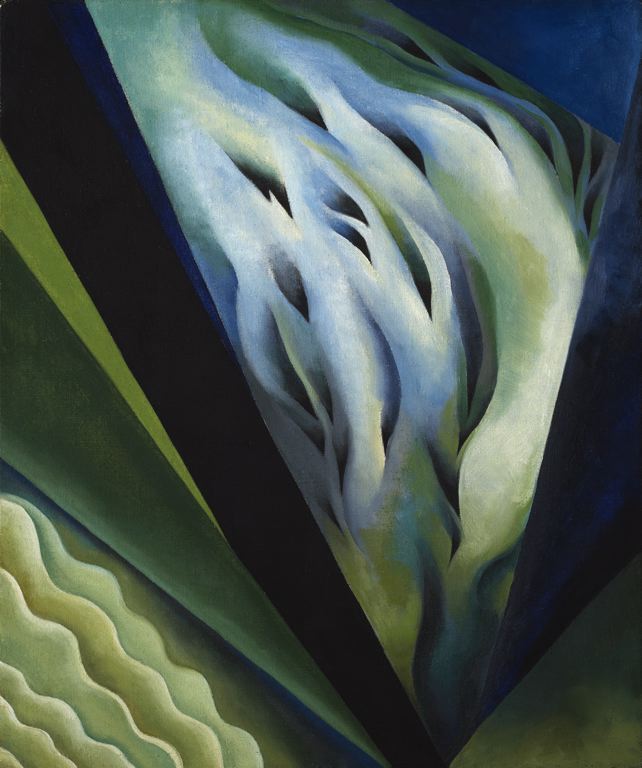
Blue and Green Music
Blue and Green Music dissolves figuration entirely into flowing, sensuous form, yet maintains the iconic quality through rhythmic composition, proving abstraction itself can carry sacred presence.

Lovers II
Kollwitz's Lovers II renders two figures in bronze as interlocked, almost architectural form, the flesh turned to metal achieving a monumental, timeless quality that transcends individual portraiture.
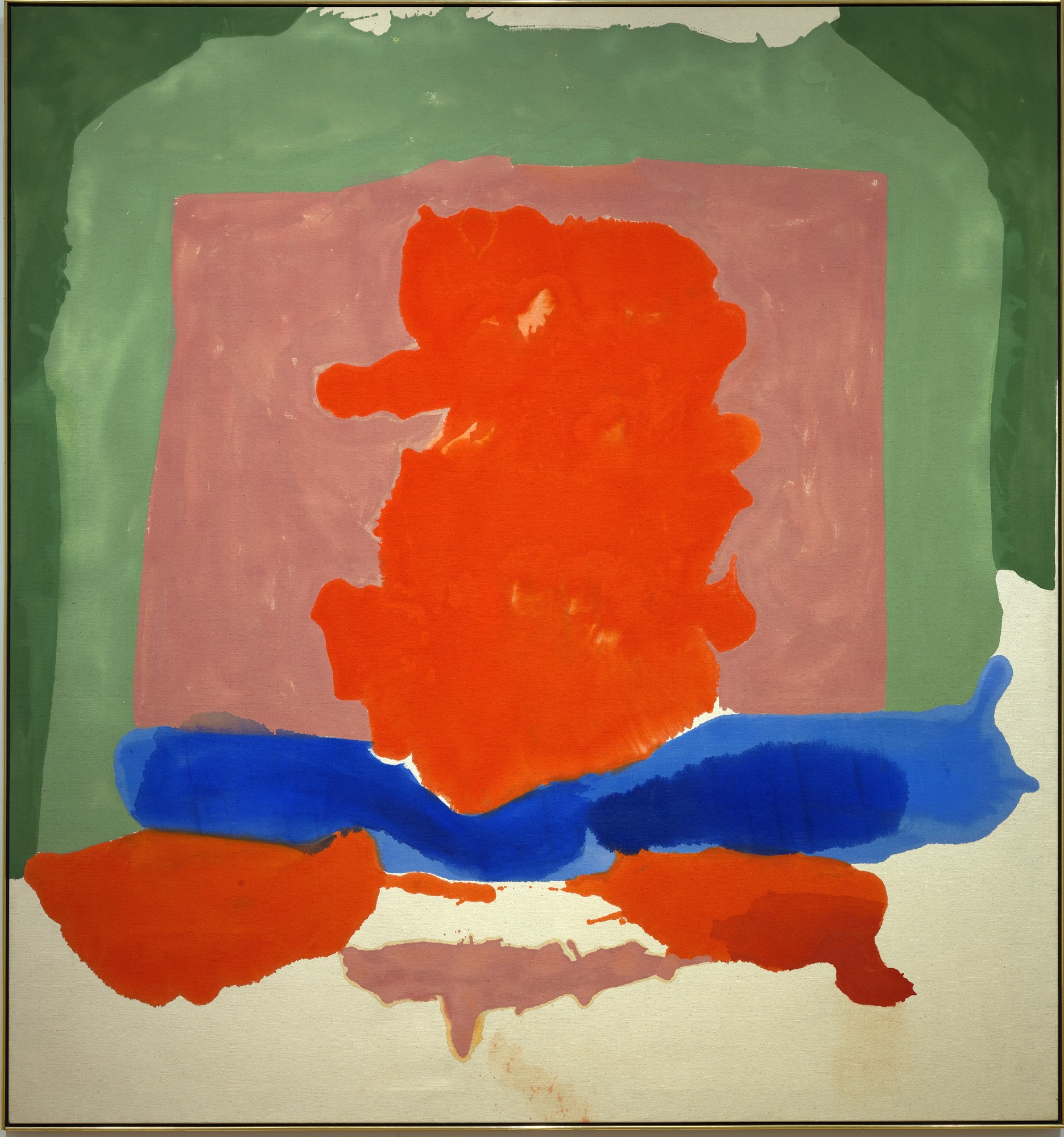
Small's Paradise
Small's Paradise uses color field painting to suggest human presence through pure chromatic relationship, the named place becoming a field of emotional and spiritual resonance rather than depicted space.
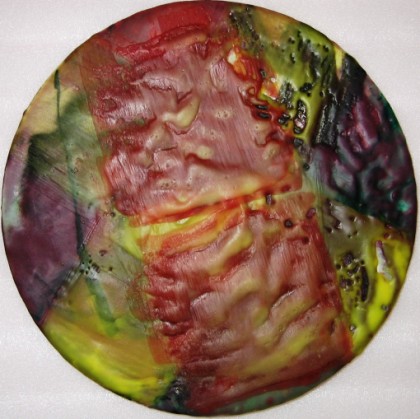
Red Combustion III
Red Combustion III employs purified pigmented beeswax as a material, the surface taking on a precious, almost devotional quality through its material specificity and luminous depth.
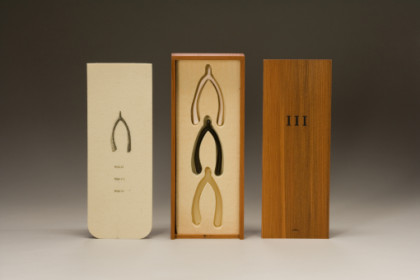
III (Peter Norton Family Christmas Project)
III (Peter Norton Family Christmas Project) combines ceramic, rubber, and bronze wishbones as a sculptural object that references desire and fragility, the assemblage creating an icon of longing through material accumulation.
The Review

The premise here is solid. The exhibition traces a formal inheritance: how the icon as a structural device, capable of rendering its subject as both present and abstracted, passed from Renaissance devotional practice into the hands of twentieth-century women artists who understood abstraction itself as a form of that same distillation. The problem is that the curators have not trusted their own argument. They keep reaching for the biography they claim to have set aside.
Walk toward Artemisia Gentileschi's Madonna and Child, the Baroque entry point. What happens in that painting is not complex: the mother bends close to the child, hands and faces emerge from shadow, geometry stabilizes the composition. It is efficient. It works because it works, not because Gentileschi was a woman claiming space in a male workshop. The work does not need that information to function. Yet the exhibition materials insist on it anyway, which weakens the show's own formal thesis.
The real strength lies in what happens when you stand between the Gentileschi and The Shelton with Sunspots, N.Y. O'Keeffe has taken the icon's logic of reduction and run it through architecture and light. The building rises into the canvas, simplified into vertical thrust, and at its center a field of dots catches something like radiance. It is not a portrait. It is a structure, almost a geometry, but one that holds presence the way an icon does. The move from figural distillation to architectural abstraction feels like a legitimate development, not a leap.
But then the show thins. Blue and Green Music, placed nearby, retreats into pure color-chord harmony. It is prettier than it needs to be. There is less to hold onto. The Symbolist paintings by Romaine Brooks, Maggie and La Jaquette Rouge, settle into a gray tonality that reads as deliberate austerity but feels more like resignation. Brooks understood silhouette and the power of what the edge does, but these works play it safe within her own vocabulary. They do not argue anything fresh with their neighbors.
The later works create different problems. Lynda Benglis's Red Combustion III is technically unusual, purified pigmented bees wax on canvas, and the surface has a particular density and warmth that oil does not quite produce. But the work sits alone, formally speaking. It does not converse with what came before. Helen Frankenthaler's Small's Paradise is a stain-field painting, loose and gestural, which should create real tension with the precision of the earlier iconic language. Instead it just occupies a wall. Lorna Simpson's III (Peter Norton Family Christmas Project) arrives last, a sculpture of ceramic and bronze wishbones, felt-printed components in a wood box. It is conceptually clever, deconstructing the icon through material heterogeneity and found objects. But formal awkwardness is not the same as formal intelligence. The work does not sit well in the body with what precedes it.
The exhibition wants to argue that abstraction is not a turn away from the iconic impulse but a deepening of it. That argument requires works that visually prove the claim. Instead, the later half of the show mostly drifts, adding artists rather than adding evidence. Käthe Kollwitz's Lovers II, a bronze from 1913, does something interesting with compression and weight in three dimensions, but it appears almost in passing. Suzanne Valadon's Naked in the mirror has an awkward, fleshy intimacy that resists idealization, which is worth watching, but the show does not make space for what that resistance actually means in relation to the icon's aspiration to transcendence.
This is a show that knows what it believes about form and then does not follow through. The first half demonstrates control. The second half demonstrates collection. That is a curatorial failure, not a failure of the artists themselves.
- +The pairing of Gentileschi and O'Keeffe reveals a genuine formal development from figural distillation to architectural abstraction that could structure a sharp argument.
- +Attention to reduction, edge, and the iconic mode as a structural principle rather than a thematic category is the right approach.
- +Lynda Benglis's use of pigmented bees wax introduces material singularity that disrupts and questions the show's own premises.
- –The second half of the roster adds artists instead of clarifying the formal argument, diluting rather than strengthening the claim about abstraction and iconicity.
- –Biographical framing in the exhibition materials undermines the show's stated commitment to formal analysis and structural inheritance.
- –No genuine visual or compositional tension between the Symbolist works and the modernist abstraction that follows; the works simply occupy adjacent walls.
- Hilma af Klint →Her early abstractions were explicitly spiritual and devoted, offering a direct line from sacred iconography to pure abstraction that this show's emphasis on women's claims to devotional form would benefit from examining.
- Agnes Martin →Her gridded, meditative abstractions in graphite and paint extend the formal reduction of the icon into systems of pure repetition and restraint, deepening the conversation about distillation as spiritual method.
- Russian Constructivism →The geometric reduction and formal abstraction central to this movement shaped how twentieth-century women artists understood the icon as form rather than religious content, making the politics of distillation legible.

One arrives at this exhibition with high expectations, and the premise itself merits them: the paradox of the icon as both instrument of effacement and potential vessel for female agency is a genuine historical problem, and one that demands serious formal attention. The roster promises eight artists across four centuries, all women, all working with what the wall text calls 'distillation' of the figure into something transcendent. What one finds, however, is a show that has grasped its own thematic apparatus without quite having earned the curatorial sophistication that such a premise demands.
Start with what works, which is to say start with the paintings that actually justify their place here through demonstrated mastery of the iconic mode as a technical and spiritual matter. Gentileschi's Madonna and Child (1612) belongs in any serious discussion of this subject, not because it is by a woman (many painters rendered Madonnas) but because it demonstrates the specific vocabulary of the Baroque altarpiece and light-working that anchors the entire historical argument. The geometry is there, the distillation is there, but so too is the earned chiaroscuro that permits a figure to be both present and numinous. This is craft at the service of devotion, and it reads as foundational.
Then one moves into the Symbolist materials, and here the show begins to drift. Romaine Brooks' La Jaquette Rouge (1910) and Maggie (1904) are competent exercises in reductive portraiture, certainly, but they feel more aligned with the period's aestheticism than with any urgent reclamation of iconic language. The silhouettes are elegant; the tonal restraint is admirable. Yet there is little here that suggests the artist is in dialogue with Marian iconography or with the sacred tradition at all. These are portraits of elegant women rendered in a fashionable minor key. The curatorial claim that they represent women artists seizing the language of the icon for their own vision requires evidence that Brooks was actually working in conscious reference to sacred tradition, and none is provided. One is asked to accept the formal similarity (reduction, essential gesture, monumental bearing) as sufficient evidence of ideological intent, which is, frankly, not how one does art history.
The O'Keeffe paintings, by contrast, cut much deeper, though not because they prove the thesis. The Shelton with Sunspots, N.Y. (1926) and Blue and Green Music (1919) do what abstraction can do when the hand knows what it is about: they propose a visual register in which the body and the building and the landscape dissolve into pure chromatic and formal relations. Whether or not one accepts the spiritual reading that the wall text proposes, one cannot deny that O'Keeffe worked with absolute conviction in the abstract registers she chose. The geometry is not incidental; it is the point. That conviction matters. Yet here again, the curators have performed a small conceptual sleight. They call this 'abstraction as spiritual witness,' but what O'Keeffe actually did was paint landscapes and architectural forms with a precision and sensuousness that owed everything to her trained eye and her refusal to illustrate. Calling it a form of female spiritual autonomy requires one to add a layer of reading that the work itself may or may not support. The painting is sufficient without the theological framework.
By the time one reaches the late twentieth-century works, the curatorial argument has begun to hollow out entirely. Lynda Benglis' Red Combustion III (1993), made with purified pigmented bees wax on canvas, is a work of genuine material ambition, and the wax surface reads as tactile and insistent in a way that paint alone cannot achieve. But what does this have to do with iconicity? The work is abstract, aggressive, almost violent in its chromatic intensity. It distills nothing. It offers no figure, sacred or otherwise. To call it a reclamation of the iconic mode requires stretching the term 'icon' so far that it ceases to mean anything at all. Abstraction is not the same as the iconic; the two operate on fundamentally different principles.
Helen Frankenthaler's Small's Paradise (1964) is a color-field painting of considerable grace, and her mastery of the acrylic stain is evident. But once again, the connection to the exhibition's stated project is tenuous at best. The work does not distill; it diffuses. It does not propose a figure, iconic or otherwise. One begins to suspect that the curatorial team has simply collected works by major women artists and then retrofitted them onto a thematic structure that does not quite fit.
The closing works, Käthe Kollwitz's bronze Lovers II (1913) and Lorna Simpson's III (Peter Norton Family Christmas Project) (1994), gesture toward something more interesting. Kollwitz's sculptural compression of two embracing figures into essential form does speak to a kind of modernist distillation that recalls the iconic. Yet the work's emotional tenor is melancholic and earthbound, not transcendent. Simpson's work, which combines ceramic, rubber, and bronze wishbones with printed felt in a wood box, operates at such a remove from the exhibition's stated concerns that its inclusion reads as purely conceptual justification.
The fundamental problem is that the curators have confused formal similarity with thematic coherence. That a painting is reduced to essential elements, that it employs distillation, that it treats the female figure with monumentality, these do not automatically make it an icon or a reclamation of iconic language. The exhibition would have been vastly stronger had it been more rigorous about what constitutes engagement with the sacred tradition itself, rather than accepting any work of formal reduction as evidence of spiritual autonomy. One wants the argument to hold. The historical problem is real. But the execution relies too heavily on assertion and not enough on demonstrated formal knowledge of what the icon, as a technical and theological matter, actually entails.
- +Gentileschi's Madonna and Child provides genuine historical anchor point that justifies the entire project
- +O'Keeffe paintings demonstrate achieved abstraction with full conviction in chromatic and formal control
- +Benglis' beeswax surface shows real material ambition and technical sophistication
- –Curatorial argument relies on formal similarity rather than demonstrated engagement with sacred tradition itself
- –Several works lack any clear connection to iconicity beyond abstract reduction, stretching the term beyond utility
- –No evidence provided that Brooks or other Symbolist painters were working in conscious dialogue with Marian tradition