The Mind of Christ: Consciousness, Doctrine, and Devotion in Renaissance Art
How artists across Northern and Italian Renaissance traditions visualized divine consciousness, spiritual knowledge, and the interior life of Christ and the saints.
“25 Renaissance artists dealing with conciousness and theory of mind and religion”
The Renaissance witnessed an extraordinary intellectual movement concerned with the nature of consciousness itself. Theologians, philosophers, and artists grappled with how Christ could be both fully human and fully divine, how the Virgin could comprehend the infinite, and how saints achieved mystical knowledge of God. This exhibition traces how printmakers and painters across the period translated these abstract theological questions into visible form, using composition, gesture, and symbolic language to convey the inner lives of sacred figures.
The works assembled here move through three interconnected territories: the mystery of Christ's dual consciousness (his human suffering and divine omniscience held simultaneously), the meditative or visionary states of saints and holy figures (Jerome in his study, John the Baptist in wilderness, Catherine contemplating her martyrdom), and the question of how ordinary people—donors, witnesses, the faithful—might participate in and understand sacred knowledge. Many of these prints and paintings were devotional objects meant to guide meditation; their makers consciously designed them to train the viewer's mind toward spiritual understanding.
From Dürer and Altdorfer to Goltzius and Bellini, these artists were not simply illustrating scripture. They were depicting consciousness itself: the moment when understanding arrives, when doubt enters, when the human mind touches the divine. The Passion becomes a study in Christ's awareness of his own fate. The Annunciation becomes Mary's instantaneous reception of impossible knowledge. A saint in his study becomes a portrait of concentration and intellectual communion with God.
Walk through in order, 22 works.
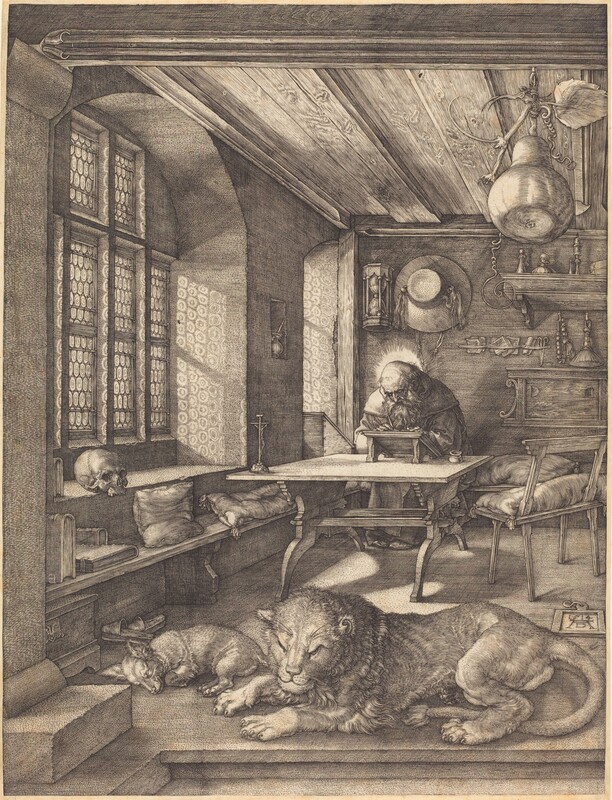
Saint Jerome in His Study
Jerome's bent posture and steady gaze at his texts enact the interior labor of theological study; the lions at his feet and the light from the window frame this as both physical and spiritual discipline.
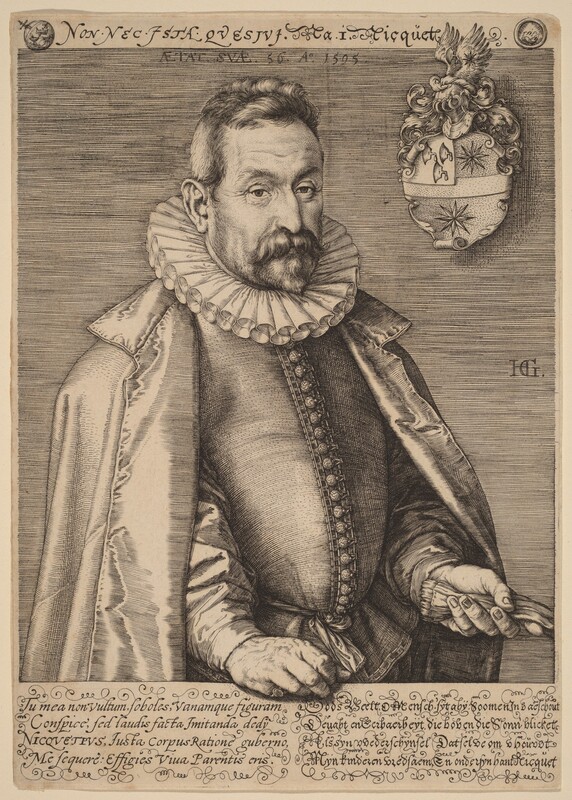
Jan Nicquet
The precise engraving of Goltzius captures the psychological intensity of an intellectual portrait, using hatching and line to sculpt a face caught in thought.
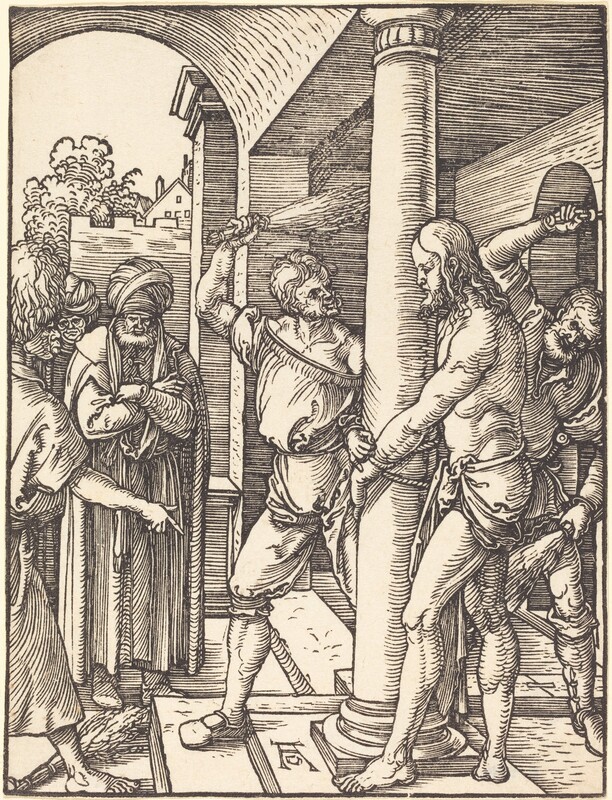
The Flagellation
Dürer's composition places Christ's face forward among soldiers and their weapons, centering the victim's consciousness of suffering rather than the violence surrounding him.
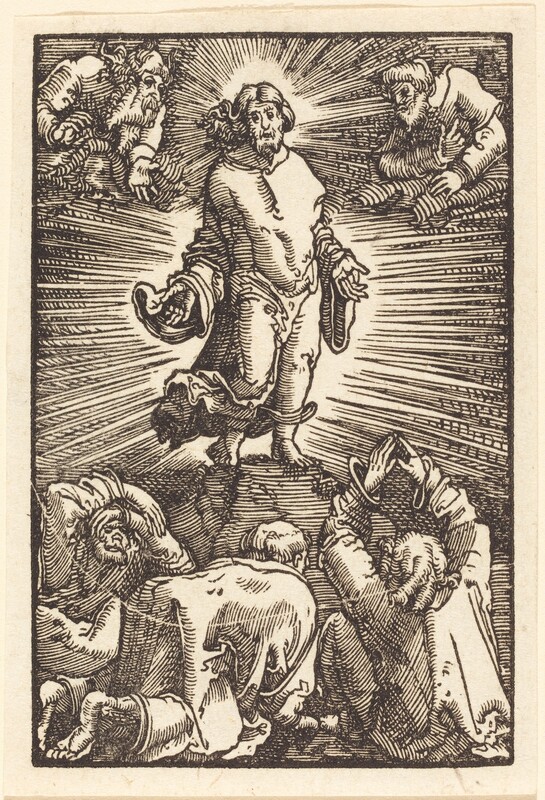
The Transfiguration
Altdorfer's radiating light emanates from Christ's figure, making the Transfiguration a visualization of divine consciousness breaking through into human perception.
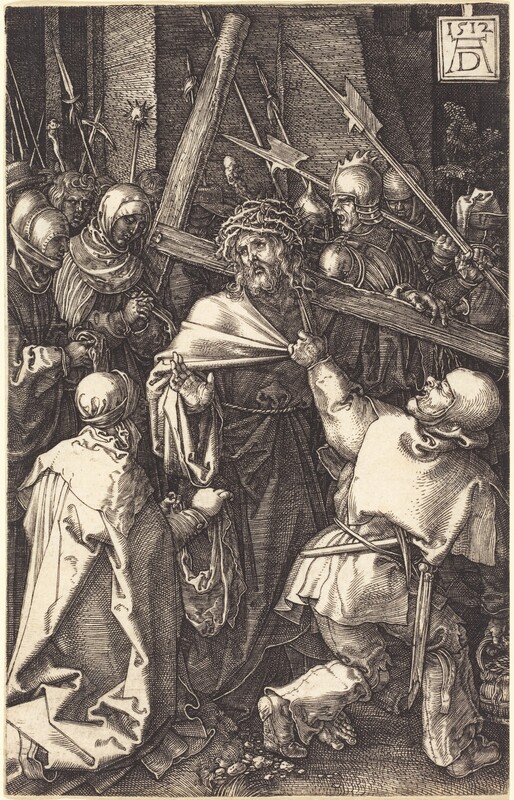
Christ Carrying the Cross
The densely hatched background and careful modeling of Christ's body convey both physical extremity and inner resignation, the body's exhaustion and the mind's acceptance.
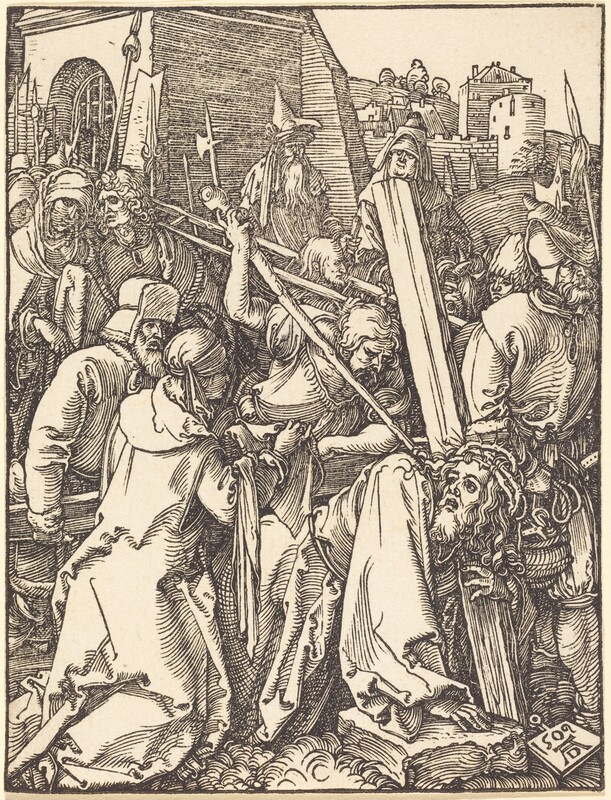
Christ Carrying the Cross
Dürer's woodcut stages Christ's journey through a crowded street as a passage of consciousness, with his face and gaze repeatedly returned to amid the chaos.
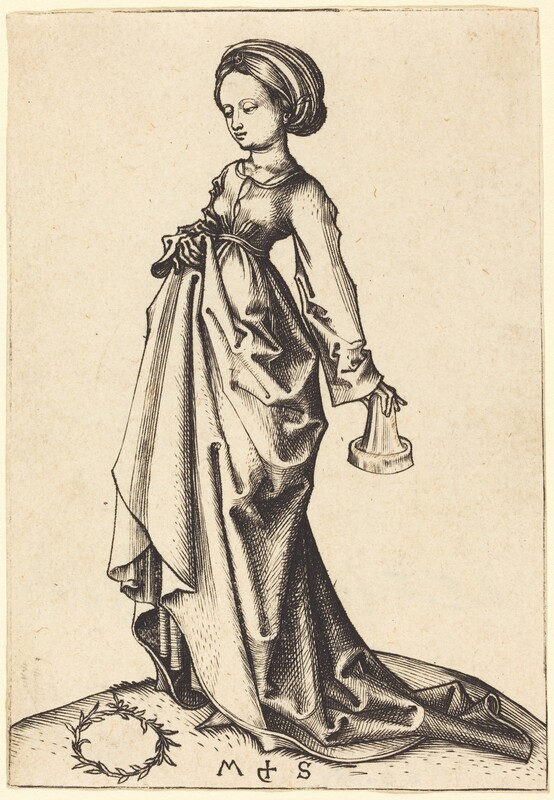
Second Foolish Virgin
Schongauer's standing figure holds her lamp downward in an attitude of doubt or introspection, her body posture embodying theological confusion about readiness and worthiness.
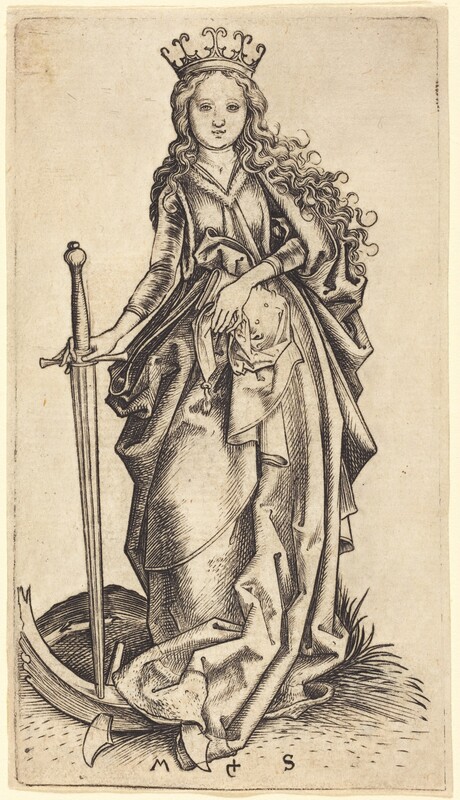
Saint Catherine of Alexandria
Catherine kneels in a moment of visionary clarity, the sword at her side and her crowned head lifted suggesting both imminent martyrdom and unwavering inner conviction.
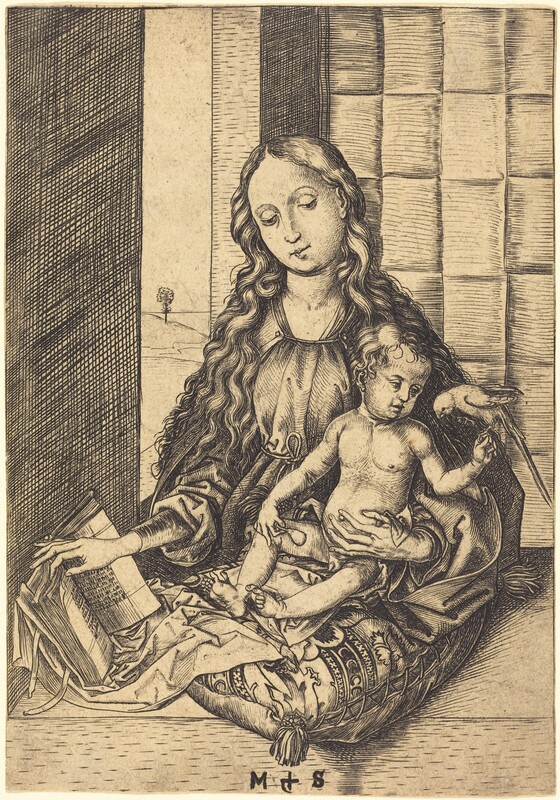
Madonna with a Parrot
Schongauer renders Mary's downcast attention to the book and the parrot as a meditation on presence; she is both intellectually engaged and emotionally withdrawn, conscious of dual worlds.
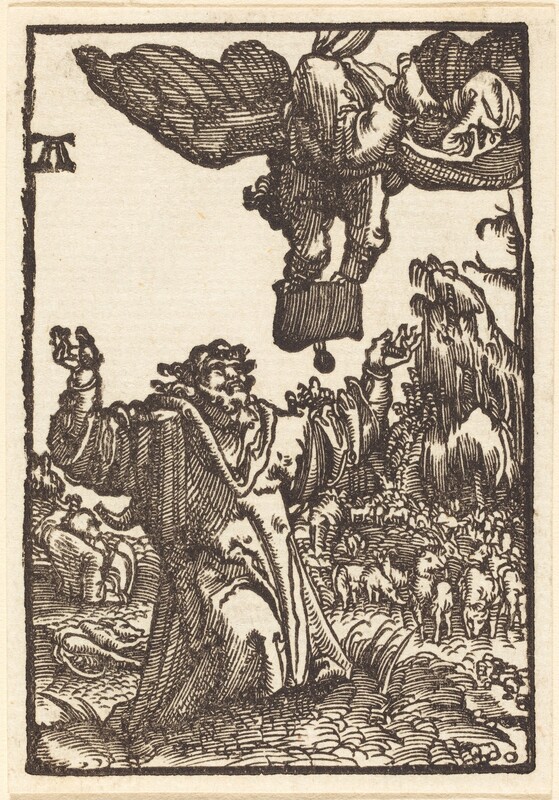
Annunciation to Joachim
The angel's arrival is marked by intense emotional reaction from Joachim and his companions, their gestures rendering visible the moment knowledge enters the human mind.
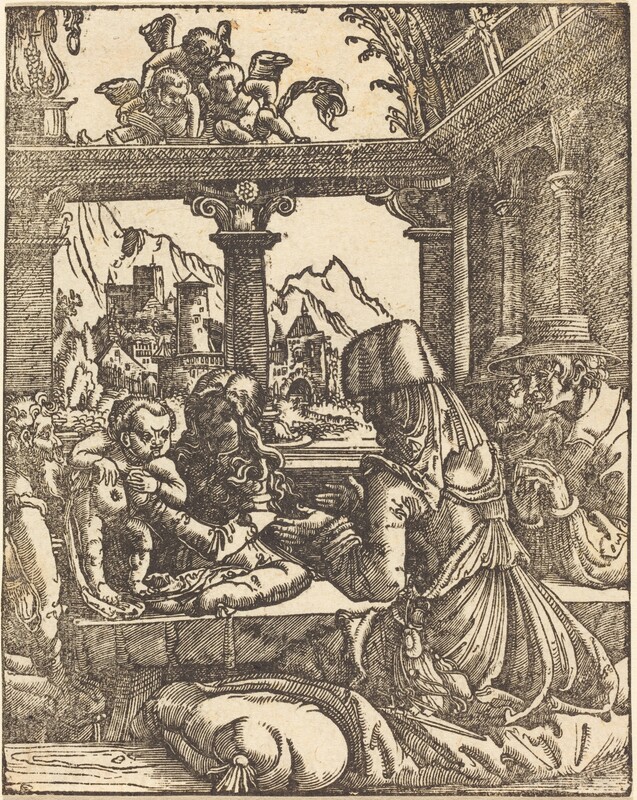
The Holy Kinship
Altdorfer's architectural framing and the careful arrangement of multiple figures around Mary and the Christ Child depicts not narrative but a moment of collective spiritual understanding and presence.
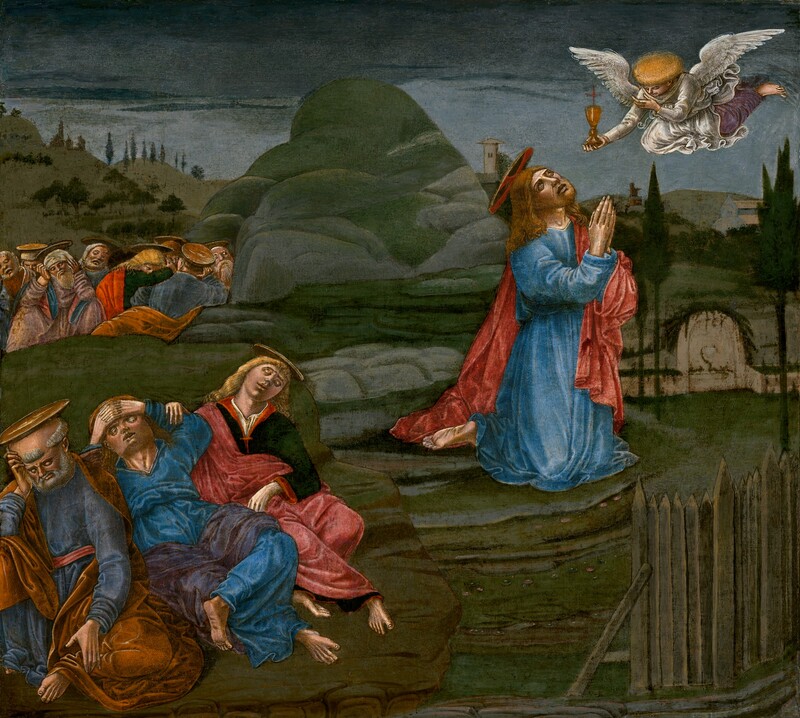
The Agony in the Garden
Benvenuto's Christ in the garden is isolated and turned inward, his anguished posture and the angels hovering above conveying his solitary awareness of coming sacrifice.
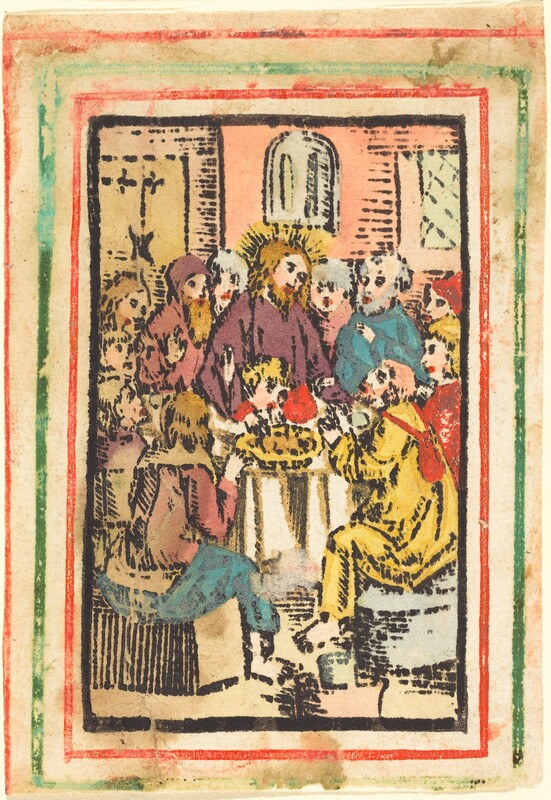
The Last Supper
The hand-colored woodcut staging of the Last Supper emphasizes Christ's central position and the disciples' varied emotional registers, capturing multiple states of consciousness in one moment.
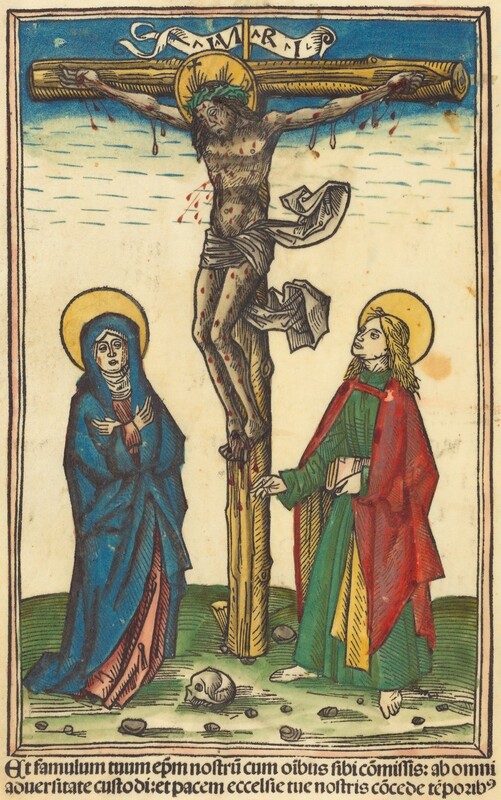
The Crucifixion
The woodcut renders Christ's crucified body with anatomical precision while saints below regard it with reverent but distinct expressions, marking the gap between bodily fact and spiritual comprehension.
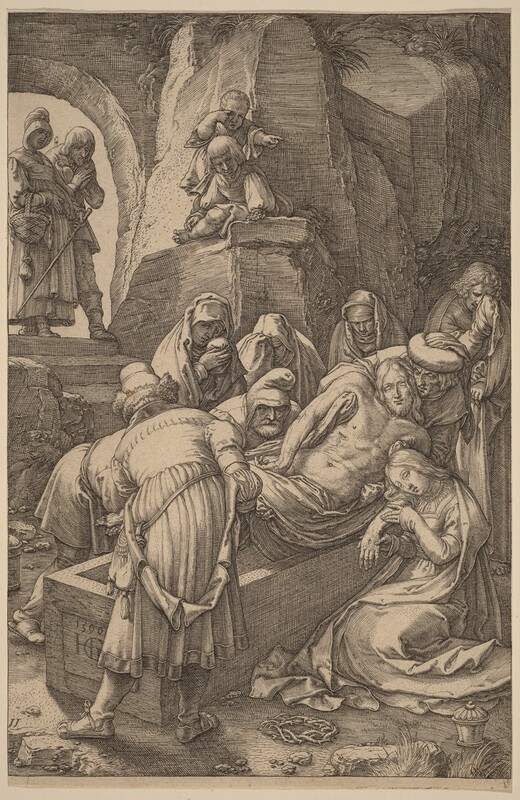
Burial of Christ
Goltzius's dense engraving of the Burial stages each figure's grief and reverence as a separate interior state, using line and shadow to differentiate consciousness among the witnesses.
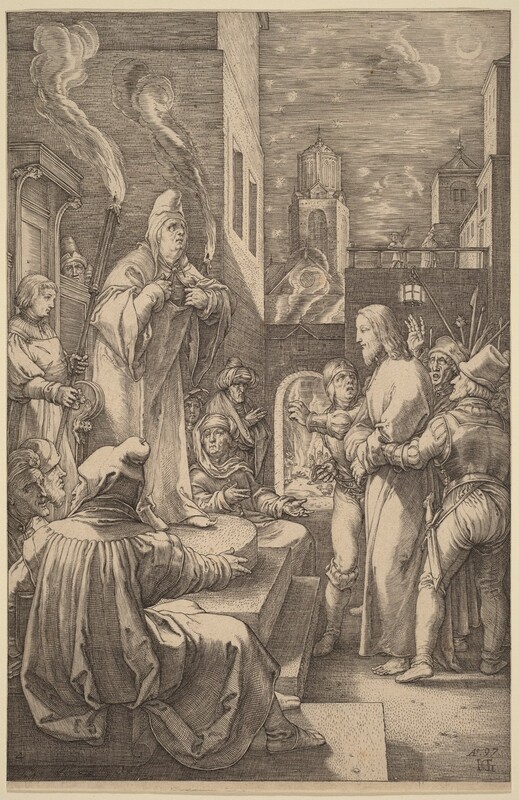
Christ before Caiphas
The interrogation scene becomes a study in psychological pressure; Goltzius renders Christ's composed face and body among hostile questioners, the figure holding inner knowledge amid external accusation.
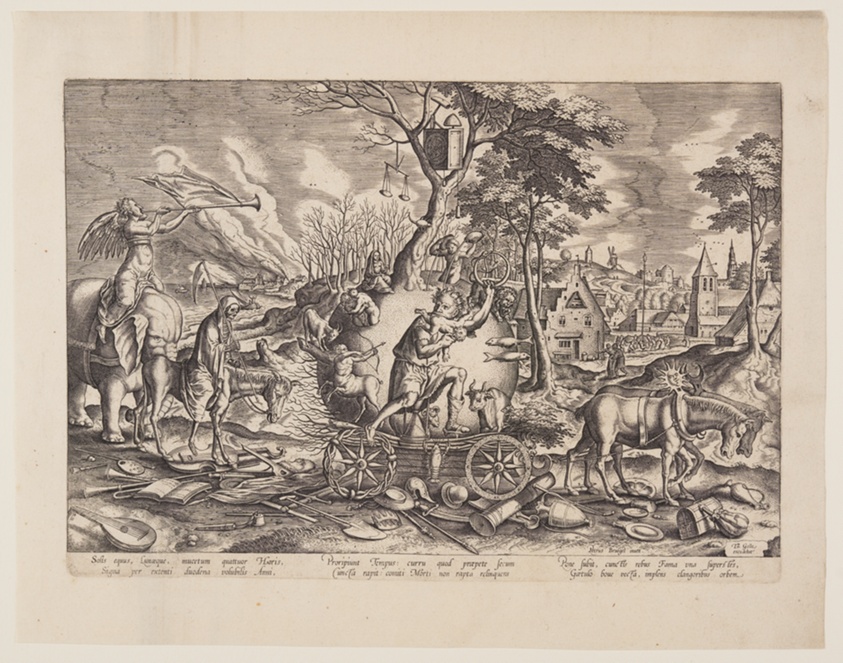
The Triumph of Time
Bruegel's dense composition of figures and actions presents multiple states of temporal consciousness simultaneously, with Time itself commanding the scene as an irresistible force of transformation.
![The Last Judgment [right]](/api/image-proxy?url=https%3A%2F%2Fapi.nga.gov%2Fiiif%2F8f33d430-f44c-4623-b195-ce1bb75acb5b%2Ffull%2F!800%2C800%2F0%2Fdefault.jpg)
The Last Judgment [right]
The Last Judgment engraving depicts souls in distinct states of awareness, from terrible recognition to continued ignorance, the composition itself enacting the separation of consciousness by divine judgment.
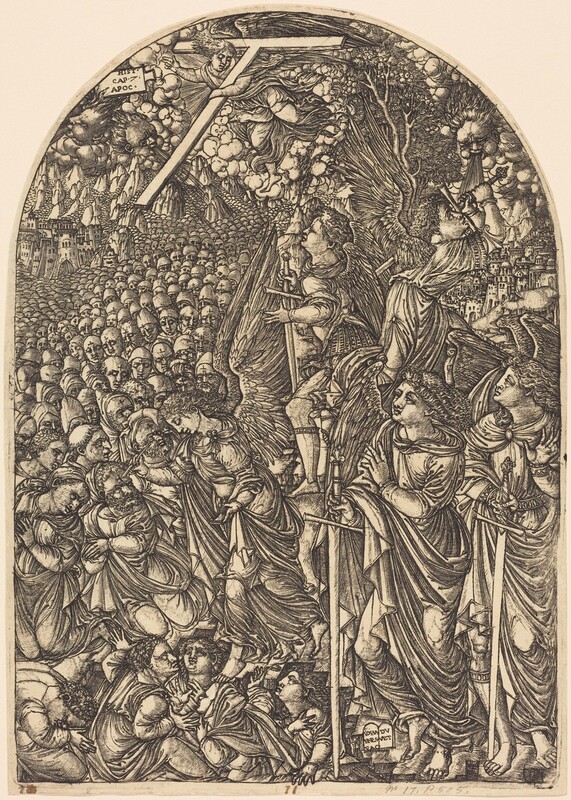
Four Angels Holding Back the Winds
Duvet's angels holding cosmic forces in restraint embody an impossible consciousness of divine order and cosmic duty, their bodies contorted to express the intellectual and spiritual tension of containing infinity.
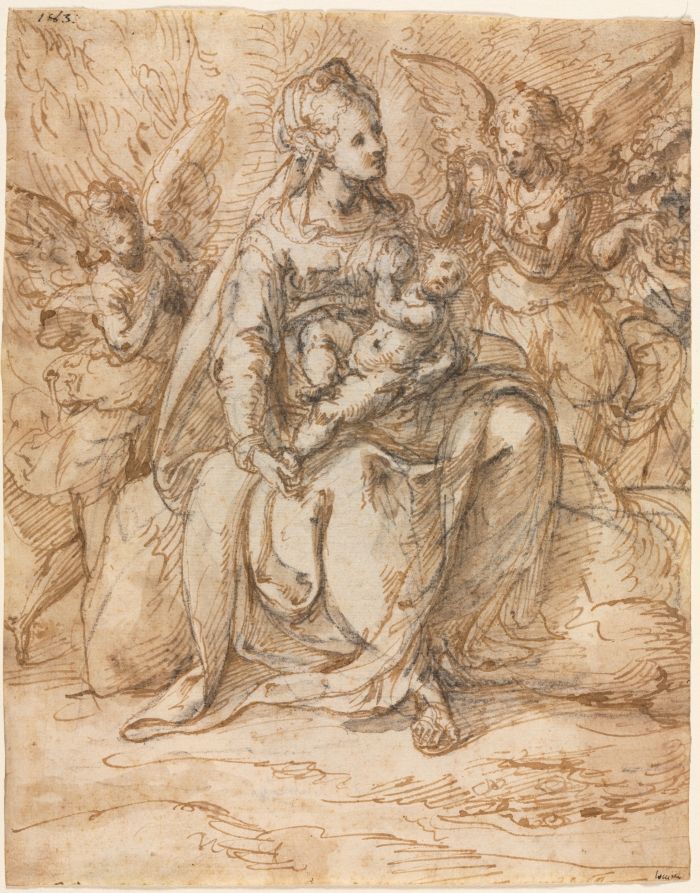
Madonna and Child with Angels
The pen-and-wash drawing captures Mary's tender, downward gaze at the Child while surrounded by attending angels, her consciousness divided between material presence and spiritual knowledge.
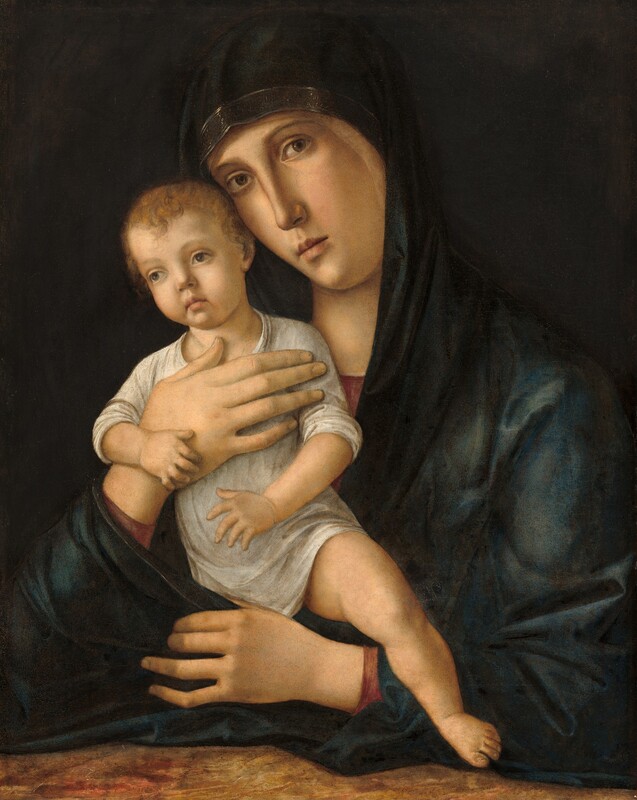
Madonna and Child
Bellini's oil painting renders the Virgin's profile as a study in inward focus; her surface composure and the Child's direct gaze place two forms of consciousness, human and divine, in intimate spatial contact.
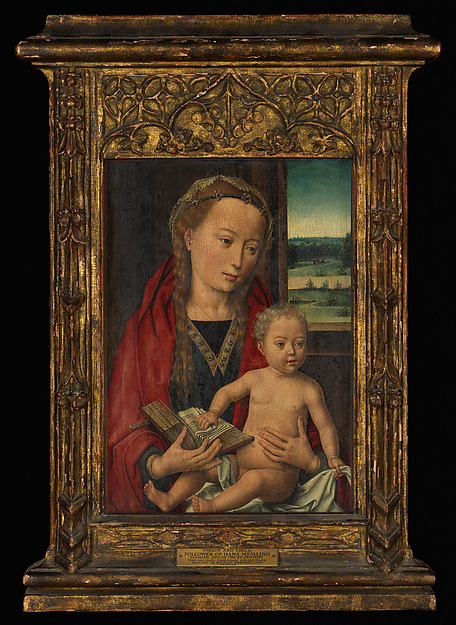
Virgin and Child
Memling's panel presents the Virgin's three-quarter profile as an icon of composed interiority, her red cloak and the distant landscape behind her constructing an interior space of prayer and presence.
The Review
The impulse is clear: line a room with Renaissance visions of Christ and the minds of the saints, and you have a show about consciousness. The paintings and prints assembled here do something simpler and more useful than that. They demonstrate, through formal discipline and technical exactness, how an artist could convey interiority without language, without narrative, using only what the hand and the printing press could make visible.
Start with Dürer's Saint Jerome in His Study. The composition is almost architectural in its control. Jerome sits at a desk, his body angled forward slightly, his hands steady over his books. The light from the left window defines planes and surfaces with surgical precision. The lions at his feet are rendered with as much anatomical attention as the saint himself. Nothing exaggerates. Nothing performs spirituality. The engraving works because Dürer understood that concentration is a visible thing, that the angle of a shoulder and the placement of light can signify thought.
This is why the show's best moments are its quietest. Schongauer's Saint Catherine of Alexandria is a standing figure, crowned, with a sword at her side. She is not being martyred in this image. She simply stands, her weight settled, her gaze lifted. The engraving measures her interior state through posture and through the careful articulation of drapery, which suggests both the weight of the body beneath and something like spiritual elevation. The crown does the work the composition asks it to do, but it is the precision of the line that makes the image work at all.
Altdorfer's woodcuts register differently. The Transfiguration radiates outward from Christ's figure, the light breaking across the picture plane in a visual display of revelation. It is more baroque in its energy than the Dürer work, less contained. Yet it succeeds for the same reason: the form follows directly from the content. The radiance is not decoration. It is the point of representation itself. When Altdorfer cuts the Annunciation to Joachim, the arriving angel and the figures' shocked reaction are rendered with sudden verticals and fractured angles that enact the disruption of normal consciousness by the intrusion of the divine.
The longer I spent with Goltzius's late engravings, particularly the Burial of Christ and Christ before Caiphas, the more their technical authority became impossible to ignore. Goltzius inherited Dürer's language but evolved it into something far more complex. The hatching in his finest prints creates an almost sculptural relief, light moving across form in ways that suggest both physical presence and emotional state simultaneously. In the Burial, each attendant figure has its own volume, its own weight, and its own degree of grief rendered through the precise modulation of line. This is not illustration. It is representation at the level of pure formal mastery.
Not everything in the show sustains this level of rigor. The hand-colored woodcuts of the Last Supper and Crucifixion function as devotional objects, and the addition of color, while understandable for a prayer book, flattens some of the formal drama that monochrome engraving can achieve. Bellini's oil painting of the Madonna and Child is competent, the Virgin's profile is well-drawn, the landscape in the window is rendered with Netherlandish care, but it operates entirely within the conventions of its type. Nothing in it surprises or contradicts itself.
The most telling weakness is the inclusion of the Holbein Dance of Death woodcuts, which feel conceptually necessary to the show's argument about consciousness confronting mortality, but which sit formally apart from everything else in the room. Where the sacred imagery is built from refinement and compression of form, the Dance of Death operates through abundant narrative detail. The woodcuts are busy, crowded with figures, with gestures that explain themselves, with action that does the work words might do. They are good prints of their kind, but they belong to a different formal language, and their presence exposes the show's reliance on thematic unity rather than curatorial rigor.
What these works do, at their best, is demonstrate that consciousness in art is not conveyed through psychological realism in the modern sense. It is conveyed through the artist's ability to make form itself, the line, the light, the surface, the interval between elements, carry the weight of the interior life. When Dürer engraves Jerome bent over his texts with the quality of attention his line gives to every inch of the plate, he is not telling us Jerome is thinking. He is showing us what thinking looks like as a formal matter. That is the distinction the show would make better if it trusted what these objects actually do rather than what the wall text wants them to mean.
- +Technical authority in Dürer's engravings and Goltzius's late work demonstrates the visual language of interiority through formal precision alone.
- +Smart pairing of Schongauer's psychological portraiture with later Transfiguration scenes shows how two different artists solve the same formal problem across fifty years.
- +The monochrome prints maintain their formal power; the material fact of line on laid paper remains the strongest evidence in the room.
- –The hand-colored woodcuts flatten the formal drama achieved by black-and-white engravings, diluting the show's visual argument.
- –Holbein's Dance of Death prints operate in a different formal language (narrative density rather than compression) and feel thematically necessary but formally incongruous.
- –Wall text leans on the theme of consciousness to unify works that don't all achieve interiority the same way; the show would be stronger if it acknowledged formal disagreement.
- Lucas Cranach the Elder →Cranach's religious woodcuts and paintings share Dürer and Altdorfer's interest in rendering spiritual states through formal precision, particularly in his Passion series.

Kessler's review is essentially right, but she's being generous to a show that wants to sound ambitious and settles for safe. The premise about consciousness and interiority is real enough, but the execution dodges every curatorial risk that could make it interesting.
When I stood with Dürer's Saint Jerome in His Study, I saw exactly what Kessler describes: the engraver's attention to light on a book spine, the angle of a shoulder over a desk. That's genuinely there in the line work. But it's also a painting about a studio, Jerome in his space, surrounded by the tools and textures of intellectual labor. The show's wall text wants you to read this as 'consciousness as formal mastery,' which is neat, but Jerome's interiority here is almost beside the point. We're looking at an old master's virtuoso demonstration of how to render objects: stone, paper, fur, flesh. That Dürer can make all these textures legible at the same scale is the actual story, not some meditation on the saint's thoughts.
The problem deepens when you move through the room. Schongauer's Saint Catherine of Alexandria stands there crowned and serene, yes, but the show keeps implying her stillness is a window into her spiritual state. What if it's just a standing portrait of a saint with her attributes? The drapery is beautifully cut, those pleats show real knowledge of how cloth behaves, but reading that as 'elevation' is the kind of symbolic reading that confirms what you already expect from Christian iconography. There's no friction, no surprise.
Altdorfer's The Transfiguration does have a different visual language than Dürer's quieter work, and the radiant lines really do pulse outward from Christ's figure. But calling this 'baroque in energy' lets the show sidestep what's actually radical about it: Altdorfer's woodcut is almost abstract in how it treats light. The figure itself is less important than the geometry of rays. The show could have been about that, about how these artists were experimenting with how to make the invisible visible through pattern and energy, not through psychological realism. Instead, we get the soft reading that the form 'follows from the content.' Sure, but so does every successful print in the Western canon.
Goltzius's engravings are phenomenal. Burial of Christ and Christ before Caiphas show technical command that makes you want to understand what decades of looking at copper plates actually teaches your hand. The hatching creates space and shadow simultaneously; you're watching one of the last great practitioners of a medium that's being replaced by painting. There's real pathos in that alone. But the show treats these as exemplars of spiritual visualization rather than as technical end-points, as something being lost. That's a curatorial choice that flattens them.
What genuinely bothered me was walking past these works and finding the reasoning thin. The Madonna and Child paintings, Bellini's is here, and there's Memling's Virgin and Child in its gilt frame, sit in this show as if the question is 'how does a painter show Mary understanding her divine motherhood?' But what's actually on the panel is a beautiful young woman holding a child, rendered with oil technique that hadn't been fully available to Northern artists a generation earlier. Bellini's softness and Memling's sharper detail are both about what the medium makes possible, not about accessing consciousness. The show could have argued that technical innovation IS spiritual innovation, that painting oil allows for a kind of intimate portraiture that changes what religious art can show. Instead, it reads interiority back onto elegance.
The worst inclusion is The Triumph of Time by Pieter Bruegel the Elder, a massive engraved allegory crammed with temporal symbolism, wheels, chariots, figures representing vanity and decay. It's there because the show needed something about consciousness meeting mortality. But it's a rhetorical wall of information, not a formal investigation. Bruegel made this to be decoded, not to be felt through form. Kessler mentioned a similar problem with the Dance of Death woodcuts, and she's right: these works are working in a fundamentally different register. The show's thematic umbrella is too broad to hold works that have nothing formal in common.
What I wanted this show to argue, and what it keeps circling without quite touching, is this: Renaissance artists developed printmaking and painting techniques that let them show states of attention, states of vision, states of knowledge, without narrating them. The Transfiguration doesn't need to show Christ teaching, it can show the moment of revelation through pure light and form. Jerome doesn't need to be shown having a thought; his posture and the quality of the space around him can be the thought. That's a story about representation as such, about what gets possible when you control the surface enough. Instead, the show says these works are about depicting consciousness, as if consciousness were a thing that art represents the way portraiture represents a face. It conflates technical sophistication with psychological insight, which is a comfortable move but a wrong one.
There are genuinely striking moments here. Dürer's Christ Carrying the Cross is a roiling composition where the crowd and the event are almost indistinguishable, bodies and weapons and motion compressed into one agitated surface. You can feel the chaos. Altdorfer's Annunciation to Joachim uses fractured verticals so the page itself registers shock. These are works thinking through form in real ways. But they're floating in a show that wants them to mean something they don't quite have to mean. The exhibition is competent and it will satisfy people who already care about Renaissance prints, but it takes no real risk. It doesn't argue anything the title doesn't already promise. It's a survey with a thesis grafted on, not a curation built from genuine disagreement about what these objects do.
Kessler's final point, that the show would be stronger if it trusted what these objects do rather than what wall text claims they mean, is the one that stuck with me as I left. She's not quite saying the show fails. She's saying it underestimates what's actually in the room. That's a gentler criticism than mine. I think the show is safe. I think it chose the easiest reading of consciousness available: consciousness as spiritual interiority rendered visible. And I think that choice, made early, made everything else follow.
- +Individual works like Dürer's Christ Carrying the Cross and Altdorfer's Annunciation to Joachim demonstrate real formal invention, using composition and pattern to register disruption or revelation.
- +The selection of major printmakers (Dürer, Altdorfer, Schongauer, Goltzius) creates unavoidable encounters with technical mastery across a period when engraving and woodcut were the dominant media.
- +Pairing Bellini and other Italian works alongside Northern prints allows genuine differences in approach to emerge, soft sfumato against linear precision, panel painting against paper prints.
- –The thematic umbrella 'consciousness and interiority' is too soft to enforce curatorial logic; it allows radically different kinds of work (allegorical prints like The Triumph of Time, narrative cycles, devotional objects) to sit together without arguing anything together.
- –Wall text and interpretation repeatedly claim that formal refinement equals psychological access, conflating technical sophistication with access to interior life, a comfortable but unexamined assumption.
- –The show lacks any real disagreement about what these works do; it treats representation of consciousness as a solved problem rather than a contested one, which drains risk and surprise.