Ecstatic Ruin: Painting Beyond Order
From Baroque altarpieces to Abstract Expressionism, how painters abandoned rational composition to reveal what reason cannot hold.
“Ecstatic ruin: Baroque ceiling frescoes, Abstract Expressionist canvases, and Surrealist dreamscapes, ordered chaos as a recurring strategy for representing what rational composition can't hold.”
This exhibition traces a counter-history of Western painting organized around a single principle: the productive overthrow of compositional order. From the swirling heavens of Baroque altarpieces to the violent brushwork of mid-century abstraction, these works do not seek harmony or balance. Instead, they embrace disarray, layering, and visual excess as strategies for representing ecstasy, the unconscious mind, and the turbulent energies that rational composition cannot hold. Whether through the supernatural tumult of Baroque religious art, the gestural chaos of Abstract Expressionism, or the dream-logic of Surrealism and Post-Impressionism, each work insists that meaning emerges not from restraint but from abundance and rupture.
The Baroque paintings anchoring this exhibition deploy architectural chaos and divine turbulence to overwhelm the viewer's sense of stable ground. The Abstract Expressionists inherited this tradition of visual excess but secularized it, using rapid mark-making and material accident as routes to authentic expression. The Post-Impressionist and early modernist works occupy liminal spaces where dream-logic, irrational association, and chromatic abandon replace both divine order and rational structure alike. Together, these ten works argue that the most profound visual experiences occur when painters renounce control and invite disorder into their practice.
Walk through in order, 10 works.
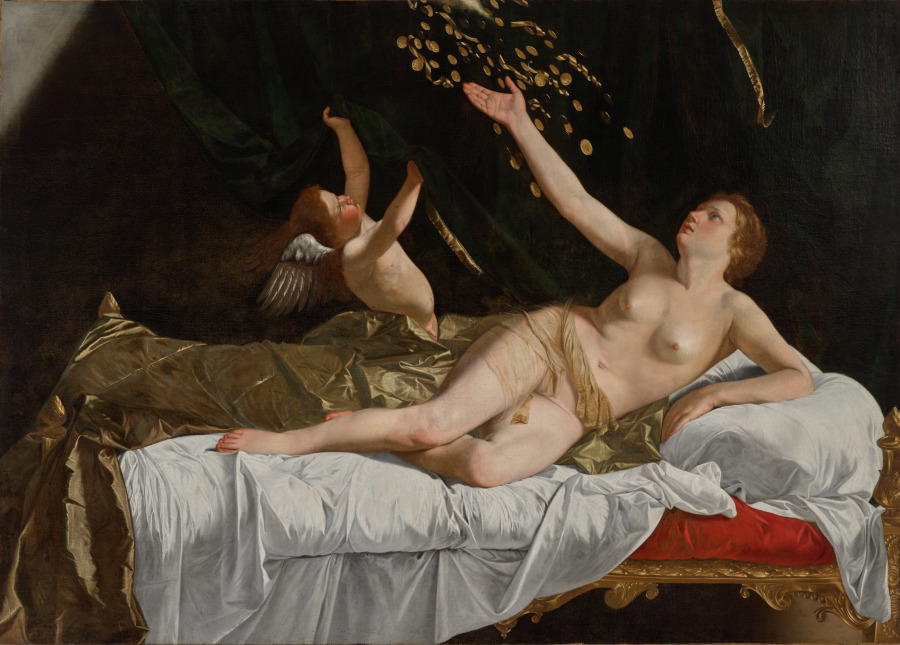
Danaë
Gentileschi's Danaë captures the moment of divine violation as a cascade of golden light and churning flesh, using extreme foreshortening and tumultuous drapery to render a supremely chaotic instant of ecstatic surrender.
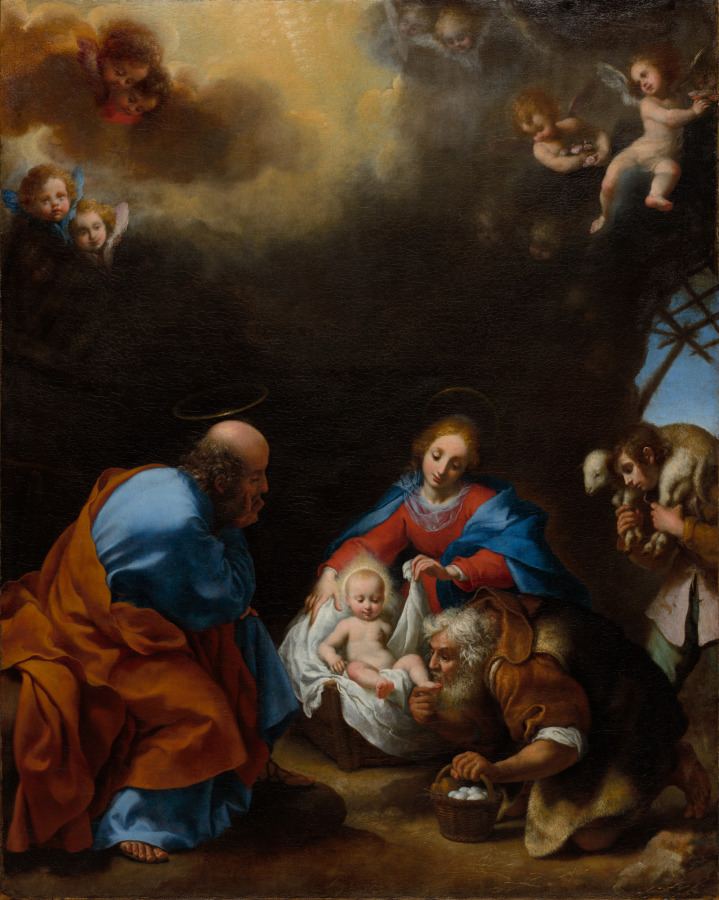
Adoration of the Shepherds
Dolci's Adoration of the Shepherds suspends multiple figures in a vertically compressed, airless composition where sacred space collapses into a tangle of bodies and gazes, denying the viewer any rational spatial foothold.
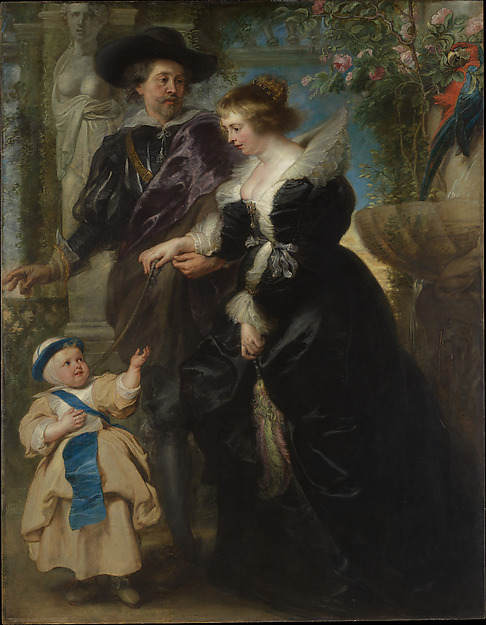
Rubens, Helena Fourment (1614–1673), and Their Son Frans (1633–1678)
Rubens' portrait of Helena Fourment and their son deploys swirling fabrics, interlocking limbs, and an almost tactile abundance of flesh and texture that makes ordered family portraiture dissolve into sensuous formal excess.
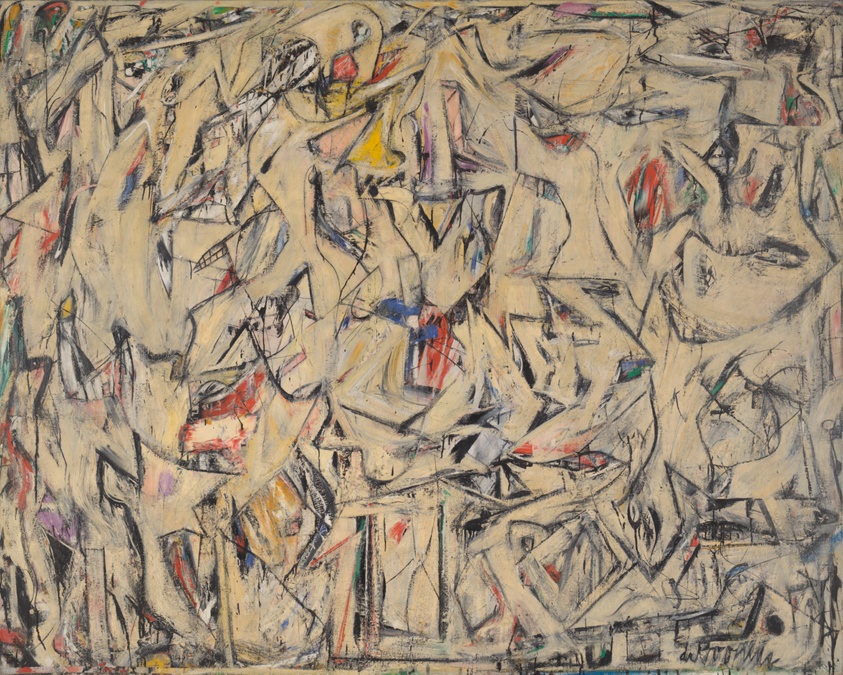
Excavation
De Kooning's Excavation is a densely layered abstract field where the eye cannot settle on any single form, only on the accumulated traces of violent erasure and reinscription that constitute the painting's surface.
April
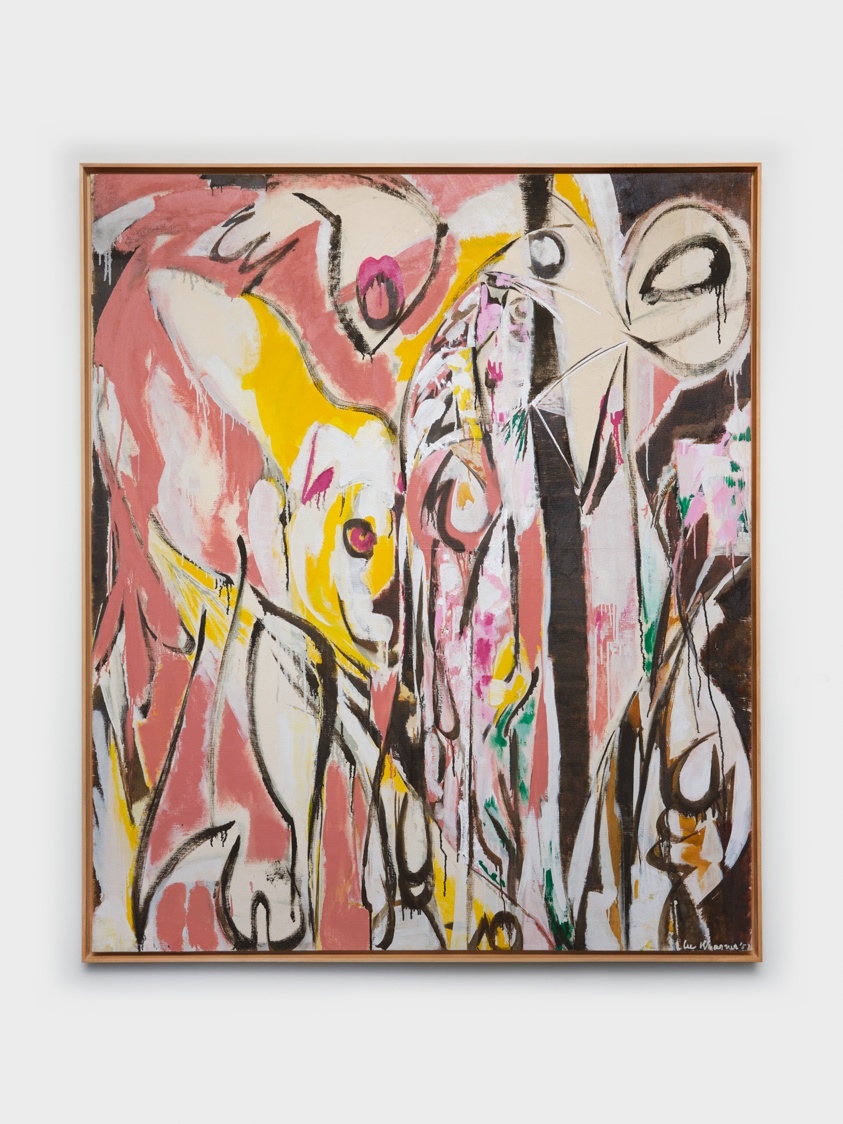
Krasner's April floods the canvas with interlocking gestural marks and dripped lines that create an allover composition where no single element dominates, embodying the Abstract Expressionist embrace of material accident.
Untitled (Painting)
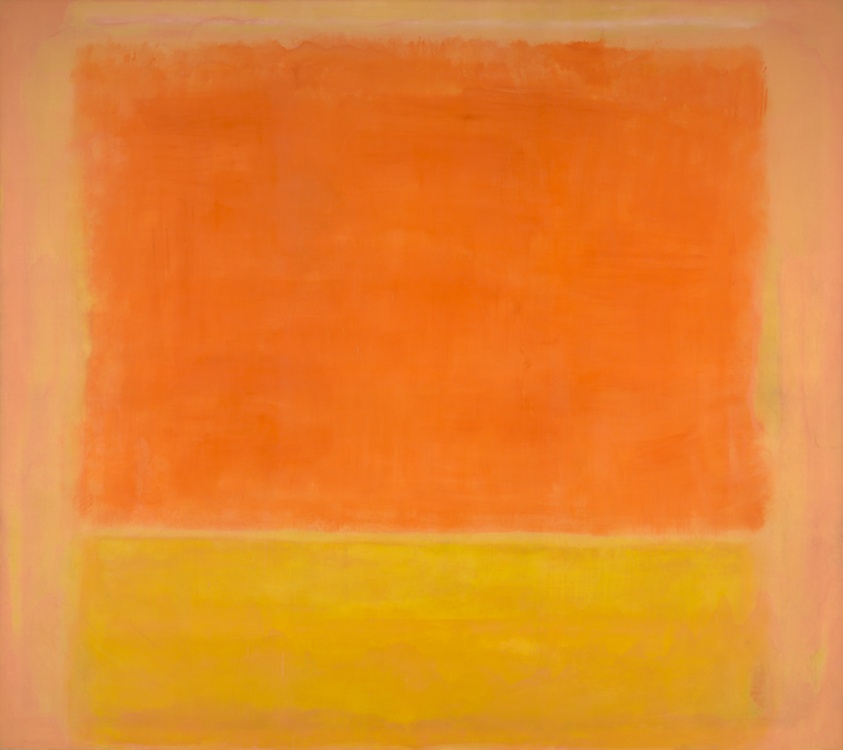
Rothko's Untitled (Painting) presents a seemingly calm field of color until proximity reveals that the edges are not clean, the hues are not uniform, and the surface vibrates with optical turbulence that dissolves the viewer's sense of stable ground.
I Raro Te Oviri (Under the Pandanus)
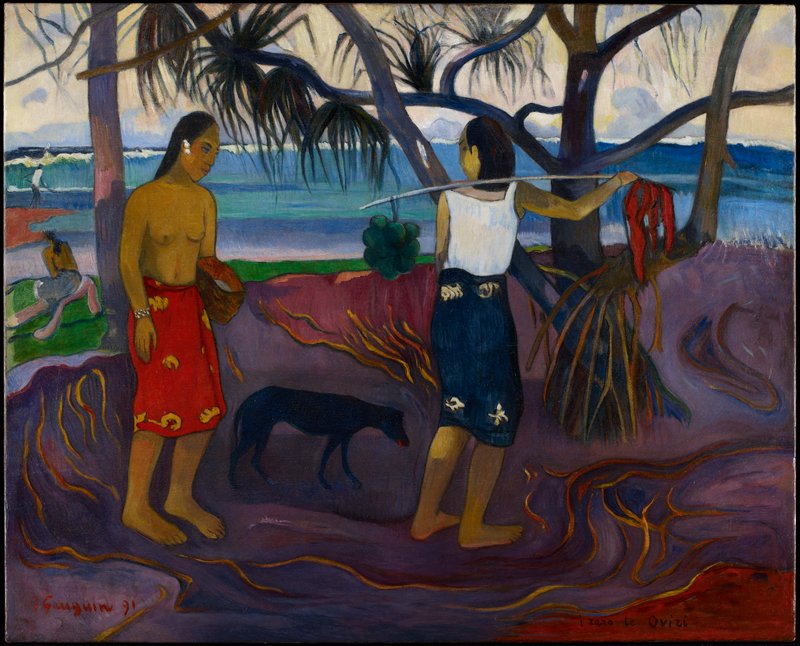
Gauguin's I Raro Te Oviri (Under the Pandanus) abandons linear perspective and natural color for a dream-thick composition where flatness, arbitrary hue, and flattened forms collapse European spatial logic into a vision of the irrational.
Abstraction: Background with Blue Cloudy Sky
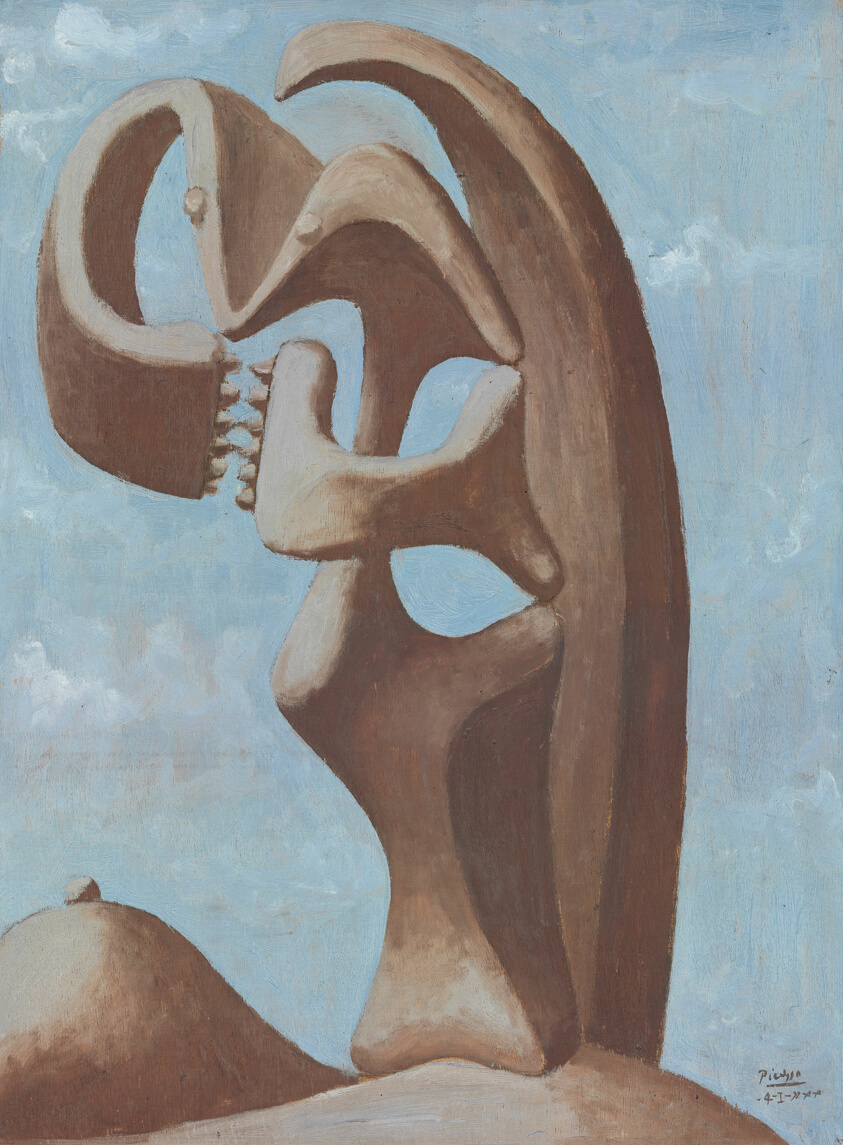
Picasso's Abstraction: Background with Blue Cloudy Sky splinters the horizon and sky into overlapping planes and fractured edges that refuse any single point of rational visual repose.
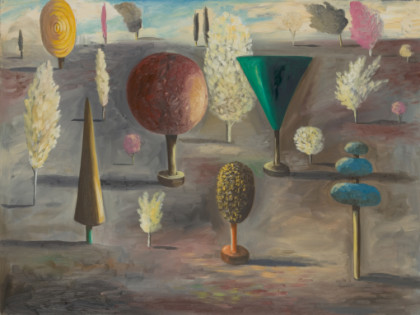
Specters in the Forest
Laemmle's Specters in the Forest uses layered gestural mark-making and murky overlapping forms to construct a vision of the forest as psychologically dense and perceptually unstable rather than spatially ordered.
Woodland Scene Overlooking Dedham Vale
Constable's Woodland Scene Overlooking Dedham Vale uses broken brushwork and atmospheric dissolution to dissolve the boundary between land and sky, rendering English landscape as mood and turbulent light rather than stable topography.
The Review
The premise arrives already exhausted. Abandoning order, embracing excess, chaos as meaning, the unconscious made visible through rupture and mark. We have heard this before, many times, and the exhibition does little to prove it needs hearing again.
Walk into the room and the problem announces itself immediately. Untitled (Painting) by Mark Rothko sits inert, a color field so restrained it reads like a negation of the show's own argument. Two muted horizontal bands, ochre above maroon, with edges that dissolve rather than rupture. The curator wants this to represent secularized Baroque excess, but there is nothing excessive here, nothing that overwhelms. The painting asks for meditation, not ecstasy. It is the wrong object for this thesis, and its presence suggests the curator selected from a list rather than actually looked.
Willem de Kooning's Excavation is where things begin to move. The painting is a genuine mess, which is not the same as a productive mess. Layers of cream, brown, and blue scrubbed over one another in what appears to be frantic revision. The surface is scarred, worked, almost archaeological in the literal sense. There are figurative ghosts in there, barely legible, teeth and limbs emerging and submerging. The painting admits its own incompleteness. It is not restful. That matters.
Then consider April by Lee Krasner. The canvas contracts and expands simultaneously, black gestural marks twisting against a lighter ground, but with a structural intelligence the title belies. The marks do not scatter. They cohere through a kind of muscular syntax, each stroke answering the one before it. There is abundance here, yes, but also argument. The painting is dense without being decorative. It is the strongest work in the room.
The Baroque section functions as historical decoration. Peter Paul Rubens' Rubens, Helena Fourment (1614–1673), and Their Son Frans (1633–1678) is competent portraiture, the figures arranged in a soft diagonal with light that flatters the flesh. It is a pleasant painting. Orazio Gentileschi's Danaë offers more turbulence, the woman's body caught in the midst of transformation, gold light pouring down as the god arrives. There is actual visual confusion here, layers of drapery and divine substance overlapping. But the Baroque works function in the show as validators, as if their existence centuries earlier proves the thesis was always true. They do not argue with the abstraction. They simply precede it.
I Raro Te Oviri (Under the Pandanus) by Paul Gauguin is a strange inclusion. The painting is claustrophobic, figures pressed into shallow space, earth tones and greens creating a surface that does not recede. There is something resistant about it, something that refuses both Impressionist light and conventional perspective. But the show frames it as dream-logic when what is actually happening is a flattening of space, a formal decision, not a psychic eruption. The curator reads Gauguin's biography into the canvas rather than the canvas itself.
Abstraction: Background with Blue Cloudy Sky by Pablo Picasso is a small panel, barely there. The composition is almost still-life cubism, a blue background with hints of form, the whole thing executed with a kind of restraint that contradicts the exhibition's central claim. Picasso abandoned order here, but tentatively, almost apologetically. It does not belong alongside Excavation.
The show's fundamental weakness is that it confuses visual chaos with meaningful disorder. Excess is not automatically productive. A painting can be wild and empty at once. The curator has selected works because they fit a predetermined narrative about modernism's rejection of rationality, but in doing so has assembled a group that argues nothing to each other. April and Excavation speak to something real, something about how mark-making can generate form rather than merely express it. The Rothko undercuts this. The Baroque works are scenery. Nothing in the exhibition actually builds.
This is a show that needed a narrower aim. Strip away the Baroque, strip away Gauguin, commit entirely to the proposition that Abstract Expressionism inherited a formal problem from earlier art and solved it through pure material investigation. That argument might hold. Instead, the curator has built a museum-approved survey, ten works that represent ten different things, all loosely gathered under the heading of chaos. The eye moves through the room without resistance or surprise.
- +April demonstrates genuinely sophisticated gestural control, where abundance and structure reinforce rather than contradict each other.
- +Excavation achieves actual visual turbulence without sacrificing compositional presence, the scarred surface doing genuine work.
- +The inclusion of Rothko's Untitled (Painting) accidentally exposes the show's own oversimplification about order and abstraction.
- –The Baroque works function as historical props validating a thesis rather than arguing within the exhibition itself.
- –Rothko's extreme restraint directly contradicts the curator's claim about Abstract Expressionist excess, suggesting the thesis was predetermined rather than tested against the actual objects.
- –The Post-Impressionist and Romantic works feel selected to pad the narrative rather than challenge or complicate it, contributing to a museum-survey passivity.
- Jackson Pollock →Pollock's drip paintings represent the logical endpoint of the gestural chaos strategy traced here, replacing the artist's hand entirely with the physics of pour and scatter.
- Anselm Kiefer →Kiefer's densely layered, textually excessive paintings revive the Baroque principle of visual abundance as a route to historical and psychological content in contemporary practice.
- Cy Twombly →Twombly builds compositions from accumulated scrawl and gestural mark-making that refuse legibility, demonstrating how chaos and abstraction can achieve lyrical rather than violent effect.
Curious what another critic would make of this show?