Crossing Lines: Art in Motion, 1900–1960
Nine artists who traveled, displaced, or reimagined themselves and their subjects across borders, mediums, and cultures.
“20 modern artists dealing with Migration & Cultural Encounter”
This exhibition traces how twentieth-century artists responded to migration, exile, and cultural displacement, not through sentiment but through formal reinvention. The roster centers on William H. Johnson, an African American painter who spent years in Scandinavia and North Africa, and his contemporaries in the Harlem Renaissance, whose work documents both community and the wider world. Alongside them, European modernists—Picasso, Léger, Braque—and the Mexican muralist David Alfaro Siqueiros demonstrate how artists at the intersection of geographies and cultures translated those encounters into new visual languages. What unites them is not a single style but a shared condition: the artist working across borders, absorbing influences from distant places and recombining them on canvas, paper, and stone.
The show moves between intimate studies and monumental forms, between sketches made abroad and finished oils, between the personal documentation of daily life and the formal abstraction that emerged from cultural encounter. Johnson's watercolors of Danish villages sit alongside Picasso's fragmented figures; Léger's mechanical bodies appear next to Siqueiros's social realism. Each artist found in displacement—whether chosen or forced—a reason to remake how they saw and painted the world.
Walk through in order, 19 works.
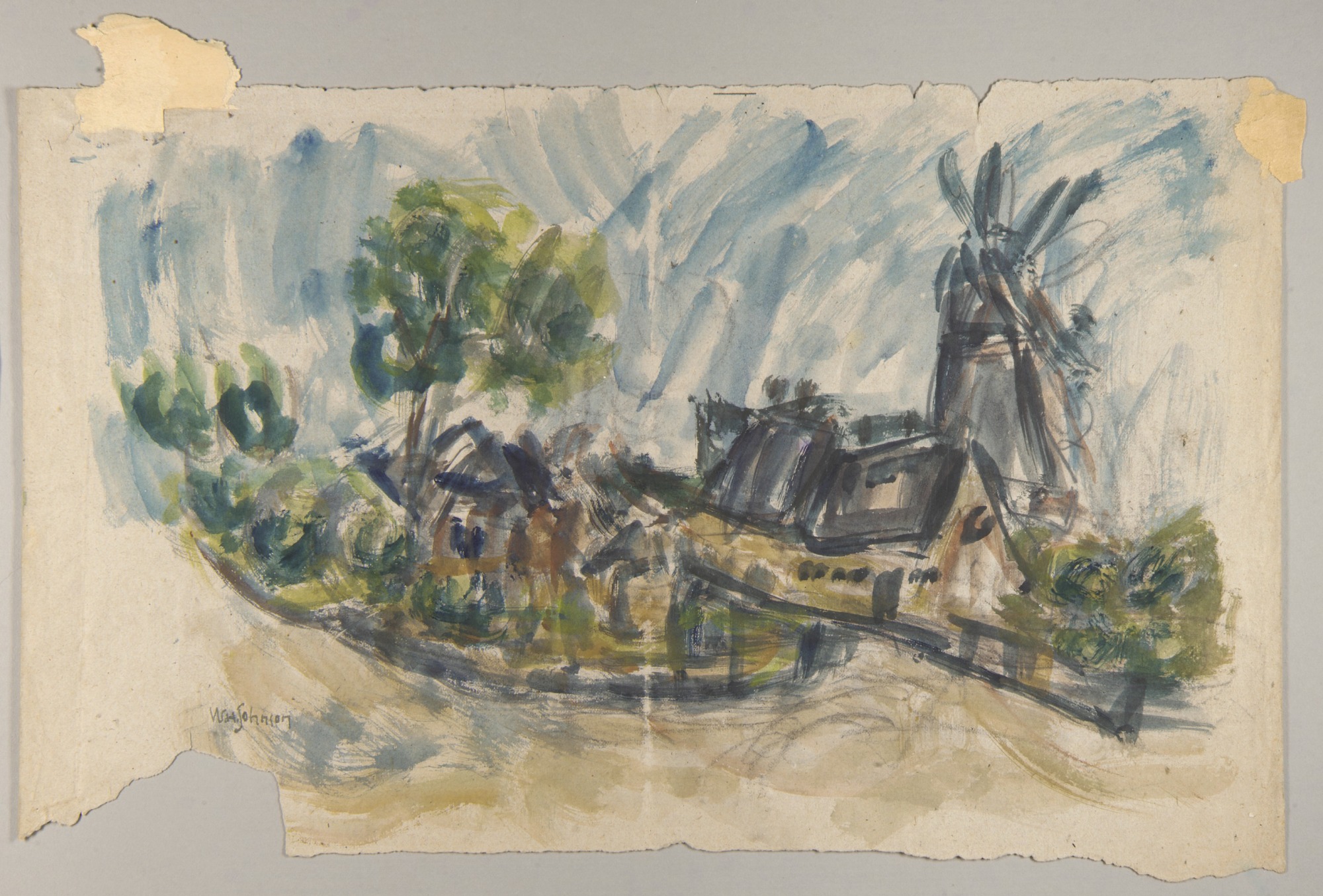
Windmill and Houses, Denmark
Johnson's tempera sketch of a Nordic windmill and cottage, made during his years in Denmark, captures the direct observation of unfamiliar architecture with simplified forms and luminous watercolor washes, a formal breakthrough that came from his encounter with northern light and vernacular building.
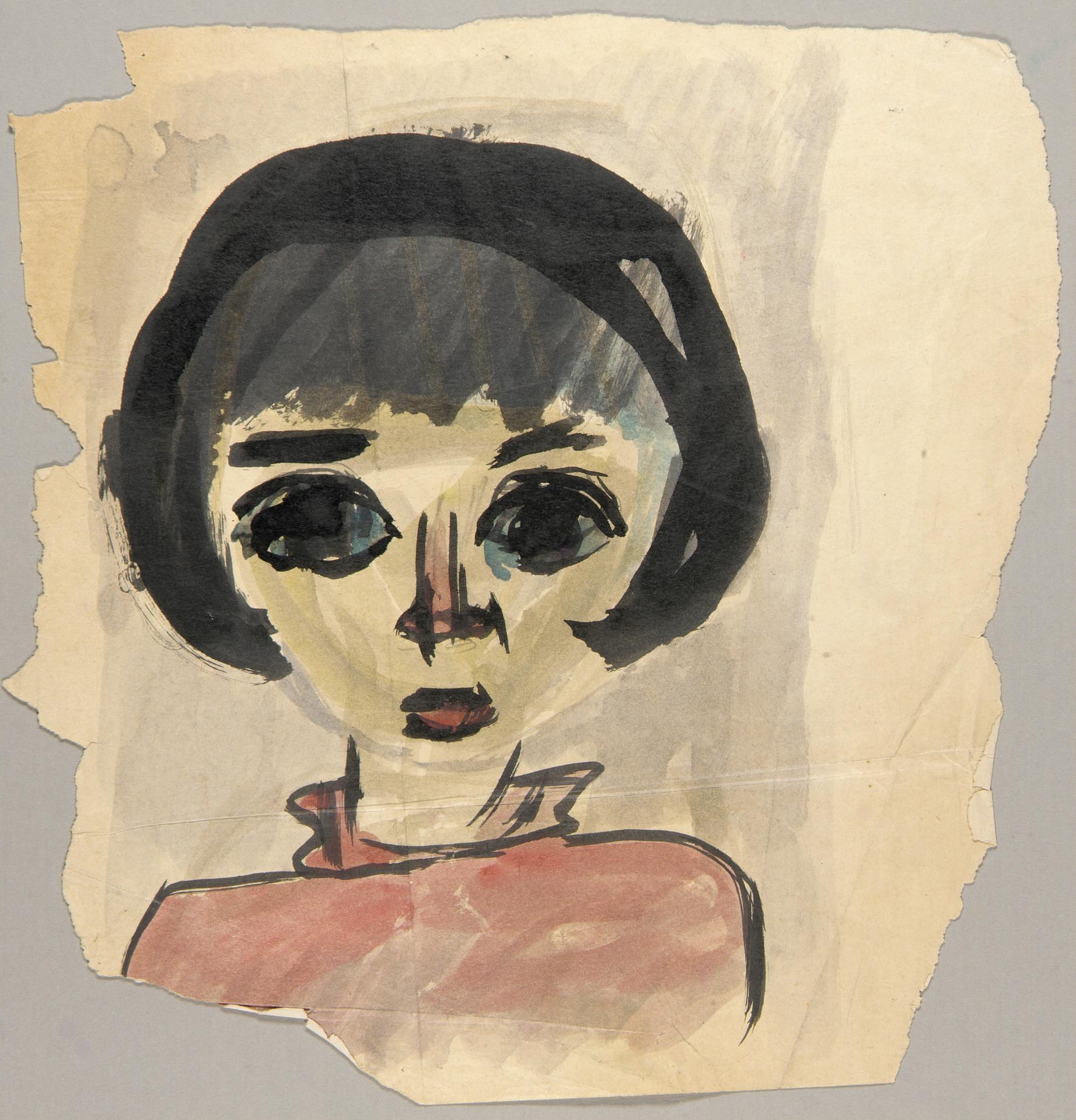
Refugee Child
A stark, expressionist portrait of a displaced child, rendered in bold black outlines and minimal color, speaks to the refugee experience of the 1930s; Johnson's exaggerated features and direct gaze transform documentary subject into psychological intensity.
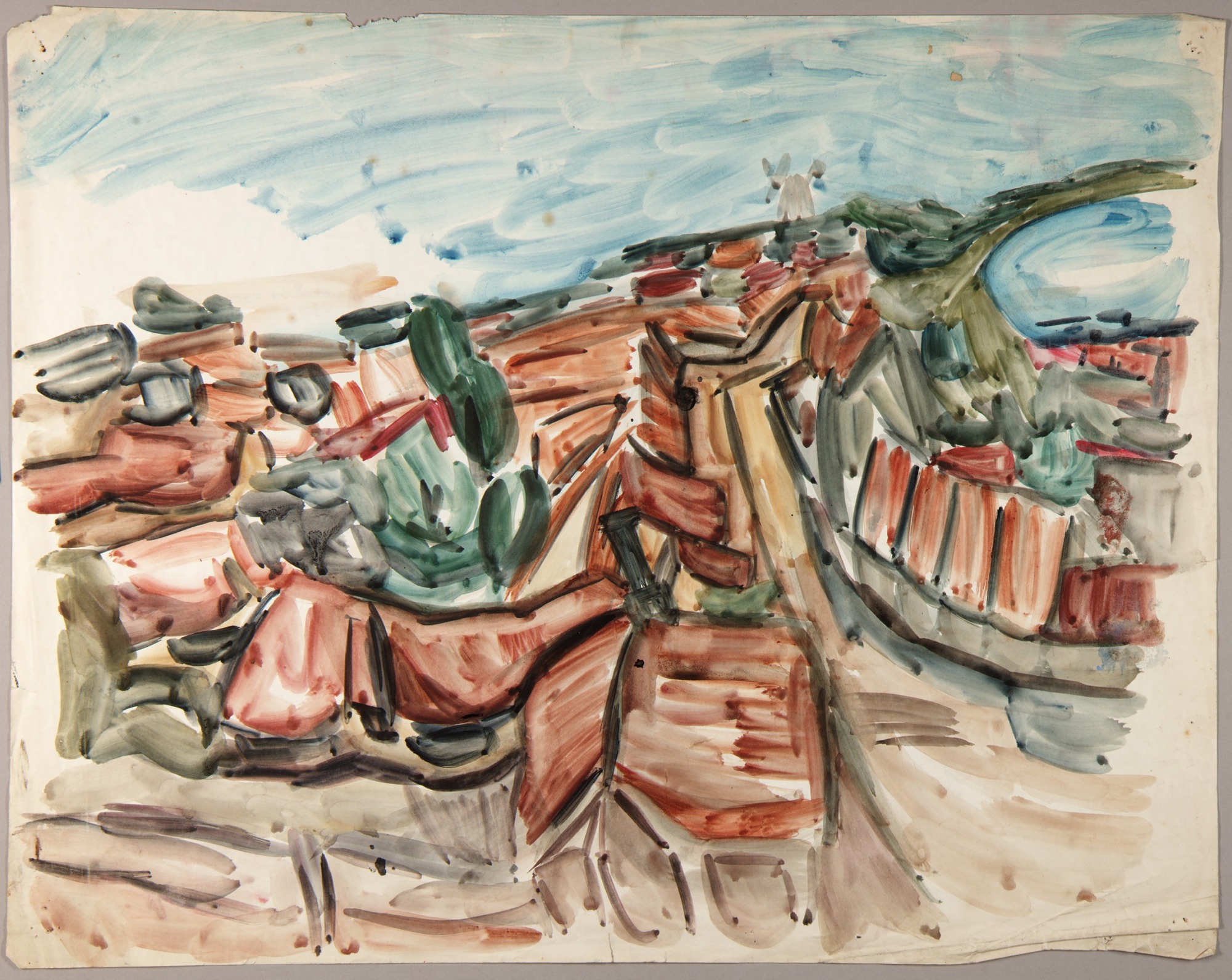
Kerteminde, Denmark
This watercolor of the Danish fishing village Kerteminde demonstrates Johnson's method of working directly from observation, using transparent washes and loose brushwork to capture both the architecture and the atmospheric conditions of a place foreign to his American origins.
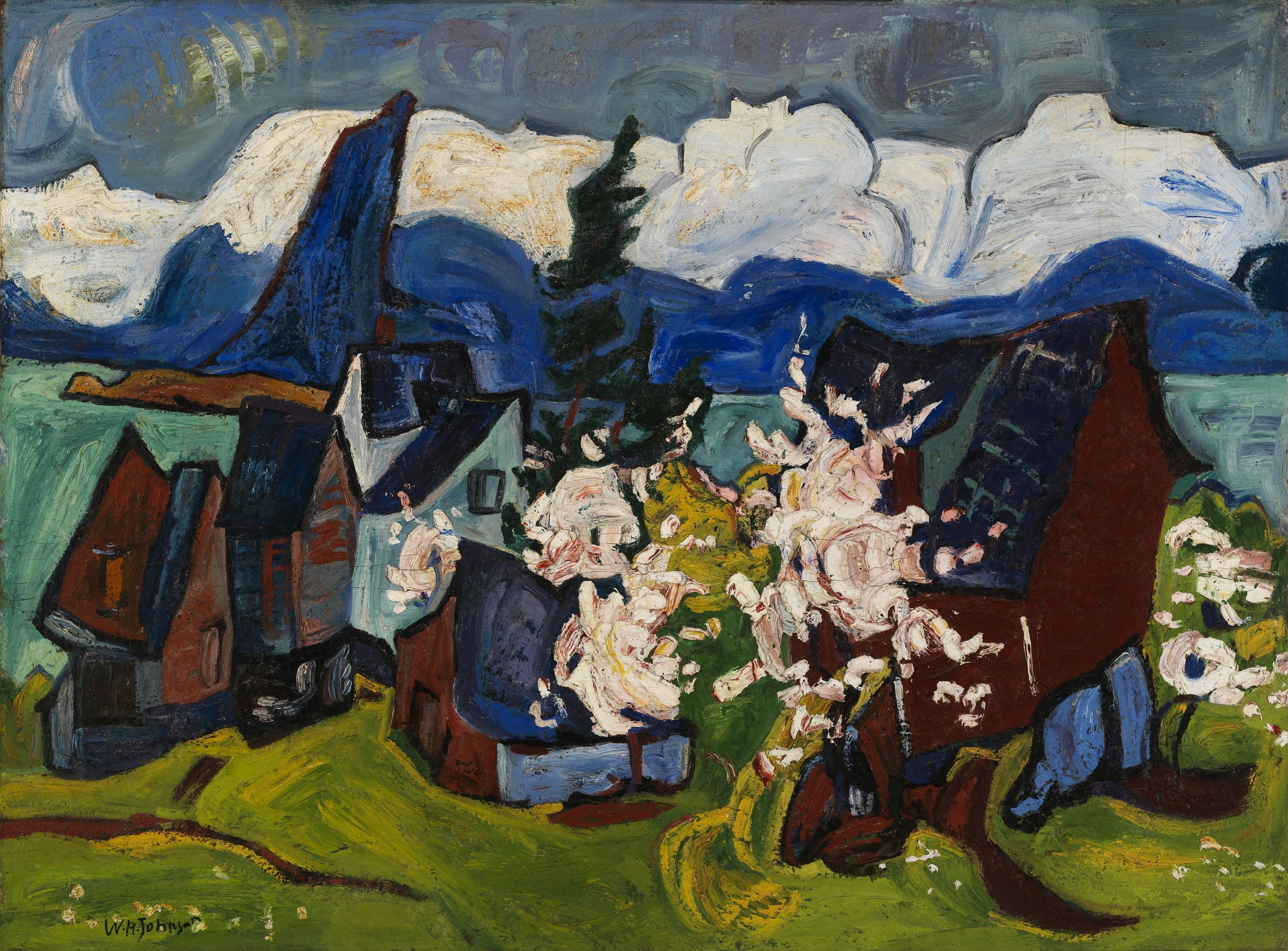
Hardanger Chalets and Blossoms
Johnson's oil on burlap, a humble, non-precious support, shows Norwegian mountain chalets and flowering trees in bold, flattened forms; the rough fabric surface absorbs and diffuses the color, creating a textural quality that mirrors the tactile experience of being present in landscape.
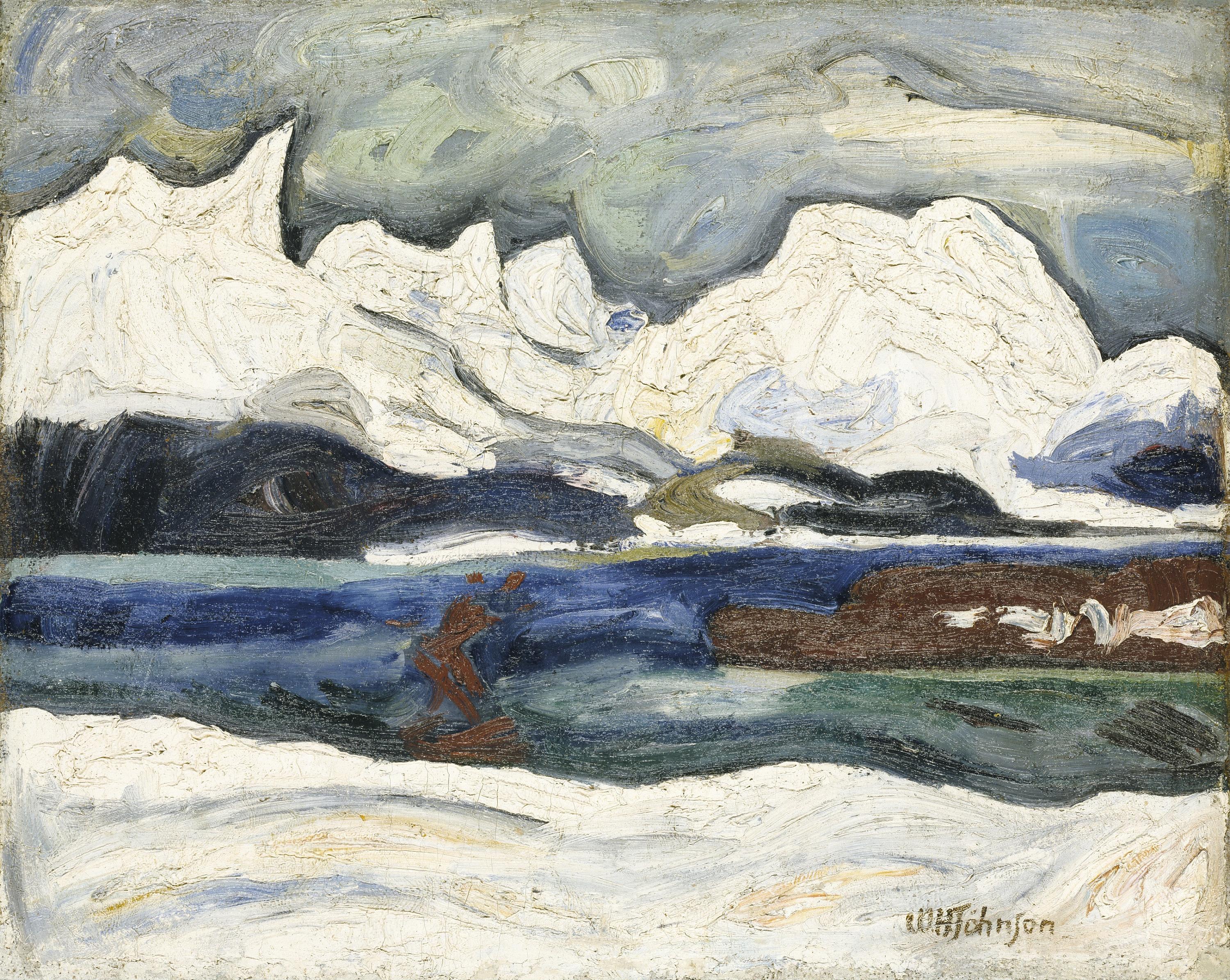
Volda
A coastal Norwegian scene rendered in oil on burlap with simplified planes of color, greens, blues, reds, that echo both folk art traditions and modernist abstraction, showing how Johnson synthesized Nordic folk aesthetics with his own painterly language.
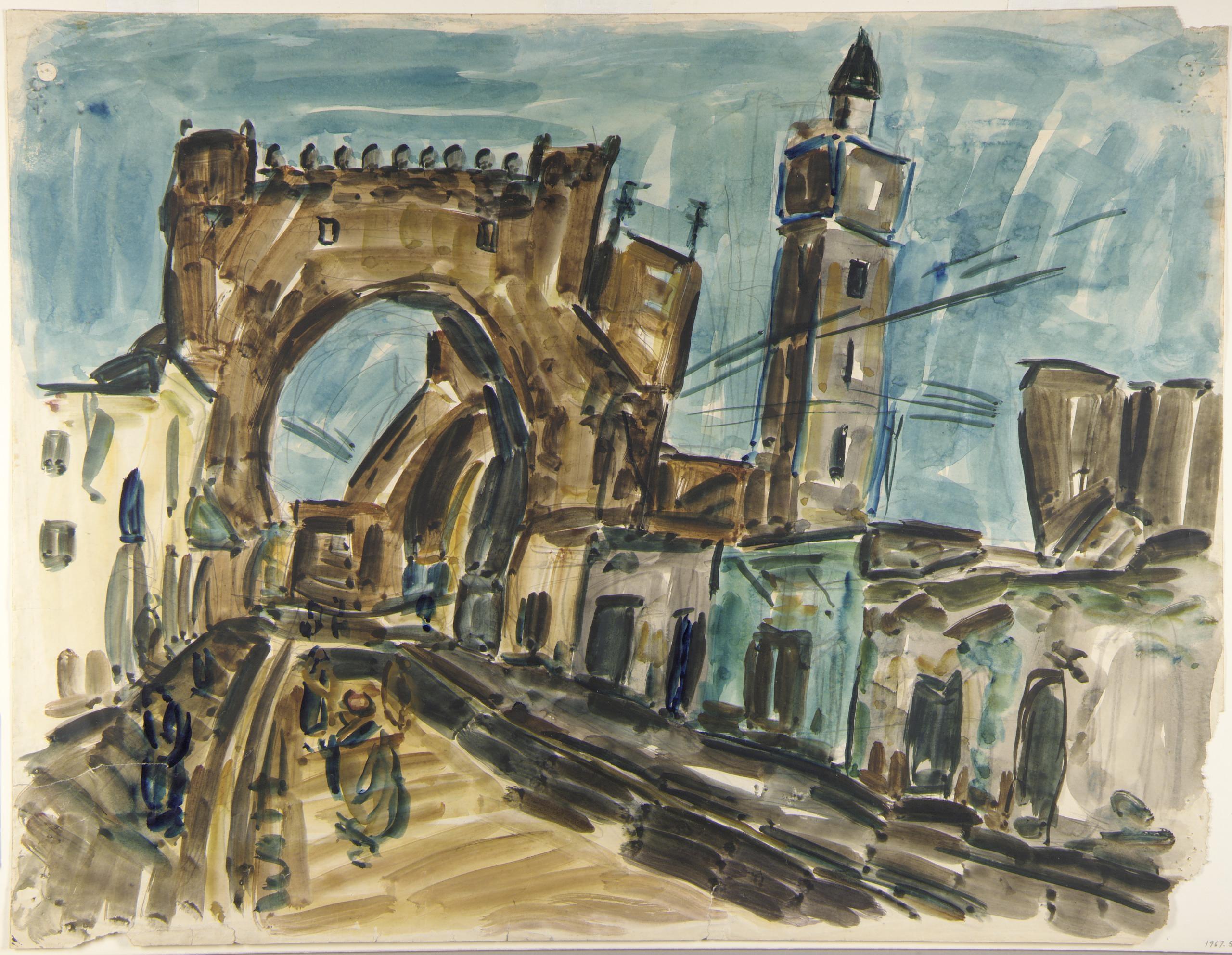
City Gates, Kairouan
Johnson's watercolor of the gates of Kairouan, Tunisia, with its intricate architectural detail and warm ochre and blue tones, documents his travel through North Africa and shows his capacity to render both the geometric precision of Islamic architecture and the luminous quality of Mediterranean light.
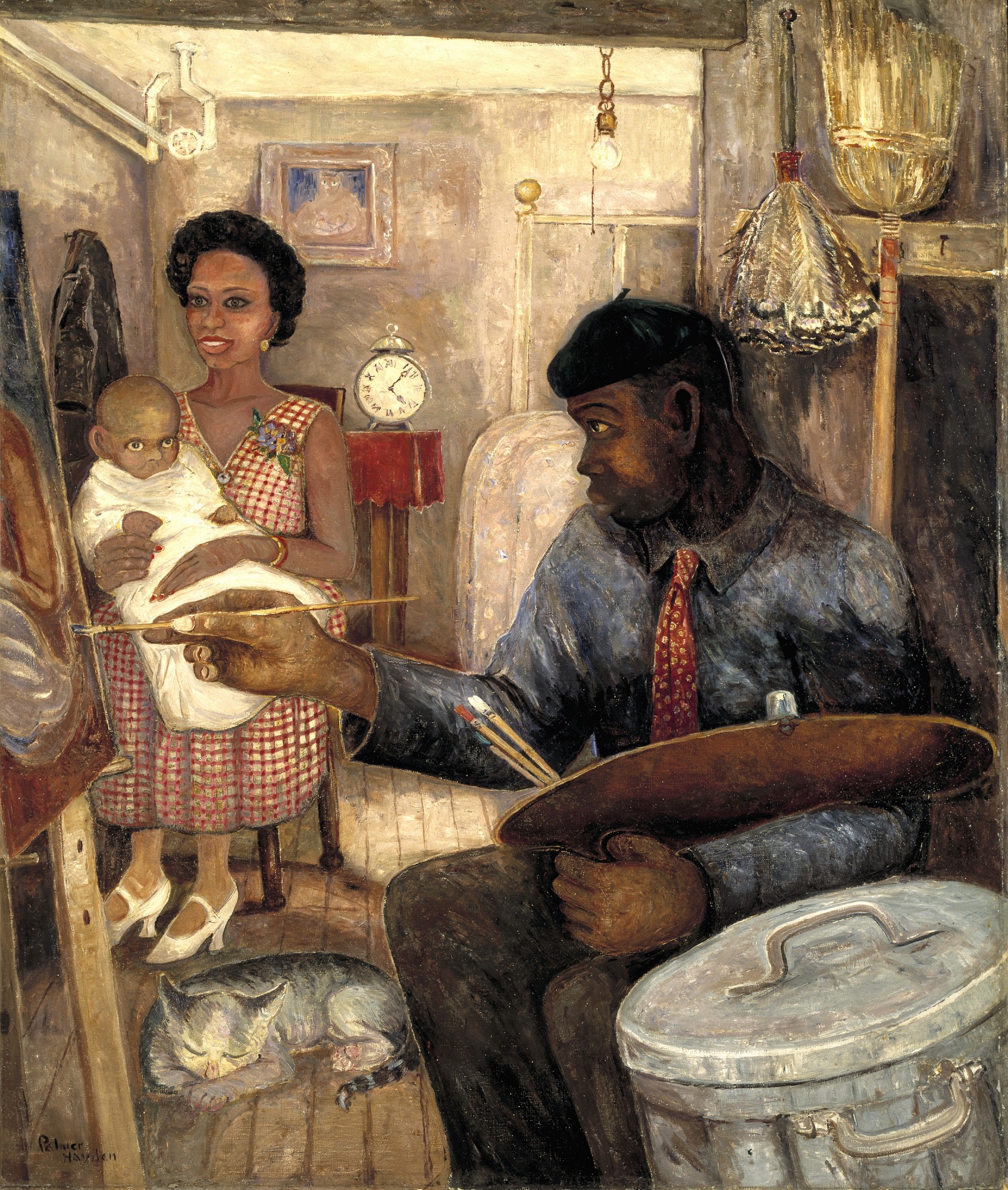
The Janitor Who Paints
Hayden's oil painting of a domestic interior, a man at work on a musical instrument, grounds the exhibition in the everyday labor and creativity of African American life, rendered with warm earth tones and a intimacy that speaks to community and craft.
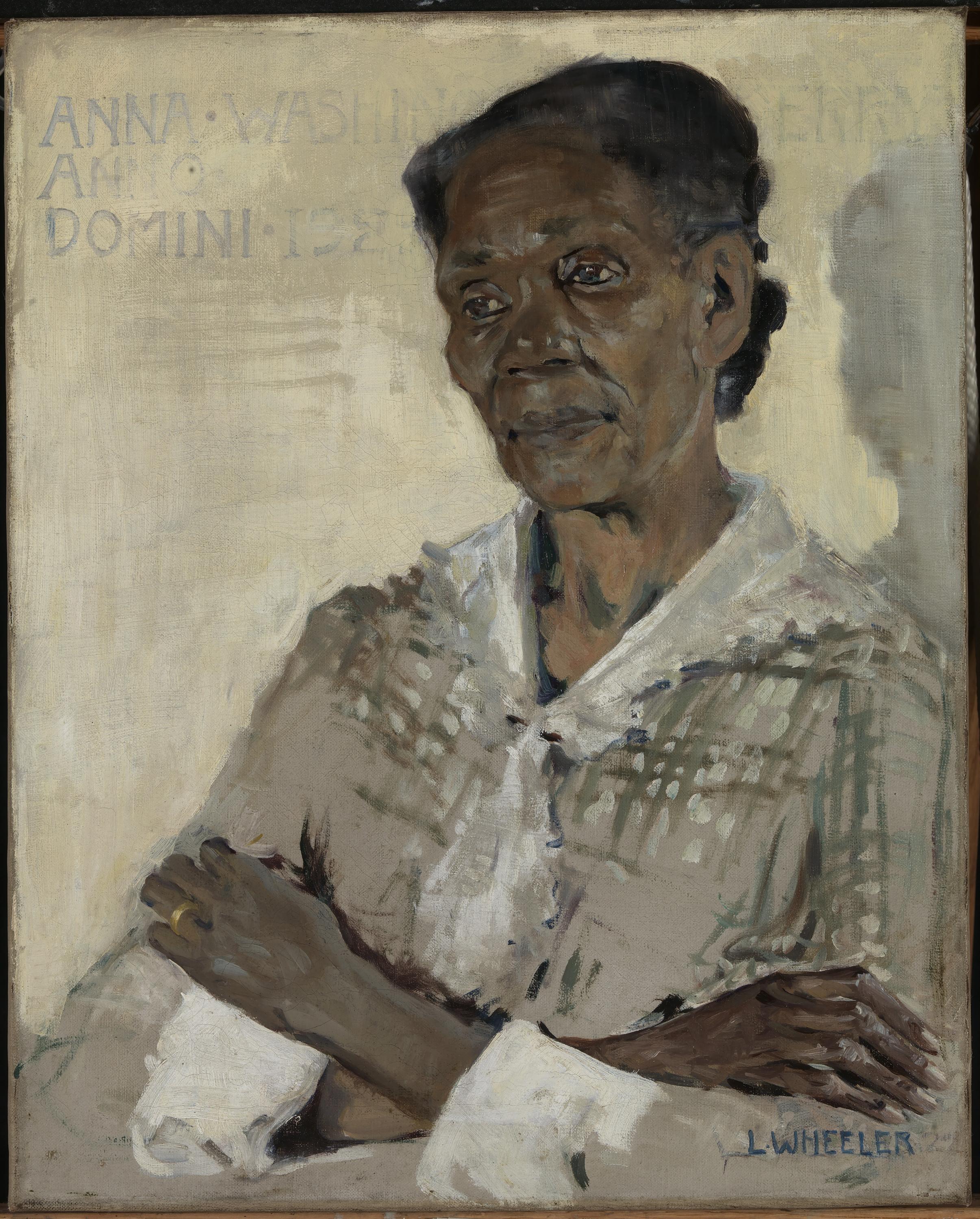
Anna Washington Derry
Waring's portrait of Anna Washington Derry, rendered with restrained modeling and direct gaze, demonstrates the formal sophistication of Harlem Renaissance portraiture, a careful attention to likeness and dignity that counters the caricature and erasure of African American representation in earlier art.
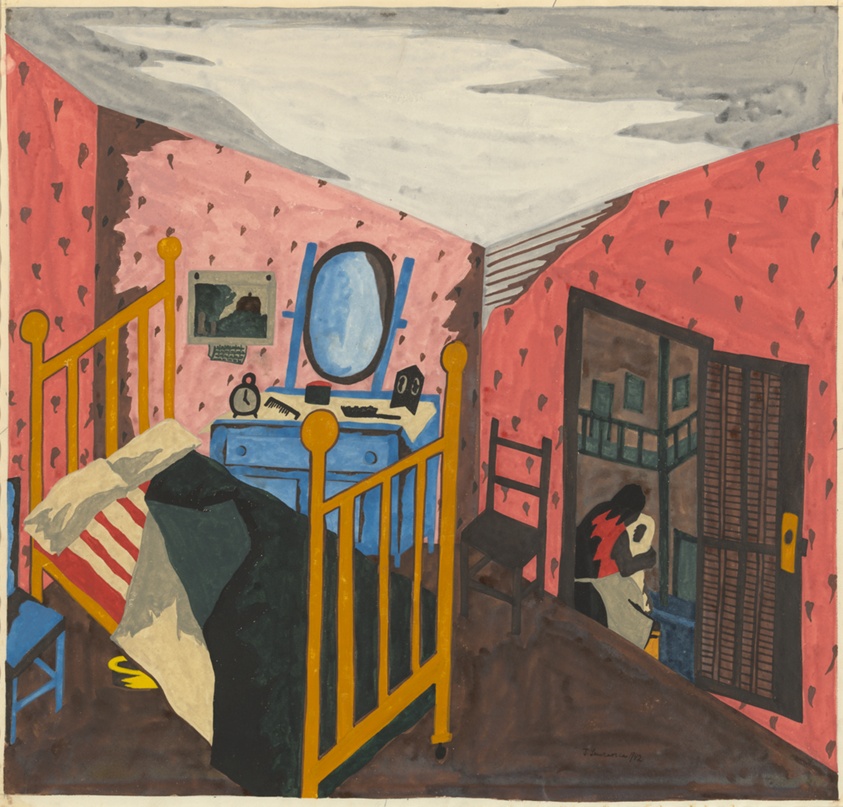
Virginia Interior
Lawrence's gouache interior, with its flattened perspective and warm palette of reds and yellows, documents vernacular American domestic space with a formality and compositional care that elevates the ordinary into the monumental, reflecting both folk traditions and modernist reduction.
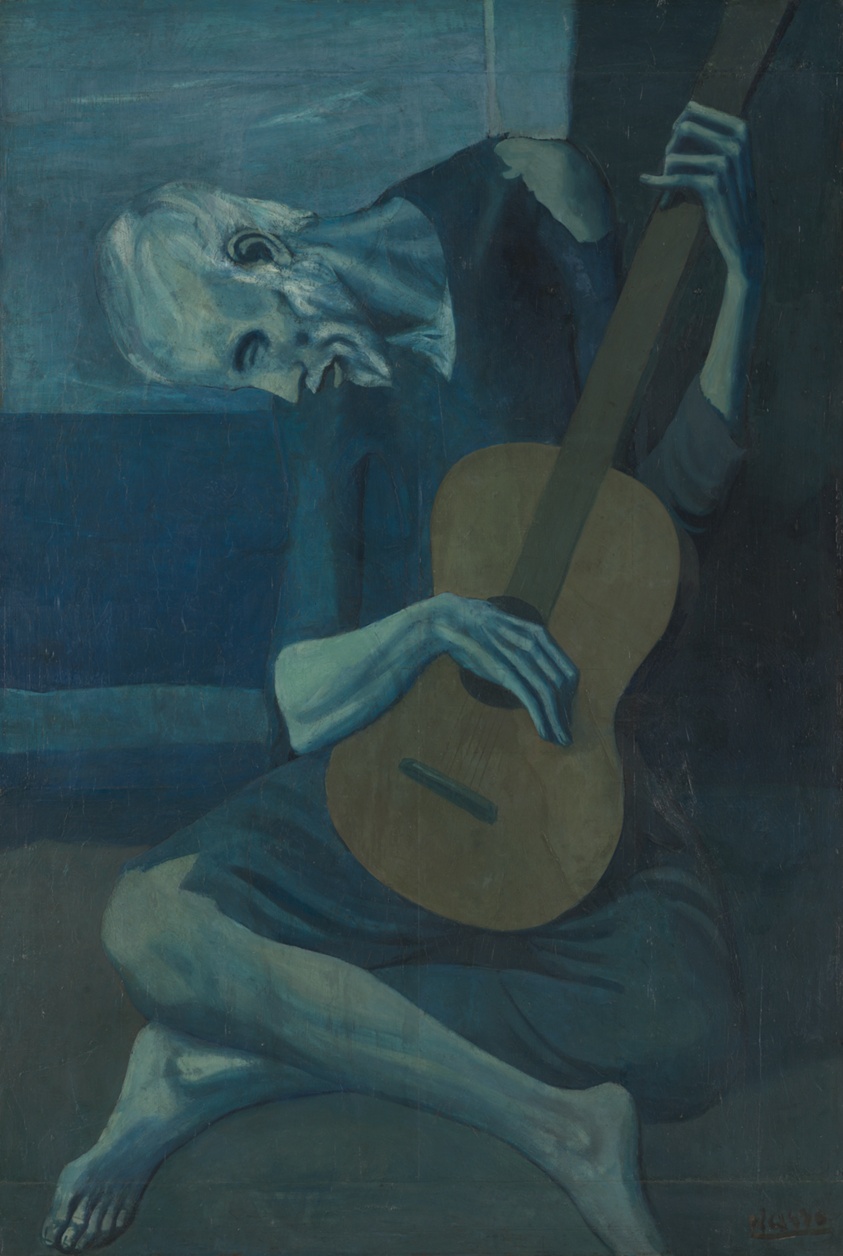
The Old Guitarist
Picasso's monumental guitar-player, rendered in monochromatic blue, demonstrates how the artist's encounter with African sculpture and primitive art radically fragmented the human figure; the work shows displacement of the self through formal distortion, a method that would define twentieth-century abstraction.
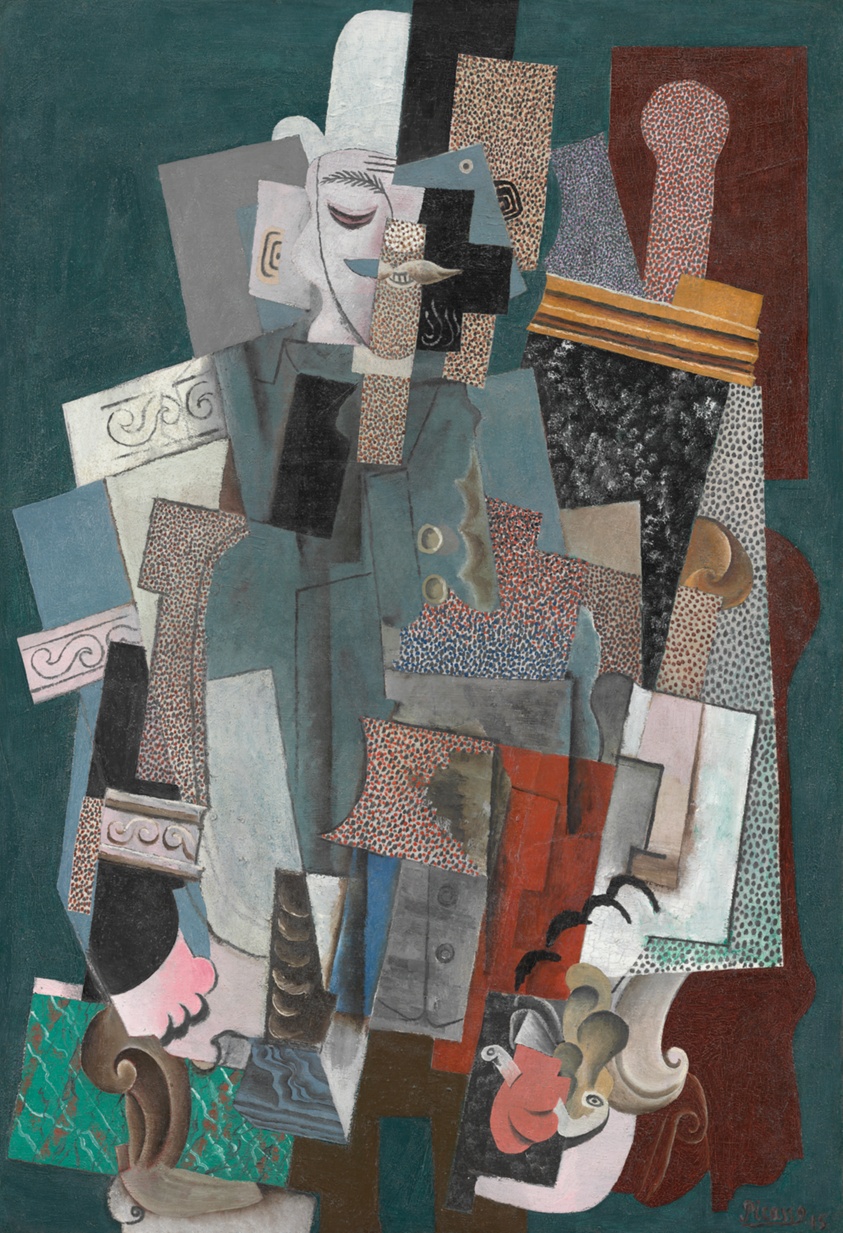
Man with a Pipe
This cubist composition of a pipe-smoking man, constructed from overlapping planes and multiple viewpoints, shows Picasso's technique of deconstructing and recombining the figure as if migrating across visual perspectives, a formal language born from cultural encounter and formal innovation.
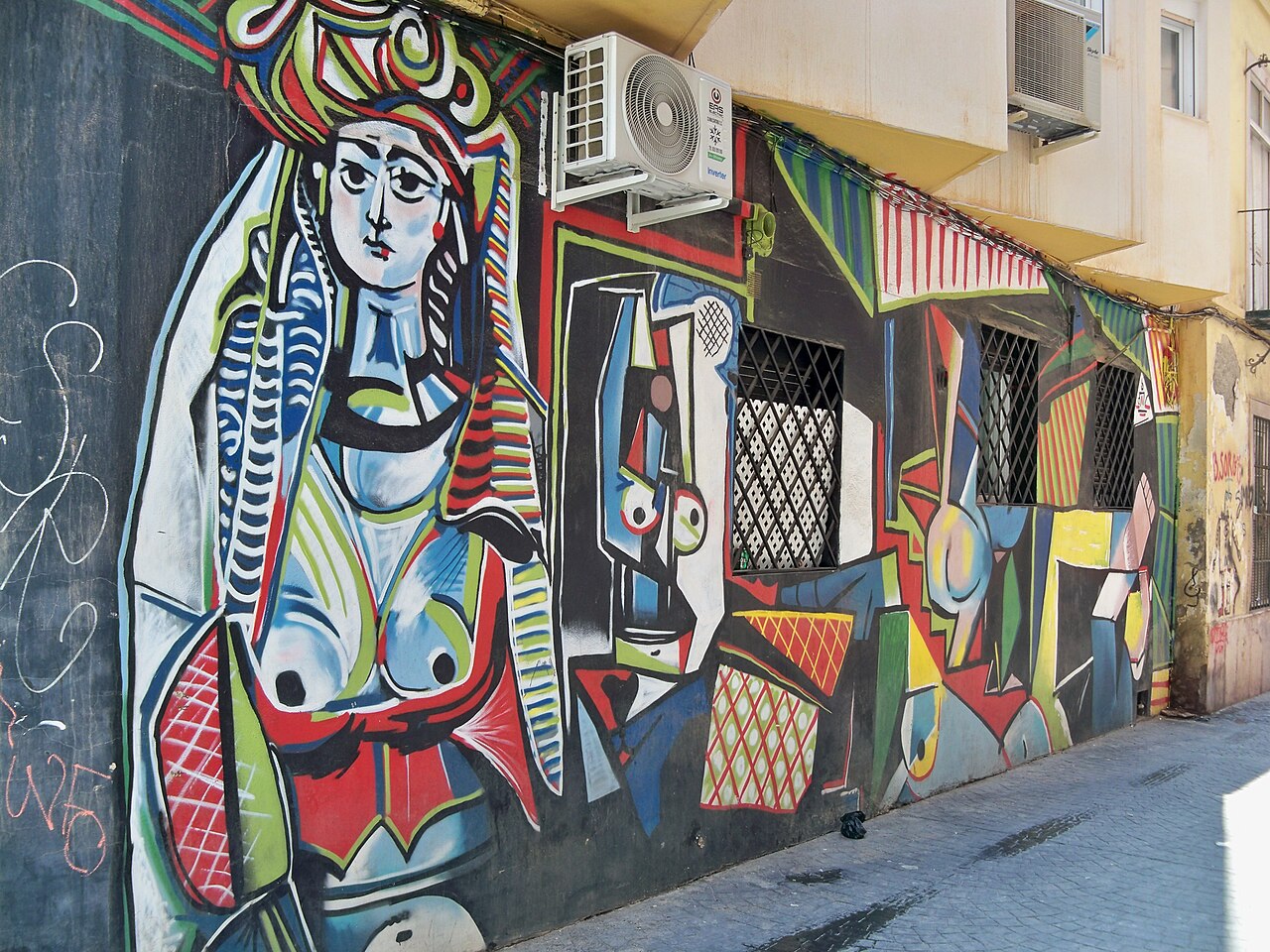
Women of Algiers, O version
Picasso's late-period Women of Algiers, O version, renders the harem interior through fractured, jewel-toned cubist planes; the work is rooted in Orientalist tradition yet destabilizes it through abstraction, showing how the artist continued to work through cross-cultural encounter in formal terms.
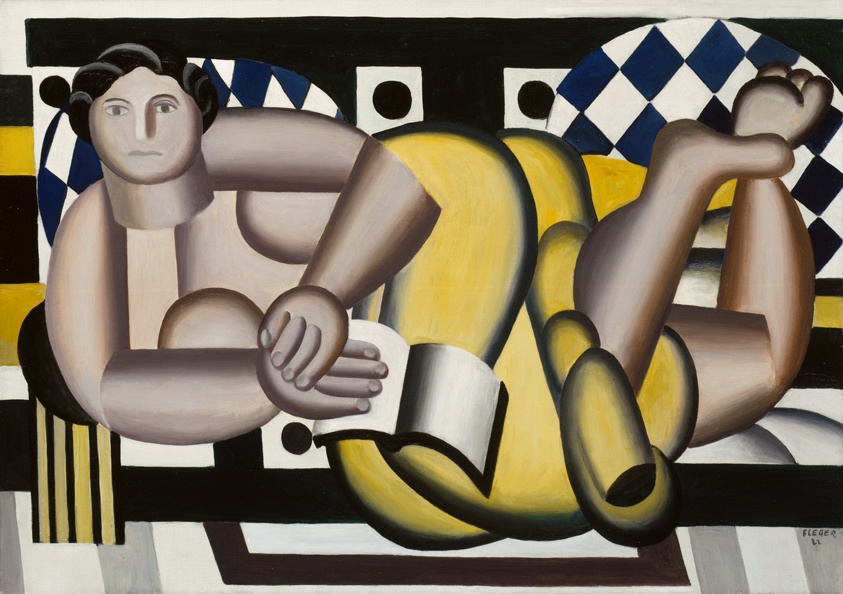
Reclining Woman
Léger's Reclining Woman, with its streamlined, machine-like forms and bold outlines, demonstrates how the artist abstracted the body into mechanical components, a formal response to modernity that mirrors the displacement and recombination inherent in cultural migration.
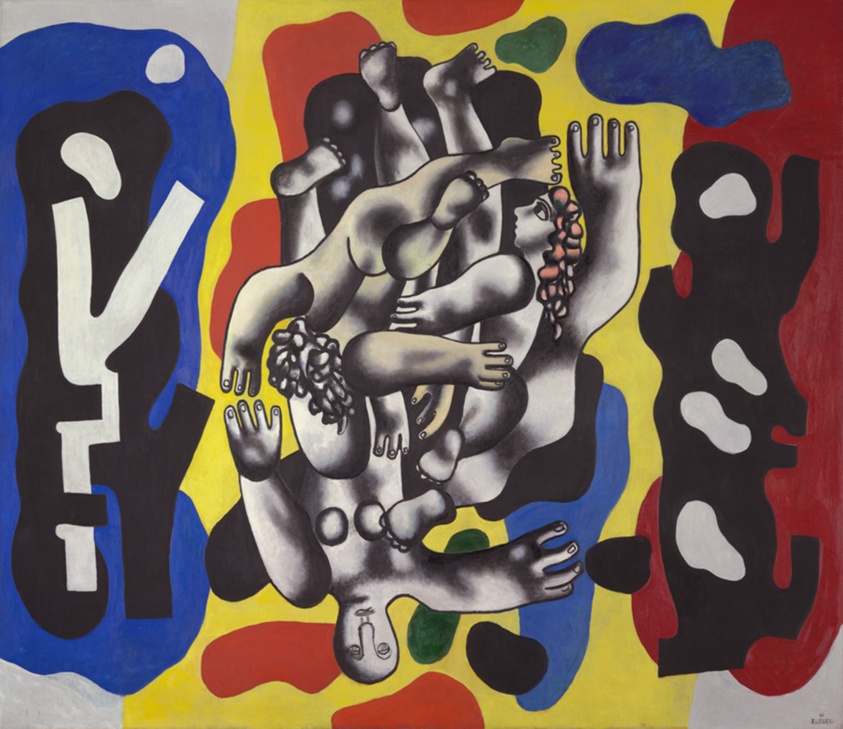
Divers on a Yellow Background
Léger's Divers on a Yellow Background shows the artist's geometric abstraction of human bodies suspended in space, rendered as interlocking forms in primary colors; the composition flattens depth and recombines limbs and torsos, suggesting the fragmentation and reassembly of identity in modern life.
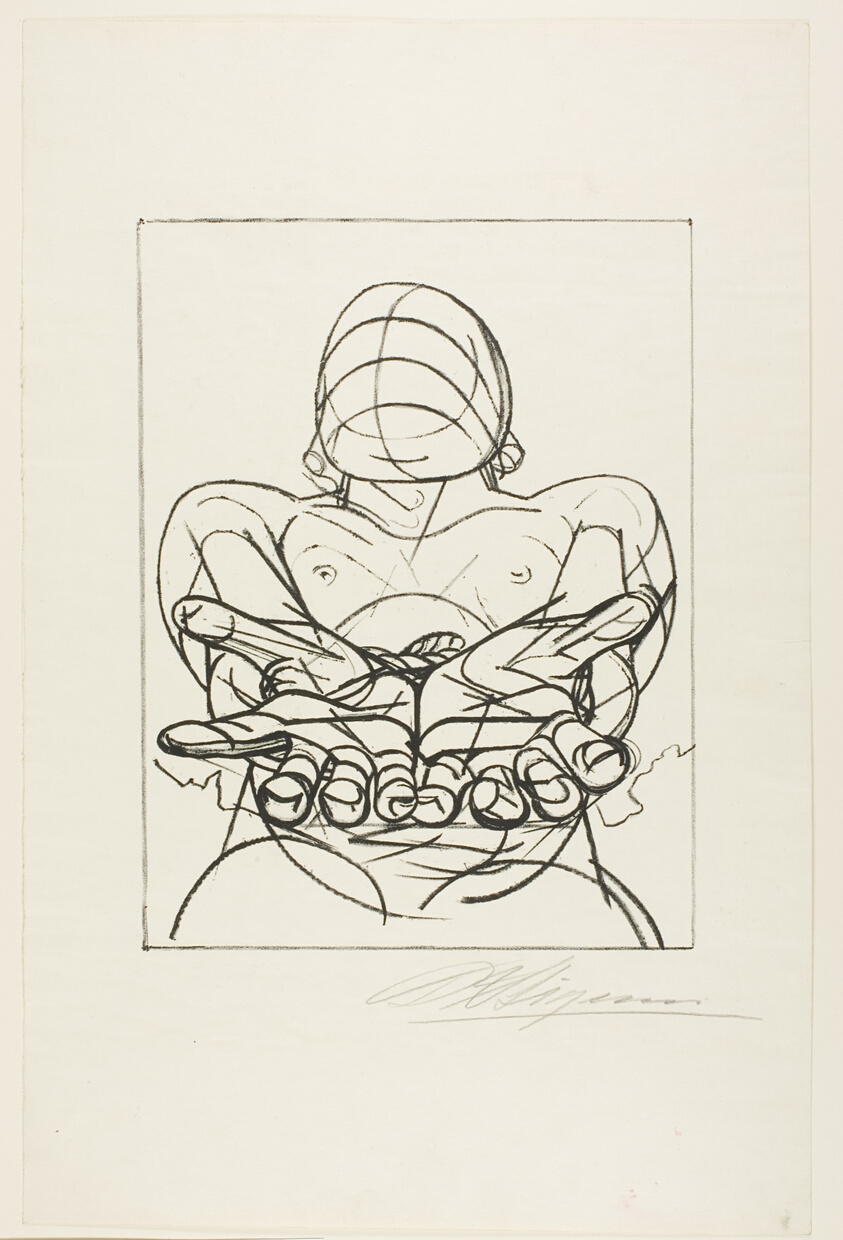
Mexico 1947
Siqueiros's lithograph Mexico 1947, a dense composition of abstracted human figures and architectural forms, represents the artist's engagement with social revolution and displacement through a formal language that merges figuration and abstraction, showing how political upheaval generates new visual forms.
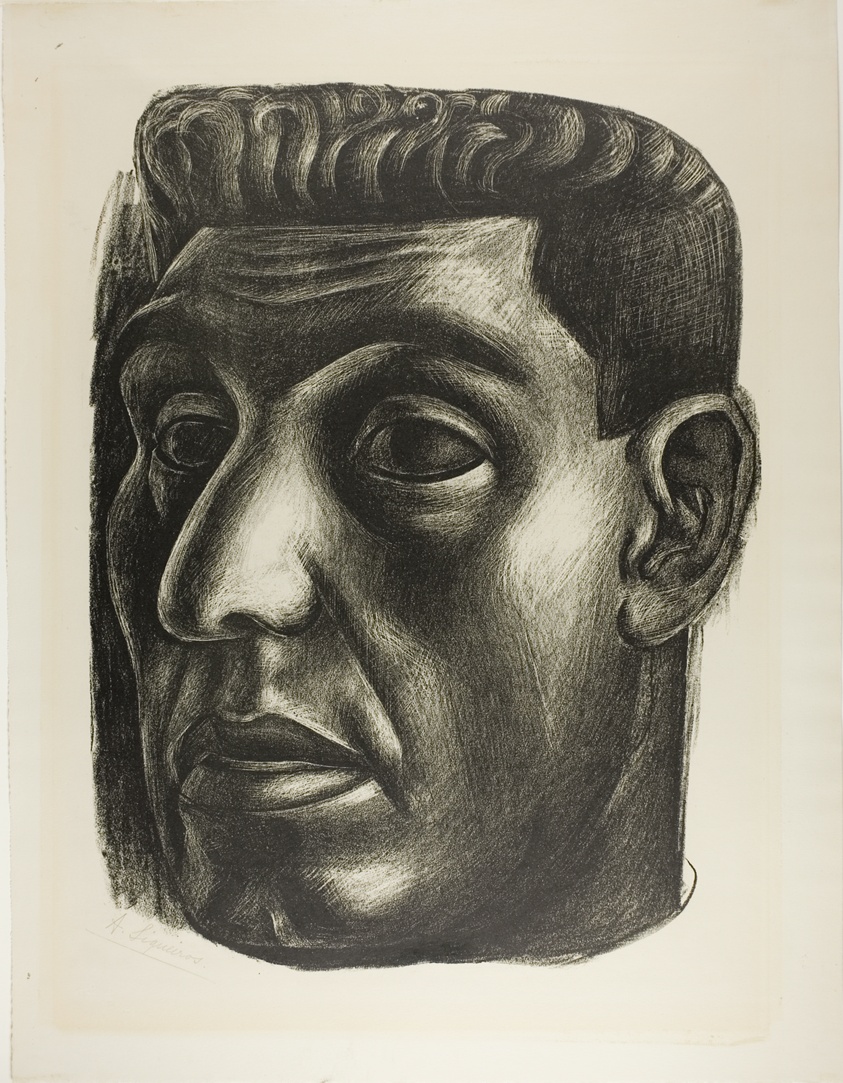
Moises Saenz
Siqueiros's portrait lithograph of Moises Saenz, executed with dramatic light and shadow and monumental scale, demonstrates the artist's commitment to social portraiture and the dignity of indigenous and working-class subjects, rendered through a formalism that respects both likeness and symbolic presence.
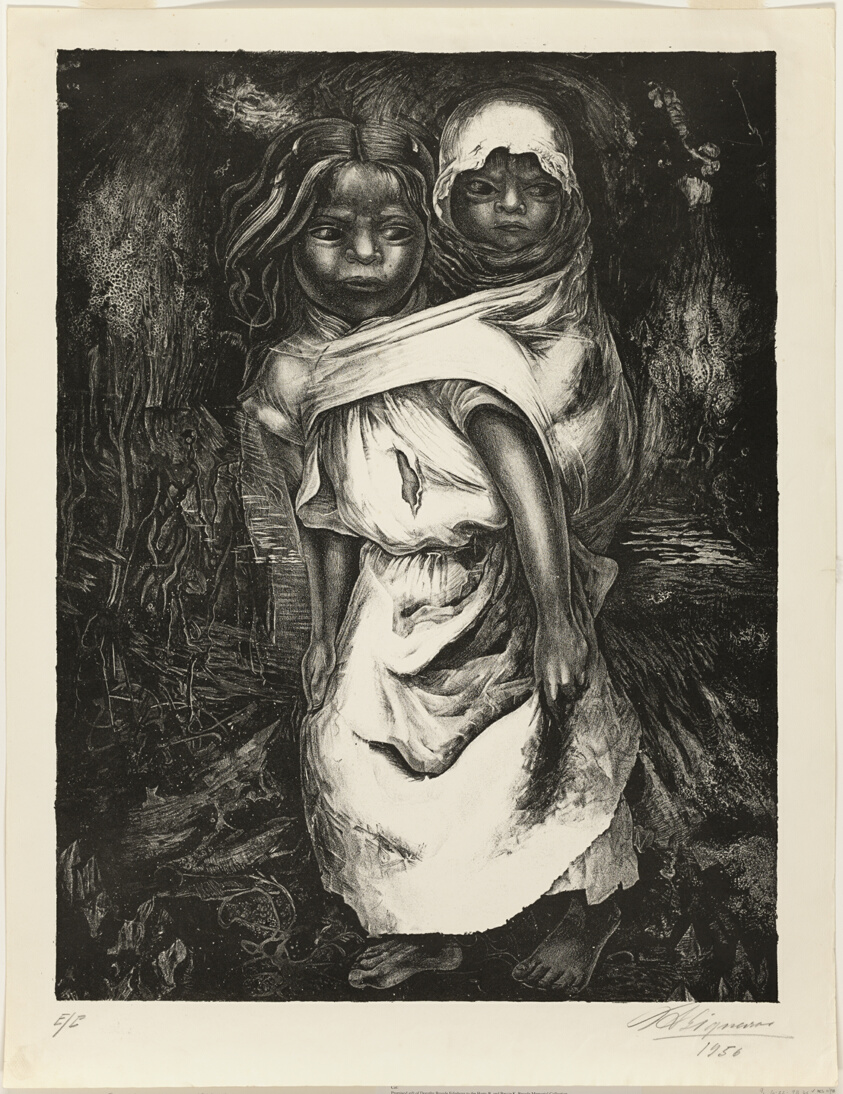
Dos Niños
Siqueiros's Dos Niños, a tender yet formally complex lithograph of two children wrapped together, balances intimate human connection with the geometric structuring of form, showing how the artist's social consciousness expressed itself through technical mastery of light, shadow, and composition.
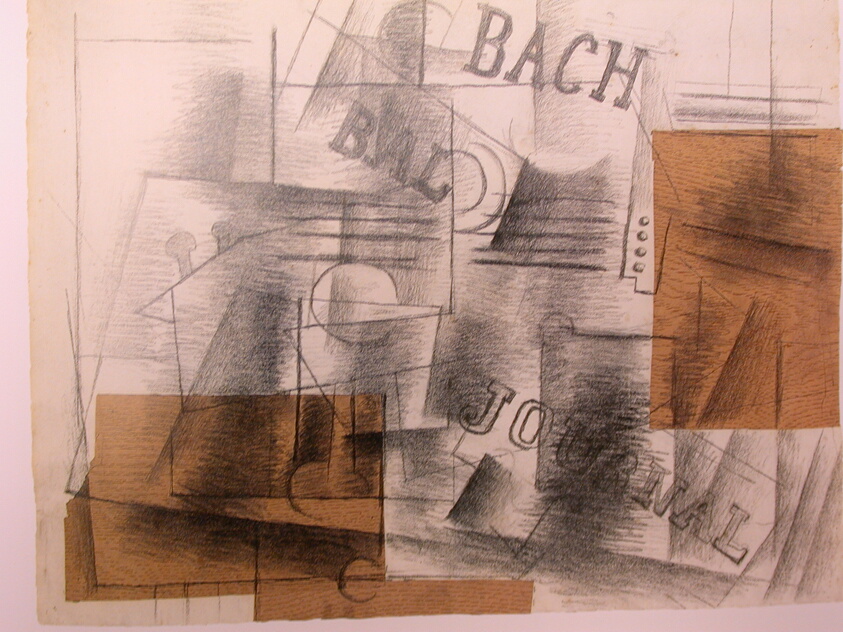
Bal (recto); Guitar (verso)
Braque's collage Bal, constructed from charcoal drawing and cut-and-pasted commercial papers, demonstrates the artist's pioneering technique of fragmentation and recombination; the layered, translucent planes suggest movement and cultural encounter as material fact, not merely idea.
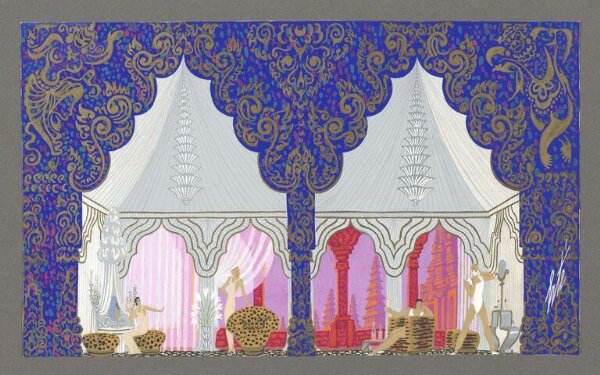
Design for a set: Room in a Chinese Palace.
Erté's design for a Chinese palace interior, executed with ornamental precision and jewel-toned colors, shows the artist's engagement with cultural exoticism and theatrical fantasy; the work demonstrates how European artists translated encounters with distant aesthetics into design language, merging art deco formalism with orientalist imagery.
The Review
The room asks you to look at how color, line, and surface change when an artist crosses a border. Not metaphorically. Literally.
William H. Johnson's watercolors from Denmark, Windmill and Houses, Denmark and Kerteminde, Denmark, are the point of entry. The man was American, trained in the American academy, and then he went north. What you see in the paintings is not nostalgia or documentation. It is the collapse of his old technique under the weight of unfamiliar light. The tempera on paper becomes thin, provisional. The pencil line wavers. In Kerteminde, Denmark the water is rendered as a series of blue-green rushes, almost abstract, with the boats described in loose brown strokes that barely cohere into vessels. This is not accomplished painting in the traditional sense. It is the record of an eye learning to see differently. The burlap works, Hardanger Chalets and Blossoms and Volda, are even more radical. Oil on burlap is a working-class support, cheap and unforgiving. The paint doesn't glide on it the way it would on canvas. It pools and catches. Johnson uses this friction. The color becomes flat and slightly granular, the forms blocky. It looks almost like woodcut translated into paint. This is technique responding to place.
The Picasso and Léger in the show operate on a different scale but with the same principle. The Old Guitarist is a monochromatic study in elongation and withering. The blue-period figure is wrung out, all skin and bone, the guitar a dark wedge beside him. It is a startling compression of form. When you move to Man with a Pipe, the fragmentation is complete. The face is split across multiple planes. The pipe juts into negative space. This is what cultural encounter, Picasso's absorption of African sculpture and Iberian traditions, looks like when it reaches the canvas: the figure comes apart and reassembles itself according to new rules. The eye has to work to track a nose from one plane to another. That labor is the point.
Fernand Léger's Reclining Woman reduces the body to interlocking cylinders and arcs. There is no gesture, no softness. The form is almost engineering. In Divers on a Yellow Background, the bodies become machine parts floating in a flat yellow field. Color here is arbitrary and assertive, not descriptive. It is the language of someone who has seen industry and mechanization not as threat but as formal possibility.
The Siqueiros lithographs, Moises Saenz, Dos Niños, Mexico 1947, operate in the register of social realism but with a formal intelligence that prevents them from sliding into message. The portrait of Saenz is built from blocks of light and shadow. The face emerges from darkness with almost sculptural weight. The two children in Dos Niños are bound together with a kind of geometric tenderness, their forms interlocking as if they are both separate and inseparable. These are not illustrations of social concern. They are technical demonstrations of how form can carry dignity without rhetoric.
The curatorial move here, pairing Johnson's Scandinavian studies with Picasso's fragmented bodies, then pivoting to Léger's machine-age abstraction, assumes that migration and formal innovation are the same thing. There is something to that. But the exhibition doesn't quite make the case that they have to be. A Picasso fragment made in Paris in 1903 is formally sophisticated, but it is not technically indebted to migration in the way that Johnson's watercolors transparently are. Johnson had to change how he worked because he was in a different light. Picasso changed how he worked because he wanted to. The show collapses those two different types of rupture into one category, and that is where it falters.
The Braque collage, Bal, is almost an aside here, a piece of layered paper with charcoal and commercial print fragments. It is the quietest work in the room and also the most sophisticated. The translucence of the papers allows you to see multiple images at once: a notation of architecture, of a figure, of pattern. Nothing settles. The eye keeps finding new edges. This is what formal intelligence looks like when it doesn't need the crutch of a theme. It is a shame the show uses it as footnote rather than as a model for what it might have been.
- +Johnson's burlap paintings and watercolors demonstrate genuine technical adaptation to northern light and vernacular architecture, not mere documentation.
- +The progression from observational Nordic landscapes through cubist fragmentation to muralist figuration creates a coherent argument about how artists remake form across borders.
- +Materials matter here, burlap, watercolor paper, lithography stone, and the show allows you to see how support and medium constrain and enable different visual languages.
- –The curatorial equation of migration with formal innovation conflates two different things: Johnson was forced to adapt his technique to new conditions; Picasso chose abstraction for formal reasons unrelated to displacement.
- –Palmer Hayden's single painting and the Harlem Renaissance portraits feel underexamined alongside the formal rigor given to the European modernists, the show asserts their presence without demonstrating equal technical sophistication.
- –The selection leans heavily on a safe narrative of cultural encounter as aesthetic enrichment, missing the opportunity to examine what formal fragmentation might owe to colonial hierarchies or unequal exchange.
- Jean Dubuffet →His Art Brut experiments with industrial and vernacular materials parallel Johnson's use of burlap and commercial papers, and his late work directly engaged with non-Western aesthetic systems as formal sources rather than as content to be i
- Joan Mitchell →An American abstract painter who moved to Paris and developed her gestural abstraction in dialogue with French painting and American action painting, she embodies the kind of sustained cultural migration and formal innovation that Johnson's
Curious what another critic would make of this show?